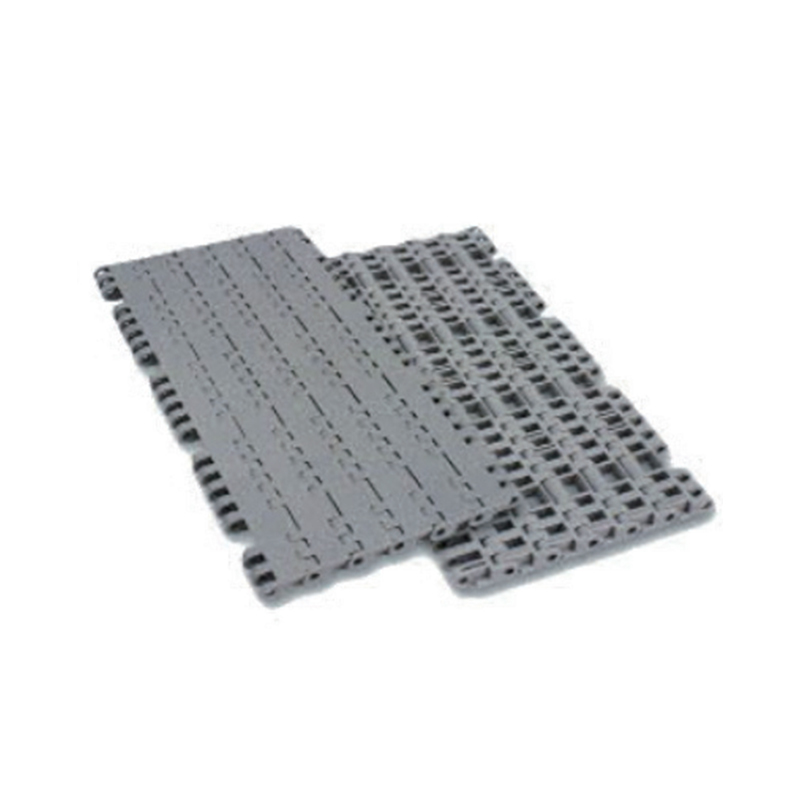
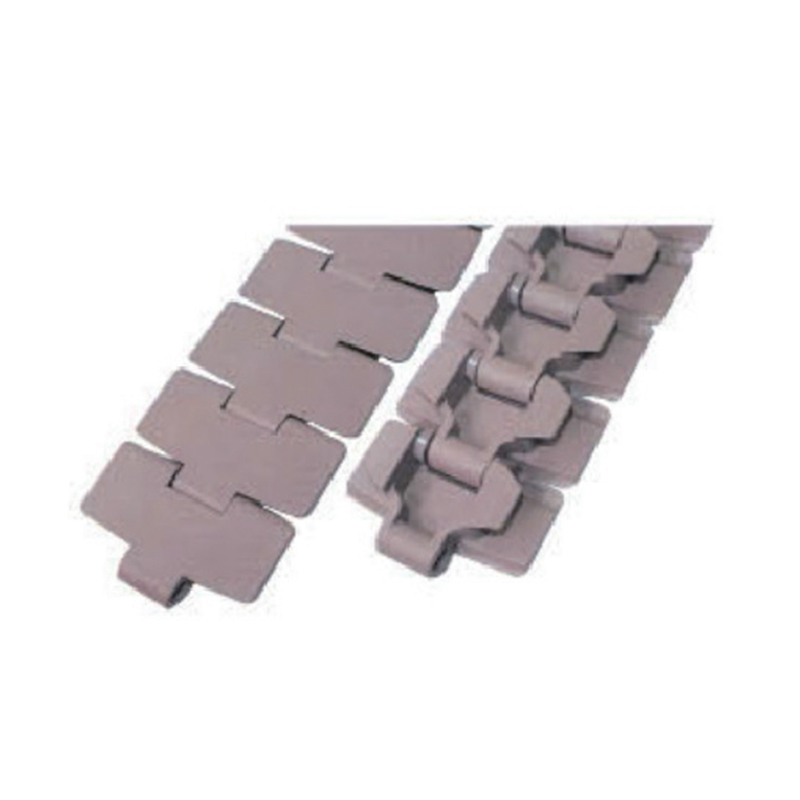
7705 Type Flat Chain Mesh
Chain Plate Series
7705 Type Flat Chain Mesh
The 7705 Type Flat Chain Mesh is a modular plastic conveyor belt constructed from interlocking engineering plastic modules—such as HDPE, PP, or POM—secured by transverse hinge pins. This specific model features a fully closed, smooth top surface that eliminates gaps, providing a continuous and stable support plane for conveyed items. The underside integrates precisely engineered sprocket engagement pockets to ensure synchronous and reliable power transmission. Technical Features and Advantages Surface Flatness and Stability: The solid flat-top design prevents small or irregularly shaped products from tipping or snagging during transit, ensuring consistent material flow. Modular Assembly Flexibility: The brick-lay assembly pattern allows for flexible width configurations tailored to specific conveyor frames. In the event of localized wear, individual modules can be replaced independently, reducing overall maintenance expenditures. Low Friction and Corrosion Resistance: The plastic composition offers inherent chemical stability against acids, bases, and moisture. Additionally, its low coefficient of friction minimizes energy consumption and operational noise. Hygiene and Ease of Cleaning: The non-porous, smooth surface prevents debris accumulation and complies with strict sanitary standards, facilitating rapid cleaning using water or standard industrial detergents. Primary Application Areas Food and Beverage Processing: Extensively utilized in meat processing, bakery cooling lines, beverage bottling, and fruit/vegetable sorting. Packaging Automation: Implemented in systems for conveying and merging cardboard boxes, shrink-wrapped products, and lightweight containers. Pharmaceutical and Chemical Industries: Suitable for pharmaceutical packaging and cosmetic production lines requiring high levels of environmental cleanliness. Electronics and Precision Manufacturing: Deployed in workstations requiring stable transport of delicate components or anti-static properties (via specific material modifications).
Beaded Omnidirectional Wheel
Skate Wheel Bearing Series
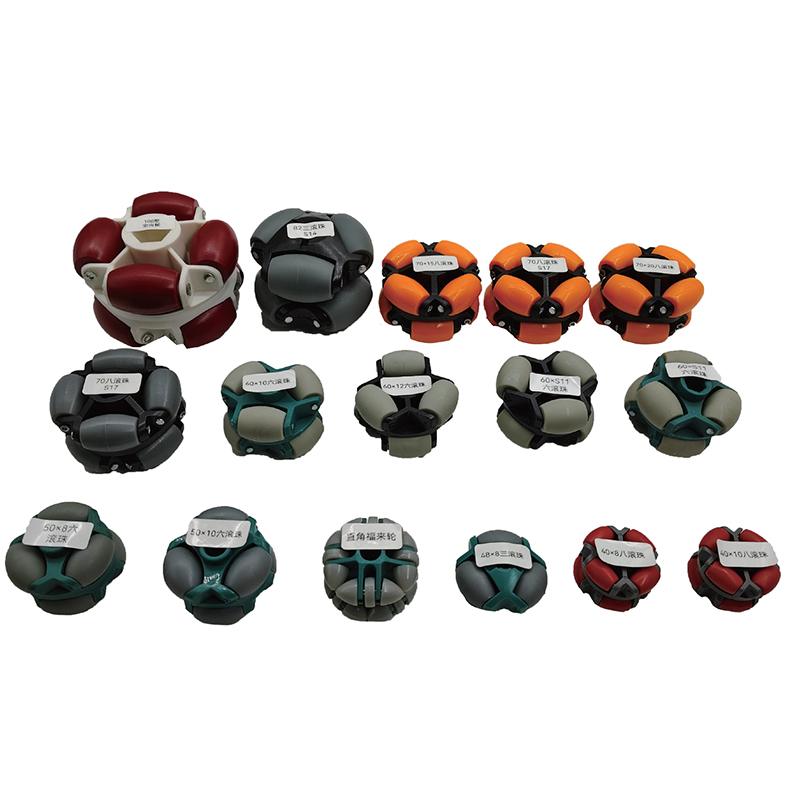
Beaded Omnidirectional Wheel
The beaded omnidirectional wheel is a functional component designed for multi-directional material movement and positioning. Its working surface consists of multiple independently rotating beads, allowing items to move freely in various directions when in contact with the wheel. This design supports flexible handling and directional adjustment in conveying and workstation environments. Product Features Multiple independently rotating beads are distributed on the surface Supports longitudinal, lateral, and combined directional movement Beaded structure helps distribute contact forces Suitable for flat conveying and auxiliary guiding applications Can be installed on platforms, worktables, or guiding assemblies Product Advantages Enables multi-directional movement without a powered drive Reduces directional constraints during material handling Supports flexible positioning in workstations and handling areas Compatible with various conveying and handling components Easy integration into existing system layouts Application Areas Sorting and turning worktables Assembly stations and manual handling zones Multi-directional guiding points in automated conveyor lines Logistics, warehousing, and packaging systems Temporary material positioning and adjustment areas
Roller Guide Wheel
Components
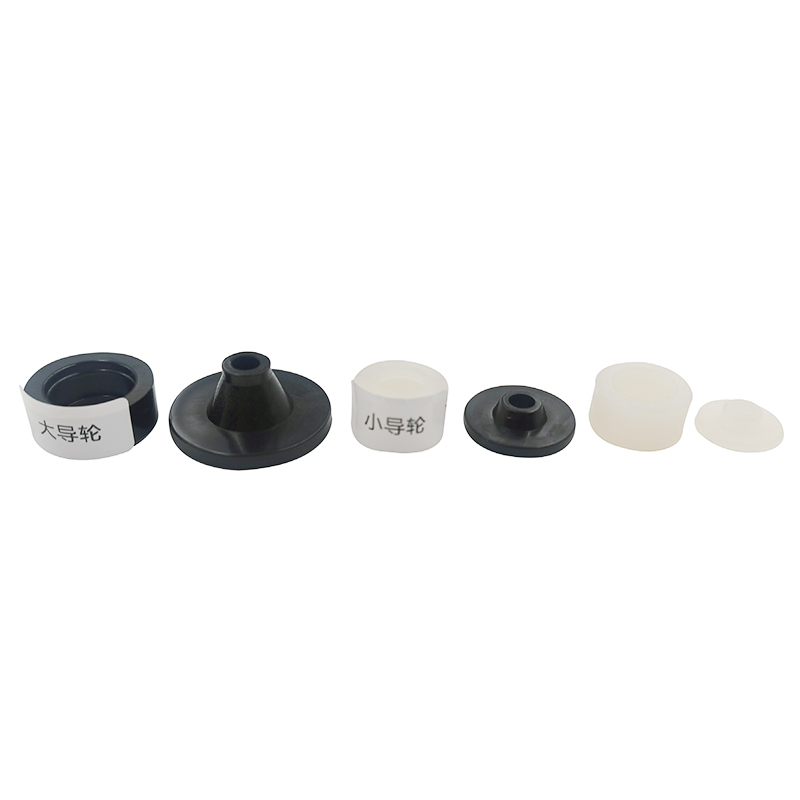
Roller Guide Wheel
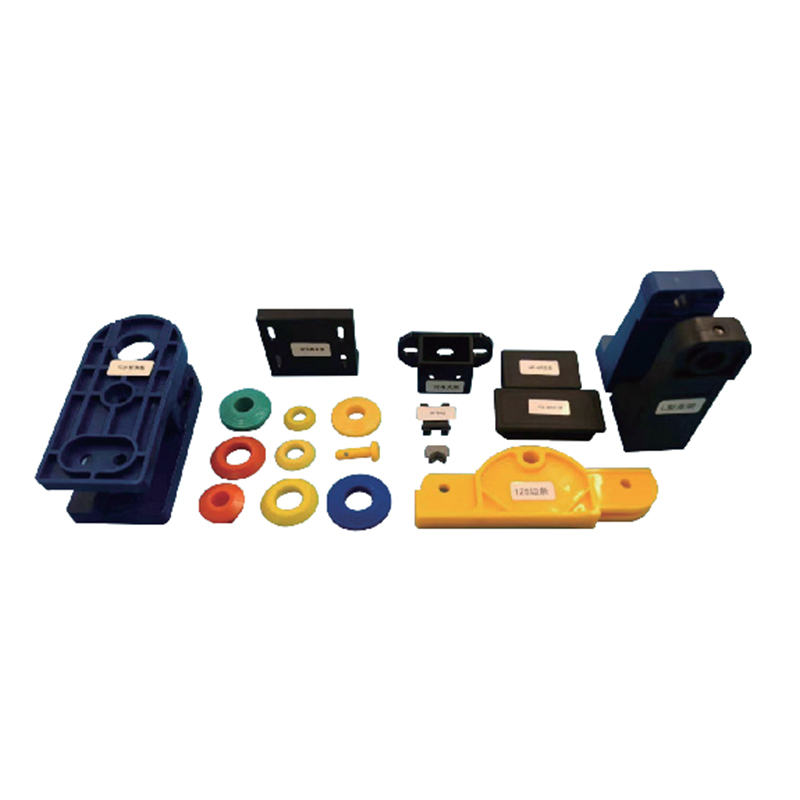
The guide wheel serves as a critical directional component in industrial conveying systems, designed to control and maintain the travel trajectory of conveyor belts, chains, or flexible materials. Its core function involves providing a lateral constraint to moving conveying carriers through the integration of physical limitations and rolling contact, ensuring stable directional transport of materials along complex conveying paths. Structural Features Incorporates flanged or grooved wheel construction to establish mechanical limitation interfaces for conveying carriers Integrates precision bearing mechanisms, enabling low-torque rotational guidance Wheel surface customizable through hardening treatments, polyurethane coating, or specialized surface applications Equipped withan adjustable mounting base supporting three-dimensional angular and positional fine-tuning Technical Advantages Rolling contact effectively reduces friction coefficients during guidance, minimizing energy loss Mechanical limitation design prevents progressive deviation in conveyor belts during extended operation Modular component design facilitates rapid installation, maintenance, and replacement Adaptable to both high-speed continuous operation and intermittent heavy-duty working conditions Typical ApplicationsPrimarily deployed in sorting conveyor lines within automated warehousing systems, positioning devices for food packaging machinery, plate chain guidance systems in automotive assembly lines, belt tracking mechanisms for mining equipment, and various industrial transmission scenarios requiring precise path control.
880 Guide Side Bending Chain
Chain Plate Series
880 Guide Side Bending Chain
The 880 guide side-bending chain is designed for side-guided and curved conveying applications. It enables conveyors to change direction smoothly while maintaining continuous chain movement. The chain structure supports controlled side guidance when used together with guide rails, allowing materials to follow a defined conveying path through curved sections. Product Features Designed for side-guided and curved conveyor layouts Supports continuous chain movement through bends Compatible with guide rail systems for path control Suitable for various conveyor line configurations Designed for continuous and cyclic conveying operations Product Advantages Supports compact conveyor layouts with directional changes Helps maintain material movement along defined paths in curved sections Minimizes impact on conveying rhythm at turning points Compatible with standard conveyor system components Easy integration into existing side-bending conveyor systems Application Areas Curved and side-guided conveyor lines Material transfer systems in automated production lines Packaging, sorting, and logistics conveying equipment Conveyor systems are used in the food, beverage, and personal care industries Continuous conveying systems requiring directional changes
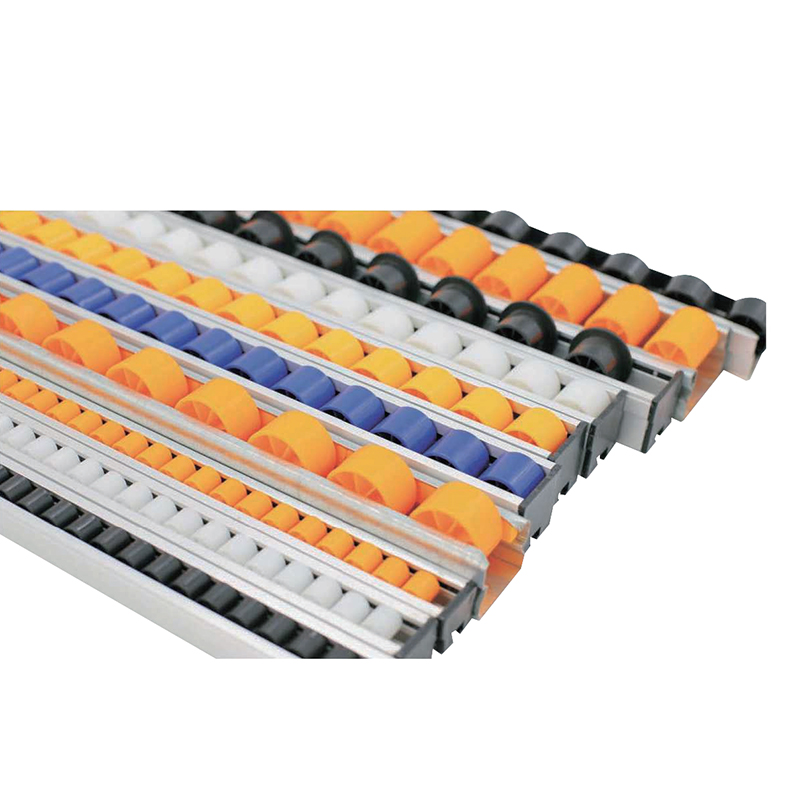
Conveyor Flow Bar
Fluency Strip Series
Conveyor Flow Bar
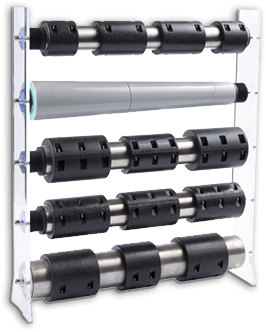
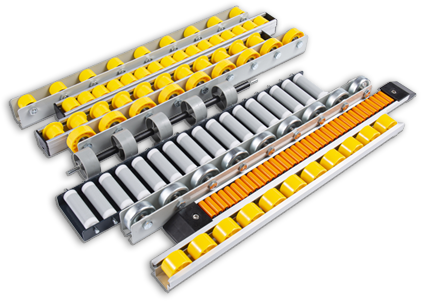
The conveyor flow bar is a rolling component designed for gravity-driven or assisted conveying systems. It consists of multiple rollers integrated into a bar structure, enabling smooth movement of goods without a powered drive. Flow bars are commonly used in racks, picking lanes, and conveyor transition zones to support controlled material flow. Product Features Bar-shaped structure with integrated rolling elements Designed for gravity or auxiliary conveying applications Can be installed on conveyors, racks, or guiding structures Supports flat movement of cartons, totes, and containers Suitable for straight or slightly inclined conveyor layouts Product Advantages Enables material movement without powered operation Helps reduce manual handling requirements Supports sequential and directional material flow Compatible with existing conveyor and racking systems Suitable for buffering, accumulation, and staging areas Application Areas Gravity conveyor lines and flow rack systems Warehouse racking and order picking lanes Logistics sorting and distribution centers Packaging, assembly, and material handling zones Conveyor transition and buffer sections
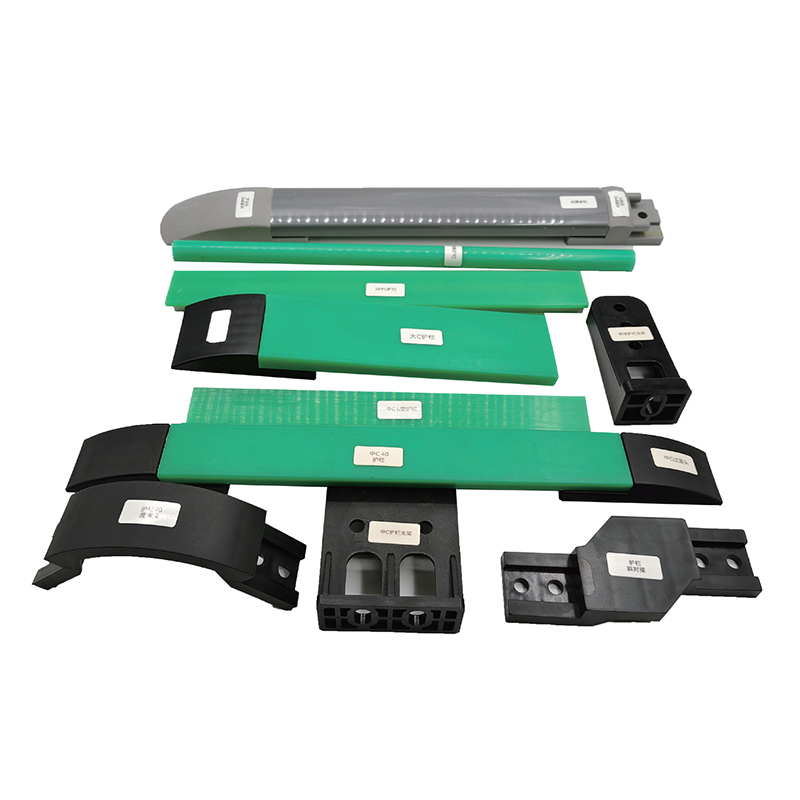
Conveyor Guardrail
Guardrail & Enclosure Series
Conveyor Guardrail
The conveyor guardrail is a modular protective structure installed along the periphery of conveying equipment, creating physical separation between personnel activity areas and equipment operation zones. Utilizing standardized connection methods, this product effectively encloses equipment operation areas while maintaining on-site visibility. Technical FeaturesComprises a column-and-rail framework forming continuous protective interfaces Mesh aperture design complies with ergonomic standards, balancing protection with visual accessibility Connection nodes employ plug-in or bolted fastening structures supporting rapid disassembly and reassembly Surface treatments include spray coating or hot-dip galvanization for corrosion-resistant protection Practical FunctionsEstablishes a clear demarcation of equipment operation zones to reduce accidental entry risks An open framework design facilitates daily equipment inspection and abnormal condition monitoring Modular construction adapts to changing protection requirements across different conveyor layouts Anti-corrosion treatments maintain structural integrity in standard industrial environments Application EnvironmentsProtection for automotive manufacturing conveyor lines, safety enclosures for food processing lines, equipment isolation in logistics sorting centers, protective barriers in heavy machinery assembly areas, and industrial sites requiring demarcation of equipment operation boundaries.
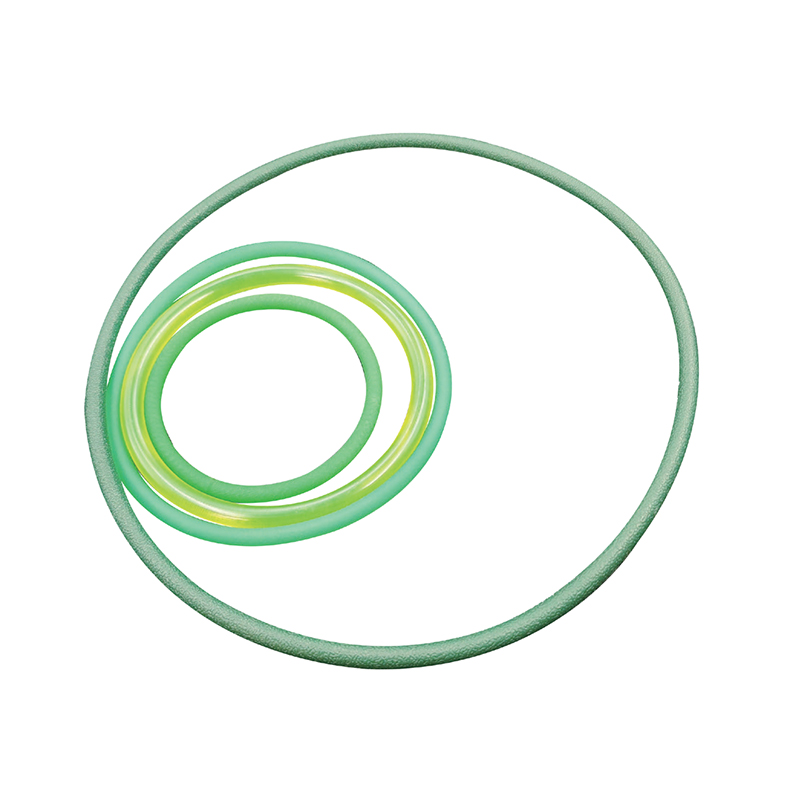
Roller O-belt
Components
Roller O-belt
Manufactured from polyurethane (PU) or other thermoplastic elastomers, it facilitates continuous power transfer from the drive shaft to the driven rollers through friction within the roller grooves. Its seamless circular structure ensures consistent tension and flexibility, making it a standard connection element in logistics automation. Technical Features and Advantages Elasticity and Tension Retention: The material features a high recovery rate, maintaining stable pre-tension over extended periods to minimize slippage during operation. Operational Stability and Low Noise: The seamless loop design eliminates vibration at connection points, maintaining low decibel levels even under high-speed rotation. Wear and Chemical Resistance: With optimized surface hardness and chemical stability, the bands resist industrial lubricants, moisture, and mild chemical exposure. Simplified Installation and Maintenance: The elastic architecture allows for rapid installation without disassembling the entire roller frame, reducing equipment downtime. Primary Application Areas Logistics Sorting Systems: Utilized in light-duty box and parcel conveying lines within e-commerce and courier distribution centers. Automated Production Lines: Suitable for unit conveying in precision industries such as electronics assembly and pharmaceutical packaging. Airport Baggage Handling: Employed in horizontal transport and divert sections of baggage processing systems. Warehousing Equipment: Acts as a critical drive link in the motorization of gravity roller conveyors.
Conveyor Accessories
Fluency Strip Series
Conveyor Accessories
Conveyor accessories are a collection of functional components designed for industrial conveyor systems, enhancing the functionality, safety, and maintainability of basic conveying equipment. This product series employs modular design principles, enabling standardized integration with mainstream conveyor equipment to meet functional expansion requirements under specific operating conditions. System Integration FeaturesModular interface designs compatible with various conveyor structures Component functions address common operational issues in conveying systems Standardized installation methods reduce system modification complexity Adaptability to special working environments, including high temperature, humidity, or dusty conditions Applied Value DemonstrationExtends maintenance cycles for core conveyor system components Improves stability and precision in material conveying processes Reduces downtime caused by equipment malfunctions Enhances safety protection levels in conveying operation areas Compatible Equipment ScopeAuxiliary systems for belt conveyors, functional modules for roller conveyor lines,配套 components for chain plate conveyors, enhancement devices for screw conveyors, and accessory requirements for various customized conveying equipment.
RN 300 F Synchronous Lifter
Synchronized Lifting Equipment Series
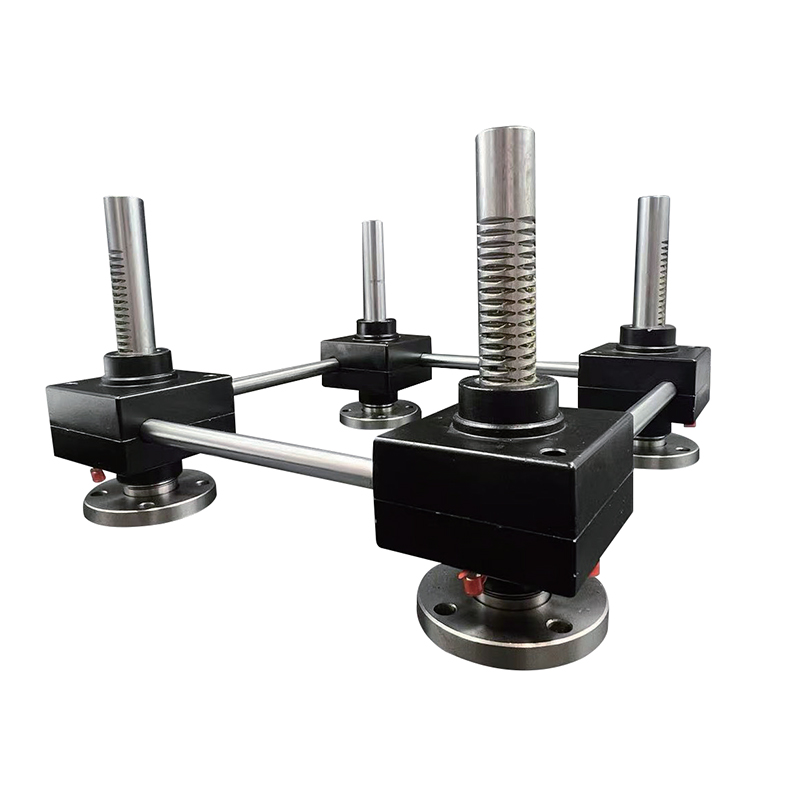
RN 300 F Synchronous Lifter
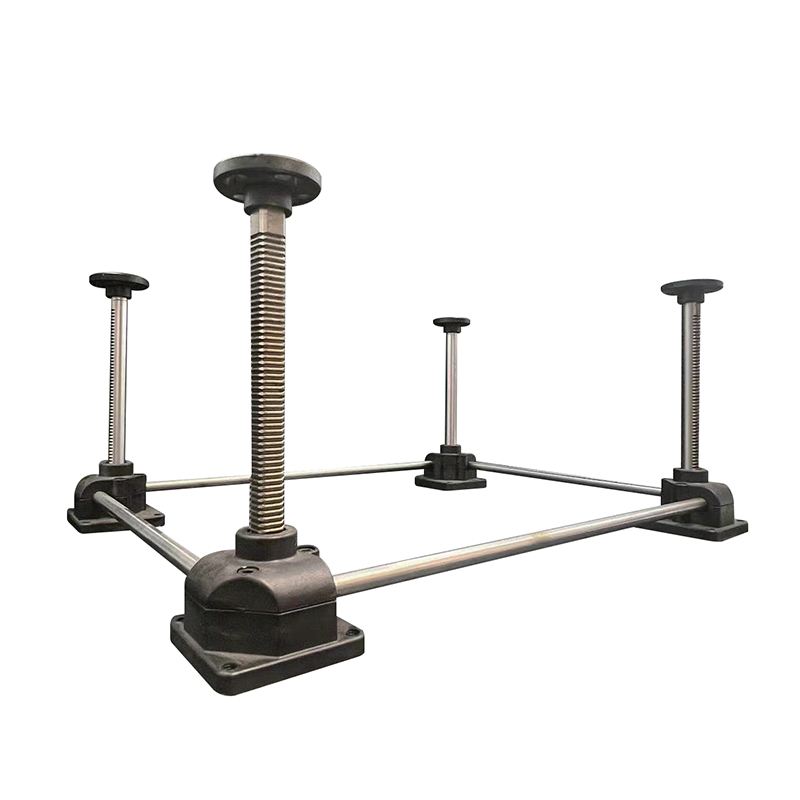
The RN 300 F Synchronous Lifter features a scissor lift structure design, utilizing mechanical linkages or gear transmission mechanisms to ensure height consistency across multiple lifting points during vertical movement. The main body is typically constructed from high-strength steel, with key friction areas undergoing precision machining and equipped with lubricated bearings or self-lubricating bushings to minimize motion resistance. The design includes limit devices and anti-fall safety mechanisms capable of locking at specific heights. The RN 300 F series possesses specific load-bearing specifications suitable for platforms of various sizes. Product AdvantagesThe core advantage of this equipment lies in its high synchronization precision, effectively addressing platform tilt issues caused by uneven force distribution during multi-point lifting and ensuring stable load handling. The mechanical synchronization structure eliminates the need for complex electrical control systems or hydraulic feedback loops, simplifying the system architecture. The structure is compact with a small footprint, maintaining good stability during the lifting process. The safety locking mechanism prevents accidental platform descent in the event of power loss or system pressure release, enhancing operational safety. Application FieldsSuitable for industrial assembly line lift tables, automated assembly equipment, material handling systems, scissor aerial work platforms, precision instrument calibration tables, and mechanical devices requiring smooth and synchronous displacement in the vertical direction.
Roller Sleeve
Roller Case Series
Roller Sleeve
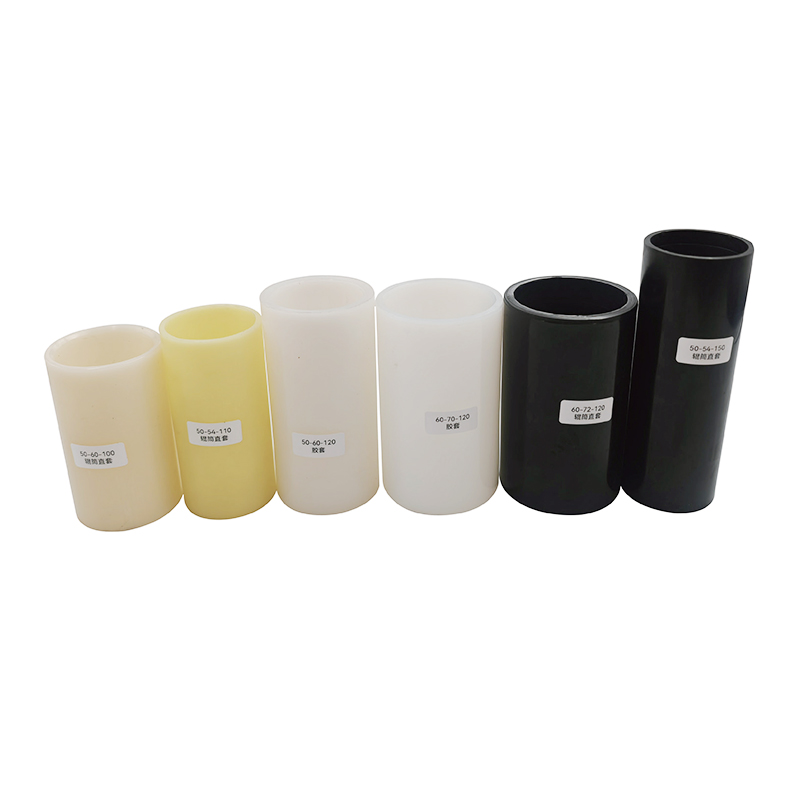
ROLLER SLEEVE is manufactured from precision tube materials, utilizing CNC machining processes to guarantee the coaxiality of the inner bore and outer circle. Surface treatment processes include mirror polishing, hard chrome plating, or ceramic coating to meet specific requirements for surface roughness and hardness. The product features uniform wall thickness and a compact structure, designed for direct mounting on roller shafts, which simplifies the assembly procedure. Product AdvantagesThe product demonstrates excellent cylindricity and straightness, contributing to operational stability during high-speed rotation. The surface treatment layer provides high wear and corrosion resistance, extending component service life in contact friction environments. Standardized dimensional design facilitates easy replacement and maintenance, reducing equipment downtime. Customizable options for various materials and surface hardness are available to meet specific industrial requirements. Application FieldsWidely used in printing machinery, packaging machinery, plastic extrusion machinery, papermaking equipment, textile machinery, and conveyor systems. Suitable for processes requiring precise guiding, conveying, calendering, or coating.
Roller Transition Wheel
Components
Roller Transition Wheel
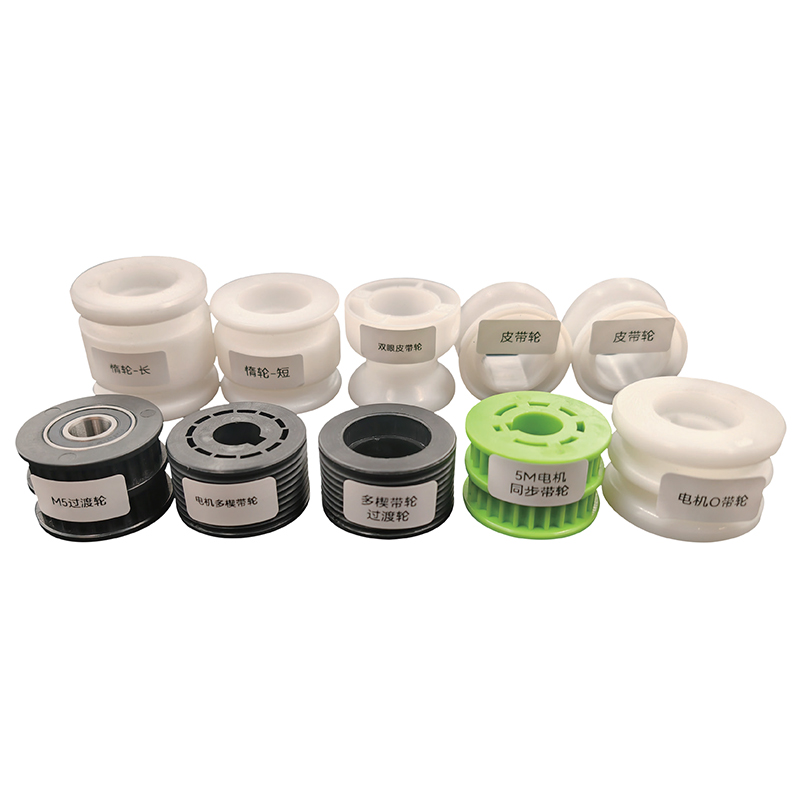
The transition wheel is used in conveyor systems to support material transfer between different conveyor sections. It is typically installed at connection points where the conveying direction changes, height differences occur, or conveyor structures transition. By providing rotational support at these points, the transition wheel helps ensure continuous material flow across conveyor interfaces. During operation, when items move from one roller section to another or enter a transition zone, the wheel serves as an intermediate support, guiding materials smoothly through the structural change without interruption. Structural and Functional Characteristics The wheel structure is designed to support material movement through transition zones Installed at junctions between conveyor rollers or sections Rotational movement helps reduce resistance during transfer Suitable for continuous conveying operations Compatible with various roller conveyor layouts Functional Benefits Maintains continuity of material flow during conveyor transitions Helps reduce irregular movement or stoppage at connection points Supports stable conveying rhythm across system nodes Allows flexible layout in systems with frequent structural changes Typical Applications Connection points between roller conveyor sections Direction-changing or curved conveyor areas Height transition zones within conveyor systems Automated production and material handling lines Logistics, packaging, and sorting conveyor equipment
RN 500 F Synchronous Lifter
Synchronized Lifting Equipment Series
RN 500 F Synchronous Lifter
The RN 500 F Synchronous Lifter is an industrial lifting device utilizing multi-actuator synchronous control technology. This product achieves positional synchronization of multiple lifting points during operation through mechanical linkage or closed-loop control systems, making it suitable for industrial applications requiring platform-level maintenance or precise cooperative lifting. Core Technical FeaturesEmploys a closed-loop synchronous control system for real-time monitoring and adjustment of each lifting point's position Mechanical structure incorporates rigid guiding components to limit lateral displacement during lifting Drive system supports multiple power configurations, including electric motor, hydraulic, or pneumatic systems The control system features a position memory function for storing multiple preset lifting heights Key Functional ValueMulti-unit synchronous control maintains the platform level during lifting operations Rigid guiding structure enhances lifting stability and off-center load resistance Multiple power configuration options adapt to different industrial installations and usage conditions Position memory function facilitates rapid positioning in repetitive lifting tasks Typical Application ScenariosAutomotive production line body positioning fixtures, lifting transfer platforms in material handling systems, synchronous lifting equipment for stage machinery, multi-point support adjustment systems for medical devices, and various industrial production lines and testing platforms requiring horizontal lifting operations.
NO.2
Who We Are
Your One-Stop Automation Line Component Partner
Huzhou Nanxun Guan's Plastic Industry Co., Ltd.
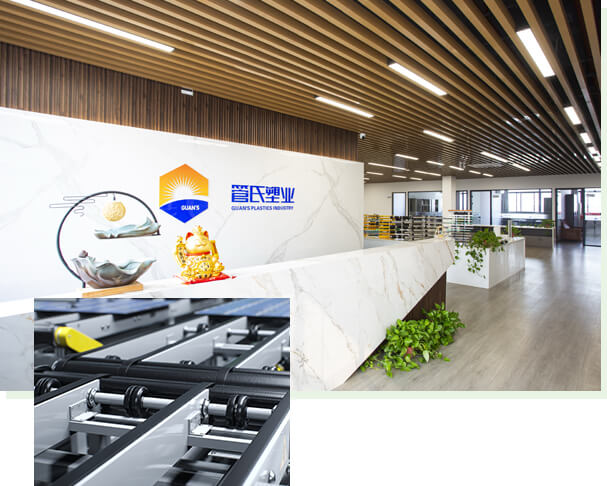
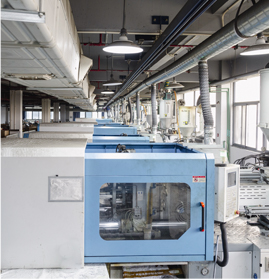
Huzhou Nanxun Guan's Plastic Industry Co., Ltd. was established in 2006, with its headquarters located in Huzhou, Zhejiang. Since its inception, the company has established three plastic product manufacturing bases and a laser cutting workshop in Zhejiang and Jiangsu provinces. We now have a large production, R&D, and operational space, with a growing team of employees. As

China Plastic Conveyor Parts Manufacturers and Conveyor Components Suppliers

, our annual production volume has reached tens of millions of pieces, making us a well-known plastic product manufacturer and service provider both domestically and internationally.

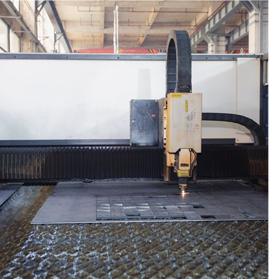
Our products and services are widely applied in various industries, including logistics, pharmaceuticals, food and beverages, warehousing, organic produce, tobacco, tire manufacturing, and airport ground services. To meet the ever-growing demands of our customers, we have also developed a laser cutting project to further enhance our production capacity and technical capabilities.

Learn More
Why Partner With Guan's Plastic?
Business Advantage.
With 20+ years in automated assembly line parts, we have 3 production bases + a laser workshop. Operating as an "Automated Parts Supermarket," we offer standard/custom plastic components—proven in production, reliable in performance. Backed by R&D and fast response, we meet diverse needs one-stop to keep your lines running efficiently.
  • Layout & Capacity: 2006-founded, 3 bases + 1 laser workshop in Zhejiang & Jiangsu, annual output of tens of millions, stable large-order delivery
  • Tech & Service: Full-process plastic production + laser cutting, customizable multi-industry solutions
  • Industry Fit: Coverage of dozens of sub-fields, industry-standard, scenario-specific products
  • Growth: 10+ years, stable team & supply chain, market-aligned iteration
  • 0+
    Year
    Industry experience
  • 0+
    Smart Facility
  • 0+
    Members
    Professional Team
  • 0+
    Industry
    Industries Served
Proven Solutions for Your Industry
Our components are proven to enhance performance in key applications where reliability is critical.
  • Special Fields
    Special Fields
    Special Fields
    • Tobacco-Specific Equipment
    • Hazardous Chemical Handling Equipment
    • Vaccine Sorting Lines
  • Industrial Manufacturing
    Industrial Manufacturing
    Industrial Manufacturing
    • New Energy Vehicles 
    • Pharmaceutical Machinery
    • Tire Production Lines
    • Piano Manufacturing Equipment
  • Logistics and Transportation
    Logistics and Transportation
    Logistics and Transportation
    • Airport Ground Support Systems
    • Intelligent Warehousing Equipment
    • Logistics and Express Sorting Lines
  • Consumer Goods
    Consumer Goods
    Consumer Goods
    • Food Production Lines
    • Organic Agricultural Product Processing Equipment
NO.3
News
  • 2026
    06-10
    What Are Industrial Conveyor Components and Why Are They Critical to Conveyor System Performance?
    Industrial conveyor components are the individual mechanical, structural, and motion-control elements that work together to transport materials efficiently throughout manufacturing plants, warehouses, packaging facilities, distribution centers, food processing lines, and automated production systems. While the conveyor system is often viewed as a single piece of equipment, its overall performance depends heavily on the quality, compatibility, and reliability of each component. From rollers and bearings to chains, sprockets, guide rails, wear strips, and drive assemblies, every component plays a specific role in maintaining smooth material flow. Even a minor failure in one component can lead to increased downtime, reduced throughput, product damage, higher maintenance costs, and safety risks. Understanding the Function of Industrial Conveyor Components Industrial conveyor components serve four primary functions within a material handling system: Supporting loads throughout transportation and processing operations. Transmitting motion and power from motors and drives to moving sections of the conveyor. Guiding and positioning products accurately along predefined paths. Reducing friction and wear to improve operational efficiency and service life. Each component must be selected according to operating conditions such as load weight, conveyor speed, environmental exposure, temperature, humidity, and maintenance requirements. Why Conveyor Components Have a Direct Impact on System Performance The performance of a conveyor system is determined not only by its design but also by the quality and suitability of its components. Properly engineered components help ensure: Consistent product flow and throughput. Reduced equipment downtime. Lower energy consumption. Improved worker safety. Extended equipment lifespan. Reduced maintenance frequency. Higher operational efficiency. Conversely, poorly matched or worn components can create excessive friction, vibration, noise, misalignment, and mechanical stress, ultimately leading to premature equipment failure. Key Categories of Industrial Conveyor Components A modern conveyor system typically consists of several major component groups: Component Category Primary Function Conveyor Rollers Support and move products or bulk materials Bearings Reduce rotational friction and support loads Chains and Sprockets Transmit power and motion Pulleys Drive and guide conveyor belts Guide Rails Maintain product positioning and alignment Wear Strips Minimize friction between moving surfaces Belts and Modular Chains Transport products through the system Support Structures Provide mechanical stability and load support The Relationship Between Component Quality and Productivity Production facilities increasingly depend on automation and continuous material flow. As conveyor operating speeds rise and production schedules become more demanding, component reliability becomes a critical factor in maintaining productivity. For example, a high-quality bearing with proper sealing can significantly reduce contamination-related failures, while precision-engineered rollers can improve tracking accuracy and decrease energy losses. Similarly, wear-resistant guide components help maintain product positioning over extended operating periods. When conveyor components are selected correctly and maintained properly, facilities can achieve higher throughput, lower operating costs, and greater overall equipment effectiveness (OEE). Critical Performance Factors When Evaluating Conveyor Components Engineers and maintenance professionals typically evaluate conveyor components based on several key performance indicators: Performance Factor Importance Load Capacity Determines ability to handle operational weight Wear Resistance Affects component lifespan and maintenance intervals Friction Coefficient Influences energy efficiency and operating smoothness Impact Resistance Protects against shock loading and sudden forces Corrosion Resistance Improves durability in wet or chemical environments Noise Reduction Enhances workplace comfort and compliance Temperature Resistance Ensures stable operation under extreme conditions Maintenance Requirements Influences operating costs and downtime How Industrial Conveyor Components Support Long-Term Cost Efficiency Although component selection is often viewed as a purchasing decision, it has a long-term impact on total cost of ownership. High-performance conveyor components typically deliver value through: Longer service intervals. Reduced replacement frequency. Lower energy consumption. Less unplanned downtime. Improved production consistency. Reduced maintenance labor requirements. In high-volume industrial environments, even small improvements in component efficiency can generate substantial operational savings over the lifetime of a conveyor system. Conclusion Industrial conveyor components are the foundation of efficient material handling systems. Every roller, bearing, chain, pulley, guide rail, and wear strip contributes directly to system reliability, productivity, safety, and operating costs. Understanding the role and performance requirements of these components allows manufacturers and facility operators to optimize conveyor performance, extend equipment life, and maximize return on investment. What Are the Main Types of Industrial Conveyor Components? Industrial conveyor systems rely on a wide range of components working together to ensure smooth, efficient, and reliable material movement. Each component performs a specific function, from supporting loads and transmitting power to guiding products and reducing friction. Understanding the main types of industrial conveyor components is essential for selecting the right configuration, improving system performance, and minimizing maintenance costs. The most common industrial conveyor components can be grouped into six major categories: conveyor rollers, conveyor belts, bearings and bearing housings, sprockets and pulleys, conveyor chains, and guiding or wear components. Conveyor Rollers Conveyor rollers are among the most visible and widely used conveyor components. They support products, reduce friction, and facilitate material transportation throughout the conveyor system. Depending on the application, rollers may be designed for carrying loads, absorbing impact, guiding products, or returning conveyor belts. Roller Type Primary Function Typical Application Carrying Roller Supports conveyed materials General material handling Return Roller Supports return side of belt Belt conveyor systems Impact Roller Absorbs loading shocks Loading and transfer points Guide Roller Maintains belt alignment Tracking control systems Key roller selection factors include load capacity, diameter, rotational speed, bearing quality, and environmental resistance. Conveyor Belts Conveyor belts form the carrying surface that transports products or bulk materials between processing stages. The belt material directly affects durability, hygiene, flexibility, chemical resistance, and operating efficiency. Belt Type Main Advantages Typical Industries Rubber Belt High durability and impact resistance Mining, bulk handling PVC Belt Cost-effective and versatile Packaging, logistics PU Belt Excellent hygiene and wear resistance Food processing Modular Plastic Belt Easy maintenance and flexibility Automation and manufacturing The choice of belt depends on factors such as product weight, conveyor speed, operating temperature, sanitation requirements, and exposure to chemicals or moisture. Bearings and Bearing Housings Bearings are critical components that enable smooth rotation while reducing friction between moving parts. They support radial and axial loads generated during conveyor operation and significantly influence equipment efficiency and service life. Bearing housings provide structural support, protection from contamination, and proper alignment of bearing assemblies. Parameter Importance Load Rating Determines carrying capacity Rotational Speed Affects operational performance Seal Design Protects against dust and moisture Lubrication Method Influences maintenance intervals Corrosion Resistance Extends lifespan in harsh environments Proper bearing selection helps reduce downtime, vibration, energy loss, and premature wear. Sprockets, Pulleys, and Drive Components Drive components transfer mechanical power from motors to conveyor belts, chains, or rollers. Their efficiency directly impacts throughput, positioning accuracy, and energy consumption. Pulleys are commonly used in belt-driven systems, while sprockets engage with conveyor chains to transmit motion. Component Function Drive Pulley Transfers power to conveyor belt Tail Pulley Provides belt return path Bend Pulley Changes belt direction Sprocket Drives conveyor chains Coupling Connects rotating shafts Important considerations include torque requirements, shaft size, alignment precision, and wear resistance. Conveyor Chains and Chain Attachments Conveyor chains are commonly used in systems requiring positive drive engagement, high load capacity, and accurate positioning. Compared with friction-driven systems, chains provide reliable power transmission under demanding operating conditions. Chain Type Characteristics Application Roller Chain High strength and efficiency General conveying Engineering Chain Heavy-duty performance Industrial processing Plastic Chain Low noise and corrosion resistance Food and packaging lines Attachment Chain Customized product handling Specialized automation systems Chain selection should consider tensile strength, wear resistance, lubrication requirements, and environmental exposure. Wear Strips and Guide Rails Wear strips and guide rails play a crucial role in controlling product movement and minimizing friction between moving components. Although often overlooked, these components significantly affect conveyor lifespan and operational efficiency. Wear strips provide low-friction sliding surfaces for chains and belts, while guide rails maintain accurate product positioning throughout transportation. Component Main Purpose Wear Strip Reduces sliding friction and wear Guide Rail Controls product direction and stability Side Guide Prevents product displacement Corner Guide Maintains smooth flow through curves Engineering plastics are frequently used for these applications because of their low friction coefficients, excellent wear resistance, and reduced maintenance requirements. How These Components Work Together A conveyor system achieves optimal performance only when all components operate as an integrated system. Rollers support loads, belts or chains transport products, bearings reduce friction, sprockets and pulleys transmit power, and guide components maintain alignment and positioning. When component specifications are properly matched, facilities can improve throughput, reduce energy consumption, minimize maintenance requirements, and extend overall equipment life. Conversely, selecting incompatible or underperforming components can create bottlenecks, accelerate wear, and increase operating costs. Conclusion The main types of industrial conveyor components include rollers, belts, bearings, sprockets, pulleys, chains, wear strips, and guide rails. Each component contributes to the efficiency, reliability, and longevity of the conveyor system. Understanding their functions and performance characteristics enables engineers and facility managers to design more reliable material handling solutions while reducing lifecycle costs. How Do Different Conveyor Components Affect System Efficiency and Reliability? The efficiency and reliability of an industrial conveyor system depend not only on its overall design but also on the performance of each individual component. Every conveyor component contributes to load handling, power transmission, motion control, product stability, and wear management. When these components are properly selected and integrated, the system can achieve higher throughput, lower energy consumption, reduced downtime, and a longer service life. Conversely, poorly matched or low-performance components can increase friction, accelerate wear, cause misalignment, and create operational bottlenecks that negatively impact productivity. Load Distribution and Structural Stability One of the most important factors influencing conveyor performance is how effectively the system distributes loads. Components such as rollers, bearings, support frames, and shafts must work together to evenly support the weight of conveyed materials. Uneven load distribution can create excessive stress concentrations, leading to premature component failure and increased maintenance costs. Load Distribution Factor Effect on Efficiency Effect on Reliability Proper Roller Spacing Improves material flow Reduces roller deformation Uniform Load Support Reduces energy loss Extends component lifespan Balanced Shaft Loading Maintains smooth operation Minimizes bearing wear Stable Frame Design Improves system accuracy Reduces vibration-related failures For heavy-duty applications, load distribution becomes increasingly critical because dynamic forces generated during operation can significantly exceed static load values. Friction Management and Energy Consumption Friction is one of the largest contributors to energy loss in conveyor systems. Bearings, rollers, wear strips, guide rails, chains, and belts all influence the amount of resistance encountered during operation. Reducing friction improves mechanical efficiency and decreases power requirements, allowing motors to operate more effectively while lowering overall operating costs. Component Role in Friction Reduction Efficiency Impact Precision Bearings Reduce rotational resistance Lower energy consumption Quality Rollers Enable smooth product movement Increase throughput Wear Strips Reduce sliding friction Extend chain and belt life Guide Rails Maintain alignment Prevent unnecessary drag Low-Friction Chains Minimize transmission losses Improve drive efficiency Even small reductions in friction can generate significant energy savings in conveyor systems operating continuously for extended periods. Component Alignment and Operational Accuracy Proper alignment is essential for maintaining stable conveyor performance. Components such as guide rollers, pulleys, sprockets, shafts, and guide rails must operate within precise tolerances to prevent tracking problems and uneven wear. Misalignment often results in: Increased vibration. Premature bearing failure. Excessive belt wear. Chain elongation. Higher energy consumption. Reduced conveying accuracy. Accurate alignment not only improves efficiency but also enhances product handling consistency in automated production environments. Power Transmission Efficiency Drive components such as motors, sprockets, pulleys, couplings, and conveyor chains determine how effectively mechanical energy is transferred throughout the system. Inefficient power transmission can result in energy loss, excessive heat generation, and accelerated component wear. Power Transmission Parameter Impact on Performance Sprocket Accuracy Ensures smooth chain engagement Pulley Balance Reduces vibration and noise Shaft Alignment Improves torque transfer Chain Condition Maintains consistent speed Coupling Precision Minimizes mechanical losses Efficient power transmission directly contributes to higher productivity and reduced operating expenses. Wear Resistance and Service Life Wear resistance is a key factor affecting conveyor reliability. Components exposed to continuous contact, abrasion, impact, or contamination must maintain their dimensional stability and mechanical properties over time. High-wear areas typically include: Conveyor chains. Sprockets. Wear strips. Rollers. Guide rails. Bearings. Materials with superior wear resistance help reduce replacement frequency and maintenance downtime while maintaining consistent conveyor performance. Wear-Related Factor Benefit to Reliability High Surface Hardness Slower material degradation Abrasion Resistance Longer service life Impact Resistance Reduced cracking and breakage Dimensional Stability Maintains alignment accuracy Noise Reduction and Workplace Performance Noise levels are increasingly important in modern industrial facilities. Excessive noise often indicates mechanical inefficiencies such as poor alignment, worn bearings, damaged chains, or inadequate lubrication. Low-noise conveyor components contribute to: Improved operator comfort. Enhanced workplace safety. Reduced vibration. Better equipment condition monitoring. Longer component lifespan. Engineering plastics and precision-machined components are frequently used to reduce operational noise while maintaining performance. Environmental Resistance and Reliability Industrial conveyor systems often operate in challenging environments involving moisture, chemicals, dust, extreme temperatures, or corrosive substances. Component material selection directly affects reliability under these conditions. Environmental Condition Required Component Property High Humidity Corrosion resistance Chemical Exposure Chemical compatibility Dusty Conditions Effective sealing systems Low Temperatures Impact toughness High Temperatures Thermal stability Components designed for the specific operating environment maintain performance consistency and reduce unexpected failures. How Component Compatibility Influences Overall System Reliability Individual component quality is important, but compatibility between components is equally critical. Bearings, rollers, chains, sprockets, guide systems, and structural elements must be designed to operate within compatible load, speed, and dimensional parameters. When components are properly matched, the system experiences: Lower mechanical stress. Improved operating efficiency. More stable product flow. Reduced maintenance requirements. Longer equipment lifespan. Higher overall equipment effectiveness (OEE). Incompatible components can create cascading failures, where excessive wear in one area leads to accelerated damage throughout the conveyor system. Conclusion Different conveyor components directly influence system efficiency and reliability through their effects on load distribution, friction reduction, power transmission, alignment accuracy, wear resistance, environmental adaptability, and component compatibility. By selecting high-quality components that are properly engineered for the application, manufacturers can maximize conveyor performance, reduce operating costs, minimize downtime, and achieve long-term operational stability. Which Materials Are Commonly Used in Industrial Conveyor Components? Material selection is one of the most important factors in the design and performance of industrial conveyor components. The material used in rollers, bearings, sprockets, guide rails, wear strips, chains, and structural parts directly affects durability, load capacity, wear resistance, corrosion resistance, operating noise, and maintenance requirements. Modern conveyor systems utilize a combination of engineering plastics, metals, and advanced composite materials to achieve the optimal balance between performance, cost, and service life. Selecting the appropriate material requires careful consideration of operating conditions, including load weight, conveyor speed, environmental exposure, temperature range, and industry-specific requirements. Why Material Selection Matters in Conveyor Systems Every conveyor component experiences mechanical stress during operation. Improper material selection can result in excessive wear, deformation, corrosion, or premature failure, while the right material can significantly improve efficiency and reduce lifecycle costs. Key benefits of proper material selection include: Extended component lifespan. Reduced maintenance frequency. Improved operational efficiency. Lower energy consumption. Enhanced corrosion resistance. Better product handling performance. Reduced downtime and replacement costs. Engineering Plastics Engineering plastics have become increasingly important in conveyor systems because they offer low friction, excellent wear resistance, corrosion resistance, and reduced operating noise. They are commonly used for guide rails, wear strips, conveyor chains, rollers, sprockets, and various motion-control components. UHMW-PE (Ultra-High Molecular Weight Polyethylene) UHMW-PE is widely used in conveyor wear components due to its exceptional abrasion resistance and extremely low coefficient of friction. Property Typical Performance Wear Resistance Excellent Friction Coefficient Very Low Chemical Resistance Excellent Impact Strength Very High Moisture Absorption Very Low Typical applications include chain guides, wear strips, side guides, and sliding surfaces. Nylon (PA) Nylon offers high mechanical strength and excellent load-bearing capabilities, making it suitable for gears, rollers, bushings, and conveyor sprockets. Property Typical Performance Mechanical Strength High Wear Resistance Very Good Load Capacity High Impact Resistance Good Moisture Absorption Moderate Nylon is often selected when strength and durability are more important than dimensional stability in humid environments. Acetal (POM) Acetal provides excellent dimensional stability, low moisture absorption, and high precision, making it ideal for components requiring tight tolerances. Property Typical Performance Dimensional Stability Excellent Friction Performance Very Good Moisture Absorption Very Low Machining Precision Excellent Wear Resistance Very Good Common applications include conveyor bearings, precision sprockets, guide components, and modular conveyor systems. Polypropylene (PP) Polypropylene is valued for its excellent chemical resistance and lightweight characteristics. Property Typical Performance Chemical Resistance Excellent Weight Very Light Corrosion Resistance Excellent Cost Efficiency High Mechanical Strength Moderate It is commonly used in food processing, chemical handling, and lightweight conveyor applications. Comparison of Common Engineering Plastics Property UHMW-PE Nylon (PA) Acetal (POM) Polypropylene (PP) Wear Resistance Excellent Very Good Very Good Good Mechanical Strength Moderate High High Moderate Dimensional Stability Good Good Excellent Good Chemical Resistance Excellent Good Good Excellent Impact Resistance Excellent Good Good Moderate Metal Components Metal materials remain essential in conveyor systems due to their superior strength, rigidity, and ability to withstand heavy loads. Metals are commonly used for shafts, frames, bearings, pulleys, rollers, chains, and structural supports. Carbon Steel Carbon steel is widely used because it offers high strength and cost-effectiveness for general industrial applications. High load-bearing capacity. Excellent structural strength. Good machinability. Economical for large-scale systems. However, carbon steel may require protective coatings in corrosive environments. Stainless Steel Stainless steel provides superior corrosion resistance and hygiene, making it suitable for demanding environments. Excellent corrosion resistance. High strength. Easy cleaning and sanitation. Long service life. It is frequently used in food processing, pharmaceutical production, and wet operating environments. Aluminum Alloys Aluminum alloys offer an excellent balance between strength and lightweight construction. Low density. Good corrosion resistance. Easy fabrication. Reduced overall conveyor weight. Aluminum is commonly used in conveyor frames, support structures, and automation systems where weight reduction is beneficial. Comparison of Common Metal Materials Property Carbon Steel Stainless Steel Aluminum Alloy Mechanical Strength High High Moderate Corrosion Resistance Moderate Excellent Good Weight Heavy Heavy Light Maintenance Requirement Moderate Low Low Cost Efficiency High Moderate Moderate Composite and Specialty Materials As conveyor systems become more specialized, composite and advanced materials are increasingly used to meet unique performance requirements. Fiber-Reinforced Composites These materials combine lightweight characteristics with enhanced strength and stiffness. They are often used in applications where weight reduction and structural performance are both critical. High-Temperature Materials Certain conveyor environments require materials capable of maintaining performance under elevated temperatures. These materials are selected for heat resistance, dimensional stability, and long-term durability. Chemical-Resistant Materials Chemical processing facilities often require components capable of resisting acids, alkalis, solvents, and cleaning agents without degradation. Food-Grade Materials Food-contact conveyor systems typically utilize materials that support hygienic operation, easy cleaning, and compliance with food safety standards. Factors to Consider When Selecting Conveyor Component Materials Material selection should be based on a complete evaluation of operating conditions and performance objectives. Selection Factor Importance Load Capacity Determines structural requirements Operating Speed Affects wear and friction performance Temperature Range Influences material stability Chemical Exposure Determines corrosion resistance needs Moisture Conditions Affects dimensional stability Maintenance Goals Impacts lifecycle costs Industry Standards Ensures regulatory compliance Conclusion Industrial conveyor components are manufactured from a variety of materials, including engineering plastics, metals, and advanced composites. Engineering plastics provide low friction, corrosion resistance, and noise reduction, while metals deliver superior strength and load-bearing capability. Composite and specialty materials address demanding requirements such as extreme temperatures, chemical exposure, and weight reduction. By carefully matching material properties to operating conditions, engineers can maximize conveyor efficiency, reliability, and service life while minimizing maintenance and operational costs. How Can You Select the Right Industrial Conveyor Components for Different Industries? Selecting the right industrial conveyor components is a critical step in designing a reliable, efficient, and cost-effective material handling system. Different industries operate under unique conditions involving load characteristics, production speeds, environmental factors, hygiene requirements, and maintenance expectations. As a result, conveyor components that perform well in one industry may not be suitable for another. A successful component selection process requires a thorough understanding of operational demands, material properties, equipment compatibility, and long-term performance objectives. By matching component specifications to industry-specific requirements, businesses can improve productivity, reduce downtime, and lower total ownership costs. Key Factors to Evaluate Before Selecting Conveyor Components Regardless of industry, several fundamental criteria should be evaluated during the selection process. Selection Factor Why It Matters Load Capacity Determines whether components can safely support operational loads Operating Speed Affects wear rates, friction, and power transmission requirements Environmental Conditions Influences material and corrosion resistance requirements Maintenance Accessibility Impacts downtime and servicing costs Temperature Range Determines material stability and durability Product Characteristics Affects conveyor design and handling requirements Industry Compliance Ensures adherence to operational and safety standards Once these factors are defined, component selection can be optimized for the specific industry application. Manufacturing and Assembly Lines Manufacturing environments typically require precise product positioning, continuous operation, and high throughput. Conveyor components must support repetitive movement while maintaining dimensional accuracy and reliability. Recommended characteristics include: High-precision rollers for smooth transportation. Wear-resistant guide rails for accurate product tracking. Low-maintenance bearings to reduce downtime. Durable sprockets and chains for continuous operation. Components capable of handling variable production speeds. Requirement Recommended Component Feature High Throughput Low-friction rollers and bearings Precision Positioning Accurate guide systems Continuous Operation Long-life wear components Automation Integration Dimensionally stable materials Logistics and Warehousing Facilities Distribution centers and warehouses often handle large volumes of packages with varying sizes and weights. Conveyor systems must provide reliable transportation while minimizing maintenance interruptions. Key component priorities include: High-capacity rollers. Durable bearings with effective sealing. Impact-resistant transfer components. Energy-efficient drive systems. Low-noise operation for large facilities. Operational Challenge Component Solution High Package Volume Heavy-duty rollers Frequent Start-Stop Cycles Reliable drive components Long Operating Hours Low-maintenance bearings Variable Load Sizes Flexible conveyor configurations Food and Beverage Processing Food processing facilities require conveyor components that support hygiene, sanitation, and resistance to cleaning chemicals. Materials must be easy to clean and resistant to corrosion and moisture. Critical selection criteria include: Corrosion-resistant materials. Smooth, easy-to-clean surfaces. Moisture-resistant components. Low-contamination designs. Chemical-resistant guide and wear components. Requirement Preferred Feature Frequent Washdowns Corrosion-resistant materials Food Safety Hygienic component design Chemical Cleaning Chemical-resistant plastics Moist Environments Low moisture absorption materials Packaging Equipment Packaging systems demand high speed, accurate product positioning, and reliable synchronization between conveyor sections and automated machinery. Suitable components should provide: High-speed performance. Precise product guidance. Low vibration operation. Minimal maintenance requirements. Consistent tracking accuracy. Packaging Requirement Recommended Component Characteristic High Speed Operation Precision bearings and rollers Product Stability Effective guide systems Machine Synchronization Accurate drive components Reduced Downtime Wear-resistant materials Pharmaceutical and Cleanroom Applications Pharmaceutical production environments require exceptional cleanliness, precision, and contamination control. Conveyor components must support stringent hygiene standards while maintaining operational reliability. Important component characteristics include: Non-contaminating materials. Smooth and cleanable surfaces. Corrosion resistance. Dimensional stability. Low particle generation. Requirement Selection Priority Cleanroom Compatibility Low-particle materials Precision Handling Dimensionally stable components Frequent Sanitization Chemical-resistant materials Regulatory Compliance Hygienic component design Mining and Heavy-Duty Material Handling Mining, aggregate processing, and bulk material handling systems operate under some of the most demanding conditions. Conveyor components must withstand heavy loads, abrasive materials, impact forces, and harsh environmental conditions. Key requirements include: Maximum wear resistance. High load-bearing capability. Impact-resistant rollers. Heavy-duty chains and sprockets. Dust-resistant bearing systems. Heavy-Duty Challenge Recommended Component Feature Abrasive Materials High wear resistance Heavy Loads Reinforced structural components Shock Loading Impact-resistant rollers Dust Exposure Sealed bearing systems Continuous Operation Long-service-life components Industry Comparison: Conveyor Component Priorities Industry Primary Priority Key Component Focus Manufacturing Precision and productivity Rollers, guide rails, bearings Warehousing Throughput and reliability Rollers, drives, bearings Food Processing Hygiene and corrosion resistance Chains, guides, wear strips Packaging Speed and positioning accuracy Bearings, rollers, guides Pharmaceutical Cleanliness and precision Low-particle components Mining Durability and load capacity Heavy-duty rollers and chains Common Selection Mistakes to Avoid Even well-designed conveyor systems can experience performance issues if component selection is based solely on initial cost rather than long-term operational requirements. Underestimating actual load conditions. Ignoring environmental exposure factors. Selecting materials without considering wear resistance. Overlooking maintenance accessibility. Failing to match component specifications across the system. Using components not designed for industry-specific requirements. A lifecycle-focused selection strategy typically delivers better performance and lower total ownership costs over time. Conclusion Selecting the right industrial conveyor components requires a detailed understanding of industry-specific operating conditions, performance objectives, and environmental challenges. Manufacturing facilities prioritize precision, warehouses focus on throughput, food processing emphasizes hygiene, pharmaceutical operations require contamination control, and mining applications demand maximum durability. By carefully evaluating load capacity, environmental conditions, maintenance requirements, and material properties, businesses can build conveyor systems that achieve superior efficiency, reliability, and long-term value.


    View Detials What Are Industrial Conveyor Components and Why Are They Critical to Conveyor System Performance?
  • 2026
    06-10
    Conveyor Roller Fittings: Types, Materials & Selection Guide
    What Conveyor Roller Fittings Actually Include Conveyor roller fittings is a broad category that covers every component used to mount, connect, retain, and adjust rollers within a conveyor frame. The term encompasses bearing housings, axle end fittings, spring-loaded snap-in brackets, fixed side brackets, hex-end and round-end axle inserts, and the associated fasteners that secure the roller assembly to the frame side member. The confusion around the term arises because different manufacturers and industries use it inconsistently — some apply it only to the end-mount hardware, others extend it to include the internal bearing insert and seal assembly within the roller tube itself. For procurement purposes, the safest approach is to specify conveyor roller fittings by function: what load each fitting carries, what adjustment it enables, and what interface it creates between the roller and the frame. The functional categories most relevant to system selection and replacement planning are axle retention fittings, bearing end caps, frame-side mounting brackets, and tensioning or positional adjustment fittings. Each has its own dimensional standards, material requirements, and wear characteristics. Axle End Fittings: Types, Load Ratings, and Dimensional Standards The axle end fitting is the component that transfers the roller's radial load into the conveyor frame. Its geometry — hex, round, square, or splined — must match the frame slot or bracket bore exactly, because any play at this interface introduces a rocking motion that generates fretting wear on the frame side member and progressive axle loosening over operational cycles. The most widely used axle end fitting types across standard conveyor applications: Spring-loaded pin fittings: Used in gravity and light-duty powered conveyors. The spring mechanism allows tool-free roller removal by compressing the pin against the frame slot, making them the preferred choice in applications with frequent roller replacement or format changeover. Load capacity is generally limited to 80–120 kg per roller depending on pin diameter and spring specification. Hex-end fittings: The dominant standard in medium and heavy-duty roller conveyors. The hexagonal profile prevents axle rotation within the frame slot, eliminating the wear mode that affects round-end fittings under torque. Hex flat sizes of 11 mm and 17 mm cover the majority of standard roller diameters from 50 mm to 89 mm tube OD. Threaded end fittings: Applied where the roller must be positionally locked along the frame slot axis — particularly in accumulation conveyor zones where rollers are individually adjusted to set zone boundaries. The threaded fitting engages a captive nut in the frame channel and allows axial position adjustment in increments as fine as 0.5 mm per fastener turn. Grooved or circlip-retained fittings: Used in high-speed sortation and transfer applications where impact loads at the roller entry point could otherwise displace a spring-retained axle. The circlip or external groove retainer provides a positive mechanical lock that resists axial pull-out forces up to the rated shear strength of the retaining ring material. Dimensional standards for axle end fittings are not globally unified, which creates sourcing complexity when replacing rollers on systems built to European, American, or Asian dimensional conventions. The ISO 1537 series provides guidance on roller shaft end dimensions for belt conveyors, but many gravity and chain-driven roller conveyors follow manufacturer-proprietary dimensions that require direct cross-referencing against the installed frame slot geometry before placing replacement orders. Bearing End Caps and Seals: Material Selection and Environmental Compatibility The bearing end cap and its integrated or separate seal element are the fittings that determine how long the roller bearing survives in its operating environment. An end cap that allows water, dust, or chemical ingress to reach the bearing raceway will cause bearing failure regardless of the bearing quality — the fitting, not the bearing, is the governing component for service life in contaminated environments. End Cap / Seal Type IP Rating Achievable Best-Fit Environment Limitation Open labyrinth cap IP40 Dry warehousing, logistics No liquid ingress protection Lip seal cap (NBR) IP54–IP65 Food processing, washdown zones NBR degrades in ozone-rich environments Lip seal cap (FKM/Viton) IP65–IP67 Chemical exposure, pharmaceutical Higher cost; not required for standard use Double-labyrinth sealed cap IP55 Dusty environments, tobacco, tire mfg Not suitable for full water immersion IP ratings and environment compatibility for common conveyor roller bearing end cap and seal fitting types. In food and pharmaceutical applications, the end cap material must also be evaluated for chemical compatibility with the cleaning agents used during washdown cycles. Standard polypropylene and acetal end caps are compatible with most alkaline detergents (pH up to 12) and quaternary ammonium sanitizers but can craze or swell with sustained exposure to chlorinated solvents or peracetic acid above 2,000 ppm. Specifying FDA-compliant end cap materials and confirming chemical compatibility with the facility's actual cleaning protocol — not just a generic washdown resistance claim — is a necessary step for any food-contact conveyor installation. Frame-Side Mounting Brackets and Positional Adjustment Fittings Frame-side mounting brackets are the interface fittings between the roller axle and the conveyor side frame, and they carry both the static weight load and the dynamic impact load generated when products drop onto or accelerate against the roller surface. A bracket dimensioned only to static load without impact safety factor will survive acceptance testing but show progressive fastener loosening or bracket cracking in the first months of operation in any application involving product induction from an elevated pick-and-place or a high-speed merge zone. Practical specification considerations for mounting bracket and adjustment fittings: Bracket foot geometry and frame engagement: Brackets with a foot geometry that positively locates into the frame profile slot — through a tab, a shoulder, or a captive nut feature — resist lateral displacement under side loads without relying solely on fastener friction. This is particularly relevant in systems using T-slot aluminum or polymer frame profiles, where the slot width tolerance allows enough bracket foot movement to misalign the roller axis from the designed perpendicular orientation if the foot geometry does not constrain the degree of freedom. Adjustable bracket travel range: In accumulation conveyor layouts where zone length is defined by roller spacing, adjustable mounting brackets with a ±15 mm longitudinal travel range allow zone length to be set during commissioning without cutting or repositioning the frame profile. This flexibility reduces installation time on multi-zone systems and allows zone boundary adjustment if product size ranges change after initial commissioning. Material selection for bracket fittings in regulated environments: Glass-fiber-reinforced polyamide (PA-GF30) provides the stiffness-to-weight ratio needed for heavily loaded brackets while meeting the non-metallic contamination requirements of food and pharmaceutical line audits. HDPE brackets offer greater chemical resistance at lower stiffness — appropriate for lightly loaded applications in aggressive chemical environments but unsuitable for mounting heavy rollers across spans exceeding 600 mm without additional cross-support. Replacement frequency planning: Bracket fittings in high-impact zones — end-of-line stop sections, merge induction points, and divert entry rollers — wear at two to four times the rate of brackets in straight-run sections carrying the same product. Maintaining a separate inventory count for high-impact zone brackets and scheduling their replacement at half the interval of standard brackets eliminates the reactive procurement events that disrupt planned maintenance budgets in high-utilization facilities.
    View Detials Conveyor Roller Fittings: Types, Materials & Selection Guide
  • 2026
    06-10
    Plastic Omni Wheel: Rollet Design, Array Configs & Material Selection
    What Makes a Plastic Omni Wheel Different From a Standard Conveyor Wheel A plastic omni wheel — also referred to as a multidirectional wheel or omnidirectional transfer wheel — is distinguished from a standard conveyor roller or caster by its ability to allow free passive movement in a direction perpendicular to its driven axis. The wheel achieves this through a ring of smaller rollets (barrel-shaped sub-rollers) mounted around the circumference of the main wheel body, oriented at 90° to the primary rolling direction. When the wheel is driven forward, it conveys load in the drive direction. When an external lateral force is applied — from a divert arm, a transfer belt, or another driven omni wheel — the rollets rotate freely, allowing the load to slide sideways without resistance. The plastic construction of the wheel body and rollets is what differentiates this category from older steel or aluminum omni wheel designs. Engineering polymers — typically polypropylene, nylon, or acetal — reduce the overall wheel weight by 40–60% compared to metal equivalents, lower the noise level during operation, eliminate corrosion as a maintenance concern, and reduce the cost of the component to a level that makes large-array installations economically practical. The trade-off is load capacity: plastic omni wheels are generally rated for individual loads between 5 kg and 80 kg per wheel depending on wheel diameter and rollet configuration, compared to several hundred kilograms for heavy-duty metal designs. For the vast majority of parcel logistics, e-commerce fulfillment, food and beverage, and pharmaceutical conveyor applications, this load range is entirely adequate. Rollet Design and Its Effect on Transfer Smoothness and Load Contact The rollet — the small sub-roller that enables lateral free movement — is the most performance-sensitive component in a plastic omni wheel. Its diameter, length, crown profile, material hardness, and bearing type collectively determine the transfer smoothness, the effective load contact area, and the noise level of the wheel in operation. Choosing an omni wheel without evaluating the rollet specification is equivalent to choosing a conveyor belt without specifying the surface texture. Key rollet design parameters and their practical consequences: Rollet count per wheel: A higher rollet count reduces the step height between adjacent rollets as a load transitions from one rollet to the next. Wheels with 8–10 rollets per circumference are standard for general logistics; wheels with 12–16 rollets are used in precision transfer applications — pharmaceutical packaging lines, for instance — where a smooth, vibration-free transfer surface is necessary to prevent product tipping or label distortion during lateral movement. Rollet crown profile: A barrel-crowned rollet maintains a consistent contact patch width regardless of the load approach angle, distributing load across a defined length of the rollet rather than concentrating it at the rollet tip. Cylindrical rollets with no crown are less expensive to produce but create edge-loading conditions at oblique contact angles that accelerate rollet bearing wear and produce audible click noise as each rollet engages under load. Rollet bearing type: Plastic omni wheels use either plain bore (friction) rollets or ball-bearing-supported rollets. Plain bore rollets are adequate for light loads (under 15 kg per wheel) and low-speed applications. Ball-bearing rollets are necessary above this threshold to prevent rollet drag that creates a frictional resistance to lateral movement and degrades the angular accuracy of the transfer direction. Rollet material hardness: Harder rollet materials (Shore D 70–80, typical for acetal or PA) provide better wear resistance under abrasive product bases such as corrugated cardboard. Softer rollet compounds (Shore A 80–95 polyurethane overmolding) are used in noise-sensitive environments or where the product base is fragile — glass bottles, medical device trays — and requires a compliant contact surface to prevent marking or impact damage during lateral transfer. Array Configurations: Driven, Passive, and Mixed Layouts Plastic omni wheels deliver their full functional benefit only when arranged in a deliberate array configuration that matches the intended load routing task. A single omni wheel produces no net directional change — it is the geometric and rotational relationship between multiple wheels in the array that creates controlled multidirectional movement. Array Configuration Typical Layout Transfer Angle Range Primary Application 90° driven array Two drive rows at 90° 0°, 90°, 45° diagonal Right-angle divert stations 45° dual-drive array Two drive rows at ±45° 0°–360° (any direction) Omni-sortation tables Passive ball-transfer table Grid of passive omni wheels Manual / gravity-driven Packing stations, palletizing Mixed active/passive array Driven wheels + passive infeed Fixed transfer angle Merge and accumulation zones Common plastic omni wheel array configurations and their transfer angle capabilities and primary conveyor applications. The 45° dual-drive array is the most versatile configuration and the basis for most modern omni-sortation tables used in e-commerce fulfillment centers. By independently controlling the speed of two motor-driven wheel rows oriented at ±45° to the conveyor centerline, the array can steer a load to any heading between 0° and 360° without mechanical divert arms, reducing the hardware complexity and maintenance requirements of high-throughput sortation compared to traditional belt-divert or tilt-tray alternatives. Wheel pitch within the array — the center-to-center spacing between adjacent wheels — must be set below half the minimum product footprint dimension to ensure that every load is simultaneously in contact with at least two wheels in each drive direction at all times. Material and Regulatory Considerations for Industry-Specific Applications The polymer composition of a plastic omni wheel — both the main wheel body and the rollets — determines its suitability for the chemical, temperature, and regulatory environment of the intended application. General-purpose polypropylene wheels adequate for dry logistics warehousing are not appropriate for food processing washdown zones or pharmaceutical clean rooms without explicit material qualification. Industry-specific material requirements for plastic omni wheel selection: Food and beverage: Wheel body and rollet materials must comply with FDA 21 CFR or EU Regulation 10/2011 for food-contact plastics. Acetal (POM) and food-grade polypropylene are the most common compliant materials. The wheel design must also eliminate horizontal surfaces that accumulate food debris — a requirement that favors open-spoke wheel body geometry over solid disc designs in direct-contact zones. Pharmaceutical and clean room: Non-particle-generating materials are required wherever product contamination risk exists. UHMW-PE and FDA-grade acetal generate significantly less wear debris than standard engineering polymers at equivalent loads, making them the preferred choices for clean room omni wheel installations. Wheels should also be validated for compatibility with HPV sterilization and IPA cleaning cycles without surface degradation. Cold chain and refrigerated storage: Standard polypropylene retains adequate impact resistance down to approximately −10°C. Below this threshold, impact-modified PP copolymer or HDPE grades with confirmed low-temperature Charpy impact values should be specified to prevent brittle fracture of the wheel body or rollet housing under the inertial loads of cold-environment operation. Antistatic requirements: In tobacco processing, electronics distribution, and explosive atmosphere zones, standard polymer omni wheels accumulate electrostatic charge that can reach discharge potentials sufficient to trigger sensor false-reads or — in classified hazardous areas — ignition events. Carbon-loaded antistatic polymer formulations with surface resistivity between 10⁵ and 10⁹ Ω/sq dissipate charge continuously without requiring periodic grounding maintenance. When evaluating suppliers for plastic omni wheels in regulated industries, requesting material compliance certificates alongside dimensional drawings provides the documentation basis for qualification records and regulatory audits. A supplier that can provide batch-level material traceability — confirming the resin grade and any additives used in a specific production run — offers a measurably lower compliance risk than one supplying only generic product data sheets.
    View Detials Plastic Omni Wheel: Rollet Design, Array Configs & Material Selection
  • 2025
    12-26
    The market for automated production line components continues to expand, with diversified transformation leading the industry's development.
    Industry reports indicate that the automated production line parts market is maintaining steady growth. The industry's focus is gradually shifting from scale expansion to high-quality development, with various parts types possessing core advantages emerging as key drivers of progress, leading the industry into a new stage of development. Key Content: Industry analysis shows that the automated production line parts market has maintained steady growth for several consecutive years. The core drivers of this growth are threefold: first, the rapid development of various emerging manufacturing industries, leading to a continuous increase in demand for related parts; second, the widespread application of intelligent technologies, driving the upgrading of parts products towards intelligence and expanding market space; and third, the continuous development and strengthening of the domestic parts industry, with its core competitiveness continuously enhanced, gradually breaking the pattern of dependence on foreign suppliers. Currently, the market structure shows significant differentiation. Customized parts, with their strong adaptability and exclusive services, have significantly higher profitability than standard parts, occupying a dominant market position. Simultaneously, guided by the concept of green development, the industry's low-carbon transformation is accelerating, the application scope of environmentally friendly parts products is continuously expanding, and some leading companies have achieved energy-saving and emission-reduction development goals through process upgrades. In the future, regional market development will be more balanced, the potential of each regional market will be gradually released, and a good pattern of multi-polar coordinated growth will be formed.
    View Detials The market for automated production line components continues to expand, with diversified transformation leading the industry's development.
NO.4
Our Partners
  • Huzhou Nanxun Guan's Plastic Industry Co., Ltd.
  • Huzhou Nanxun Guan's Plastic Industry Co., Ltd.
  • Huzhou Nanxun Guan's Plastic Industry Co., Ltd.
  • Huzhou Nanxun Guan's Plastic Industry Co., Ltd.
  • Huzhou Nanxun Guan's Plastic Industry Co., Ltd.
  • Huzhou Nanxun Guan's Plastic Industry Co., Ltd.
  • Huzhou Nanxun Guan's Plastic Industry Co., Ltd.
  • Huzhou Nanxun Guan's Plastic Industry Co., Ltd.
  • Huzhou Nanxun Guan's Plastic Industry Co., Ltd.
  • Huzhou Nanxun Guan's Plastic Industry Co., Ltd.
  • Huzhou Nanxun Guan's Plastic Industry Co., Ltd.
  • Huzhou Nanxun Guan's Plastic Industry Co., Ltd.
  • Huzhou Nanxun Guan's Plastic Industry Co., Ltd.
  • Huzhou Nanxun Guan's Plastic Industry Co., Ltd.
  • Huzhou Nanxun Guan's Plastic Industry Co., Ltd.
  • Huzhou Nanxun Guan's Plastic Industry Co., Ltd.
  • Huzhou Nanxun Guan's Plastic Industry Co., Ltd.
  • Huzhou Nanxun Guan's Plastic Industry Co., Ltd.
  • Huzhou Nanxun Guan's Plastic Industry Co., Ltd.
Contact Us Now
We are eager to help find the right solution for your product handling needs.