
 English
 中文简体
中文简体 русский
 Español
The conveyor sealing plate is a side enclosure component designed for conveyor e...

Industry News
PVC vs Steel Conveyor Rollers: Material Selection Guide
Author: admin / 2026-07-28
Content
- 1 PVC Conveyor Roller vs Steel Conveyor Roller
- 2 Plastic vs Metal Conveyor Rollers Beyond PVC
- 3 Conveyor Roller Material Selection Guide
- 4 Conveyor Rollers Across Material Handling, Packaging, and Warehouse Applications
- 5 Lightweight Conveyor Rollers for Industrial Applications
- 6 Conveyor Roller Specifications and Custom Roller Tubes
PVC Conveyor Roller vs Steel Conveyor Roller
The choice between PVC and steel conveyor rollers comes down to a trade-off between load capacity and environmental resistance. Steel rollers carry substantially higher loads per roller and tolerate higher operating temperatures, while PVC rollers resist corrosion, run quieter, and weigh less — advantages that matter more in specific operating environments than raw carrying capacity does.
Steel roller tubes, particularly galvanized or stainless variants, are built to handle heavy, dense loads such as palletized goods, metal parts, or bulk materials moving through distribution centers and manufacturing lines. Their rigidity under load means less deflection over long spans, which keeps the conveyor surface flatter and reduces the risk of items catching or shifting during transport. The trade-off is weight — steel rollers add significant mass to the conveyor frame, increase motor load in powered sections, and are vulnerable to rust in humid, washdown, or chemically exposed environments unless specifically treated or coated.
PVC rollers close that gap in a different direction. Because PVC does not corrode, it holds up in wet processing areas, cold storage, and washdown lines without the coating maintenance steel requires. It also dampens vibration and impact noise more effectively than bare metal, which matters on high-speed sorting lines or in facilities where operator noise exposure is a concern. The trade-off runs the other way: PVC has a lower maximum load rating and a lower continuous operating temperature ceiling, generally limiting it to light and medium-duty applications rather than heavy industrial loads.
| Factor | PVC Roller | Steel Roller |
|---|---|---|
| Load capacity | Light to medium duty | Medium to heavy duty |
| Corrosion resistance | Excellent, unaffected by moisture | Requires galvanizing or coating |
| Weight | Significantly lighter | Heavier, adds to frame and motor load |
| Noise level | Lower, dampens vibration | Higher, especially at speed |
| Operating temperature | Lower ceiling | Higher tolerance |
Plastic vs Metal Conveyor Rollers Beyond PVC
PVC is only one option within the broader plastic roller category, and the distinction between plastic and metal rollers extends past any single material comparison. Other plastic roller tubes — including polypropylene (PP), high-density polyethylene (HDPE), and glass-reinforced nylon — offer their own balance of chemical resistance, impact strength, and cost, and are sometimes selected over PVC for specific chemical exposure or higher-temperature requirements.
As a general rule, plastic rollers as a category share PVC's core advantages over metal: lighter weight, no corrosion, and quieter operation, but at a lower ceiling for load and heat. Metal rollers, whether mild steel, galvanized steel, stainless steel, or aluminum, share the opposite profile — higher load and temperature tolerance, at the cost of added weight and, for uncoated steel, vulnerability to corrosion. Aluminum splits the difference somewhat, offering corrosion resistance close to stainless steel with weight closer to plastic, though at a materially higher cost per roller than either PVC or standard steel.
Conveyor Roller Material Selection Guide
Selecting conveyor roller material for a specific conveyor system starts with three questions: what is the maximum load per roller, what environmental conditions will the rollers operate under, and what noise or hygiene constraints apply to the facility. Working through these in order avoids the common mistake of choosing a material based on unit cost alone, only to face early roller failure or excessive maintenance once the line is running.
- Calculate load per roller, not just total conveyor load — divide the heaviest expected item weight by the number of rollers actually supporting it at any one time, then compare against each material's rated capacity with a safety margin
- Assess the operating environment — washdown, humidity, chemical exposure, and temperature range all narrow the field before load capacity is even considered
- Factor in noise and vibration requirements, particularly for high-speed sorting or facilities with strict workplace noise limits
- Consider hygiene and cleaning requirements in food, pharmaceutical, or cosmetics production, where smooth, non-porous, corrosion-free surfaces are often mandated
- Weigh total cost of ownership, not just unit price — a cheaper roller that corrodes or wears out in a harsh environment can cost more in downtime and replacement over a conveyor's service life
In practice, most conveyor systems end up using more than one roller material across different sections — steel or galvanized rollers on heavy load-bearing spans, PVC or other plastics on lighter, wet, or noise-sensitive sections, and stainless steel isolated to points of direct hygiene concern. Treating material selection as a per-section decision rather than a single system-wide choice usually produces a more cost-effective and durable conveyor overall.
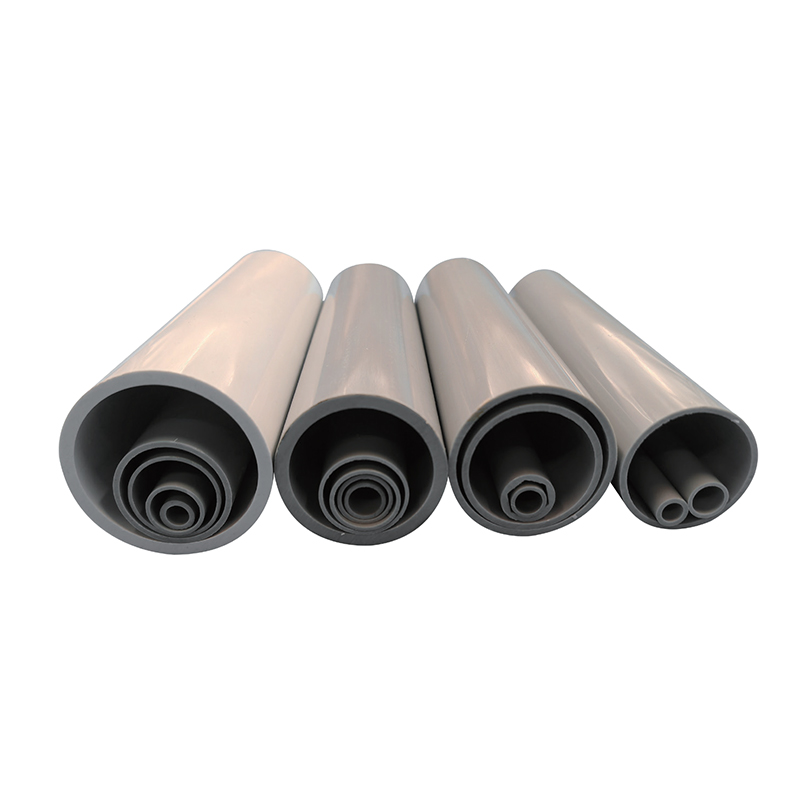
Conveyor Rollers Across Material Handling, Packaging, and Warehouse Applications
Material handling systems use conveyor rollers across a wide span of duty levels, and the right roller specification differs meaningfully between a packaging line moving cartons and a warehouse system moving palletized freight. Packaging lines typically run lighter, more uniform loads at higher speeds, favoring smaller-diameter PVC or plastic rollers that keep noise down and reduce wear on frequently indexed sections.
Warehouse and distribution conveyors, by contrast, often carry heavier and less uniform loads — mixed cartons, totes, or pallets — over longer runs, which pushes specification toward larger-diameter steel or galvanized rollers with heavier-duty bearings capable of handling repeated shock loading at pickup and transfer points. Between these two extremes sit general material handling systems in manufacturing plants, where roller specification is usually driven by the heaviest single component moving through the line rather than an average load figure.
- Packaging lines: smaller-diameter PVC or plastic rollers, prioritizing low noise and consistent light-load performance at high line speed
- Warehouse and distribution conveyors: larger-diameter steel or galvanized rollers, prioritizing load capacity and shock resistance at transfer points
- General manufacturing material handling: mixed roller specification driven by the heaviest individual component on the line
Lightweight Conveyor Rollers for Industrial Applications
Lightweight rollers matter beyond simple ease of handling during installation — reducing roller mass directly reduces the rotational inertia the drive system has to overcome at startup, which lowers motor sizing requirements and cuts energy consumption on long powered conveyor lines with many driven rollers. PVC and other plastic roller tubes offer a straightforward way to reduce this inertia compared to equivalent steel rollers, particularly on lines with frequent start-stop cycling rather than continuous run.
This weight advantage compounds across a long conveyor: a system with several hundred rollers converted from steel to PVC where load ratings allow can meaningfully reduce total conveyor frame weight, easing structural support requirements and, in facilities with elevated or mezzanine-mounted conveyor sections, reducing the load the building structure itself needs to carry.
Conveyor Roller Specifications and Custom Roller Tubes
Specifying a conveyor roller accurately requires more than picking a diameter off a catalog page. Core specifications include outer diameter, wall thickness, overall length, axle/shaft diameter, bearing type and seal rating, and maximum load rating at a given speed — all of which need to be matched to the conveyor frame width, drive method, and load profile rather than selected in isolation.
| Specification | Why It Matters |
|---|---|
| Outer diameter | Affects load support, item stability, and line speed capability |
| Wall thickness | Determines deflection resistance under load |
| Axle/shaft diameter | Must match bearing bore and frame mounting hardware |
| Bearing seal rating | Determines suitability for washdown or dusty environments |
| Overall length | Must match conveyor frame width with correct end clearance |
Custom conveyor roller tubes come into play when standard catalog sizes don't fit a specific frame width, load profile, or environmental requirement. Common customizations include non-standard lengths for irregular frame widths, grooved or crowned surfaces for belt tracking, knurled or high-friction coatings for powered sections that need grip rather than free rotation, and specialized bearing seals rated for washdown or high-particulate environments. Custom axle configurations — including hex-drive ends for chain-driven sections or double-ended shafts for line-shaft conveyors — are also common where a standard plain-shaft roller won't integrate with the existing drive system.
Related products
-
-
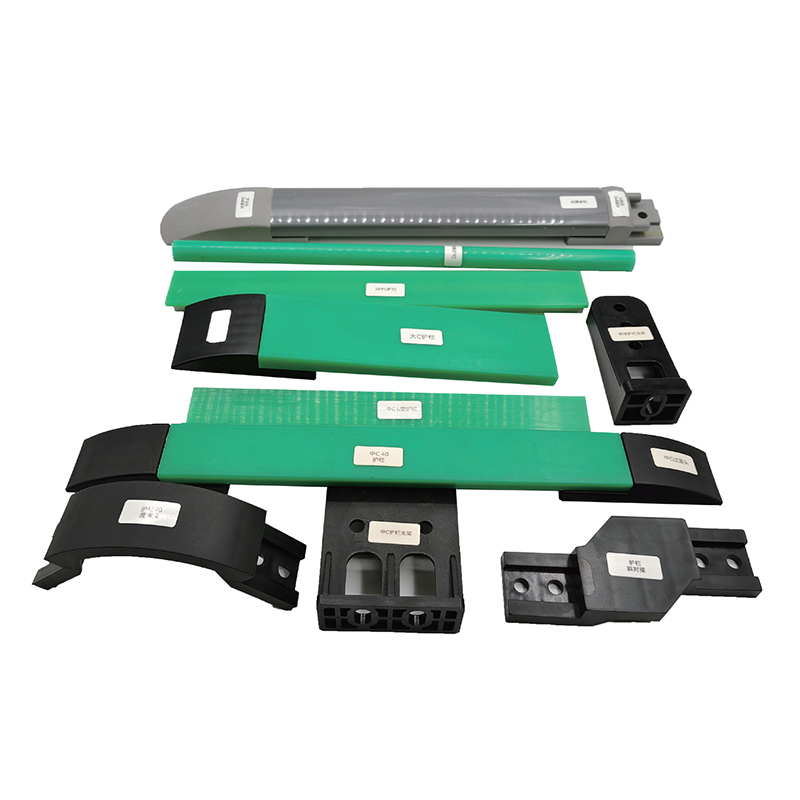 Conveyor Guardrail
The conveyor guardrail is a modular protective structure installed along the per...
-
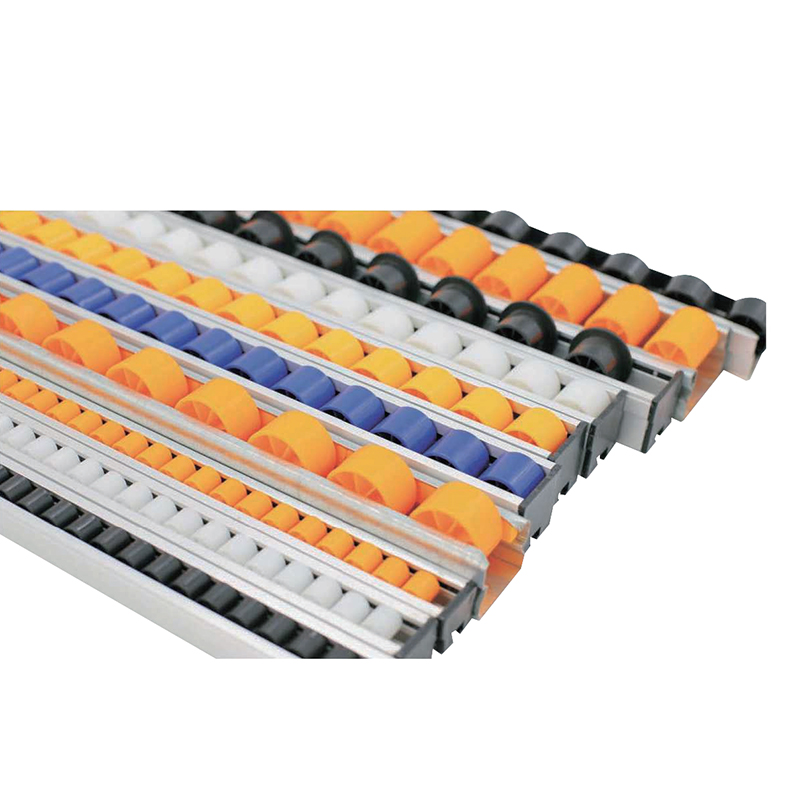 Conveyor Flow Bar
The conveyor flow bar is a rolling component designed for gravity-driven or assi...
-
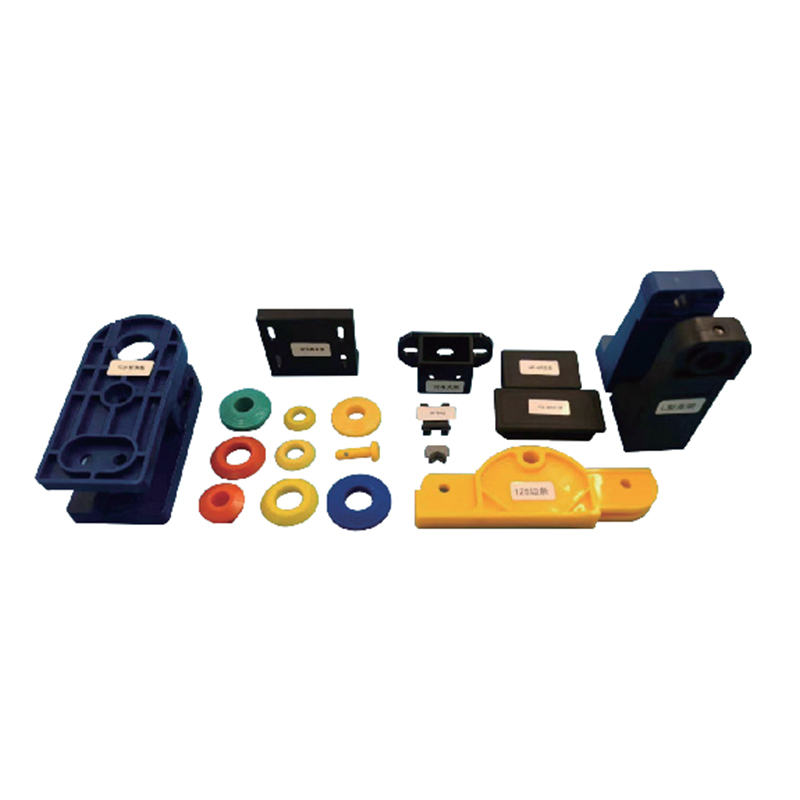 Conveyor Accessories
Conveyor accessories are a collection of functional components designed for indu...
-
Roller PVC Plastic Pipe
The PVC Plastic Pipe for Rollers is an outer sleeve applied to the surface of ro...
-
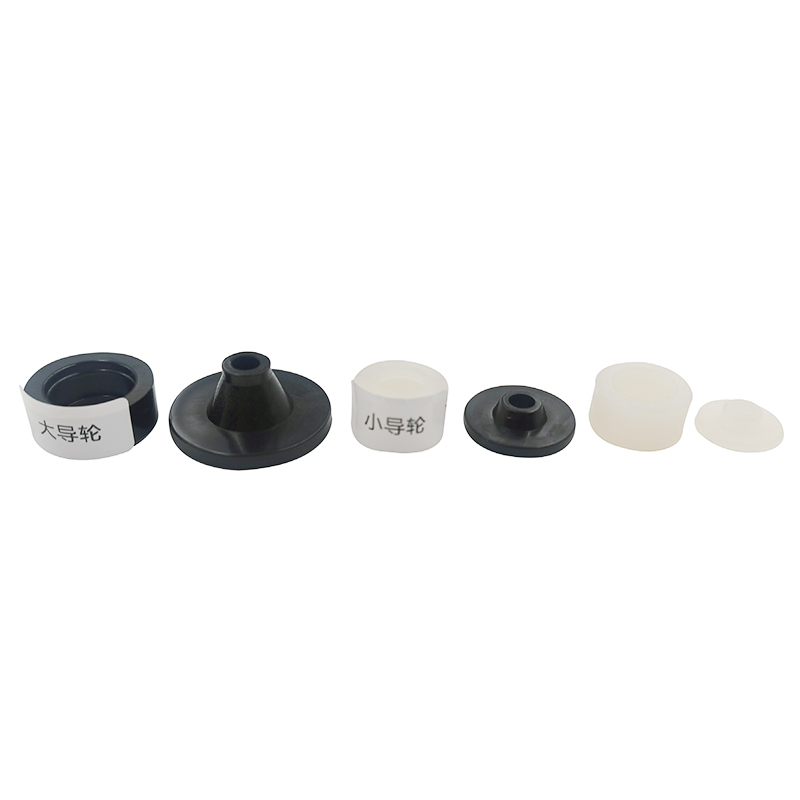 Roller Guide Wheel
The guide wheel serves as a critical directional component in industrial conveyi...


+86-13250912999
Huzhou Nanxun Guan's Plastic Industry Co., Ltd.
Email: [email protected]
Address: Building 8, North Zone, Dehao Industrial Park, Linghu Town, Nanxun District, Huzhou City, Zhejiang Province, China
Navigation
Products
About us
Copyright © Huzhou Nanxun Guan's Plastic Industry Co., Ltd.
All Rights Reserved.
 Privacy
Wholesale Plastic Conveyor Parts Manufacturers
Privacy
Wholesale Plastic Conveyor Parts Manufacturers