
 English
 中文简体
中文简体 русский
 Español
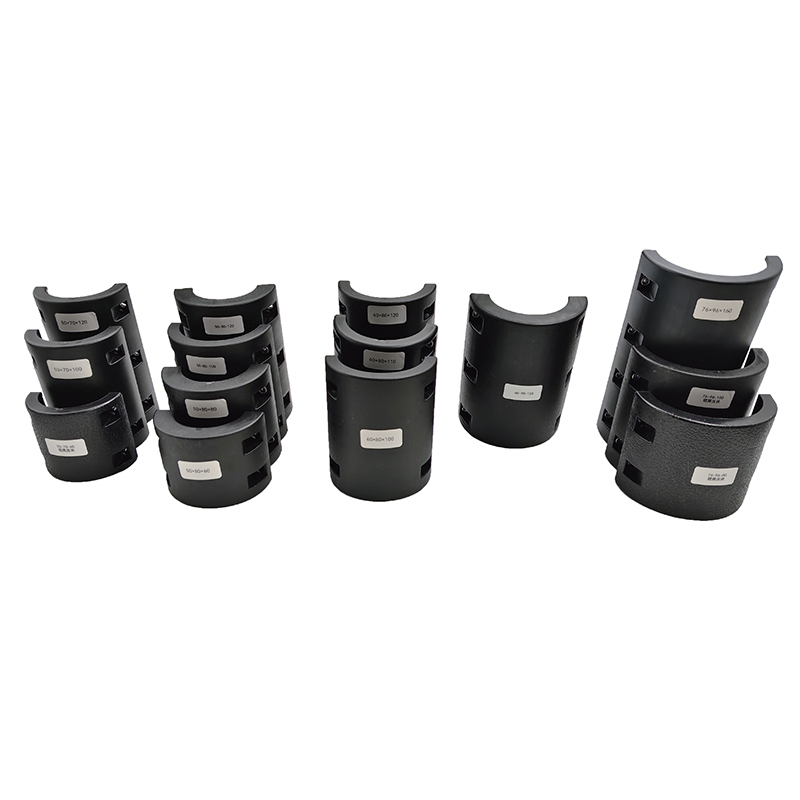
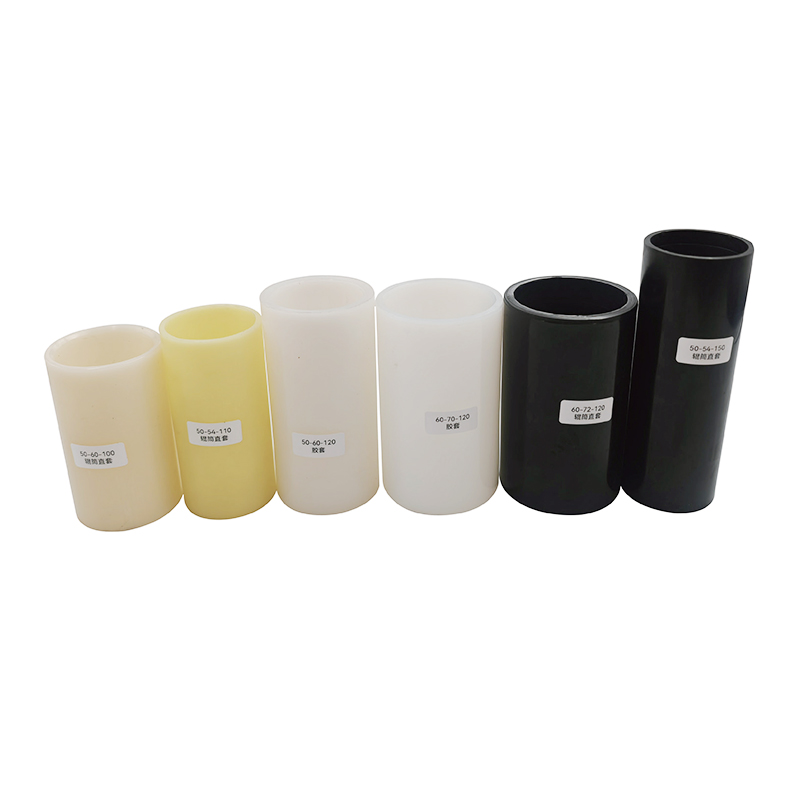
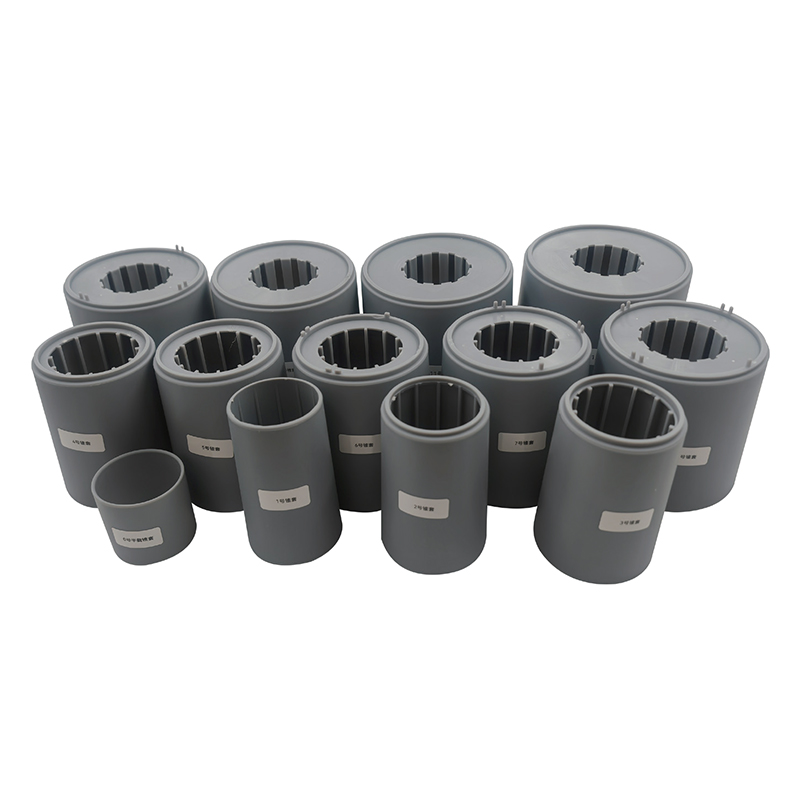
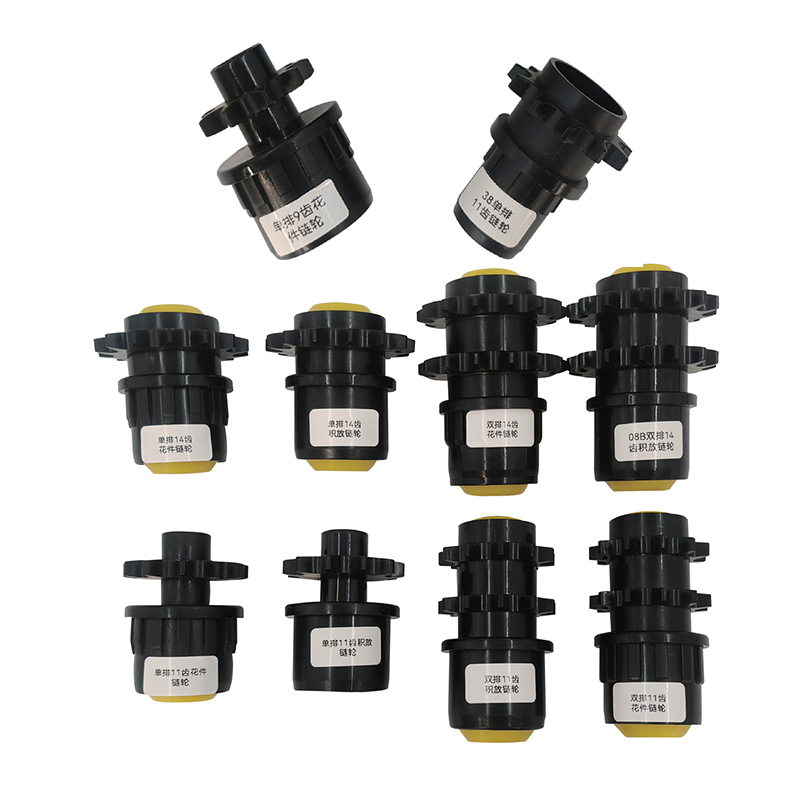
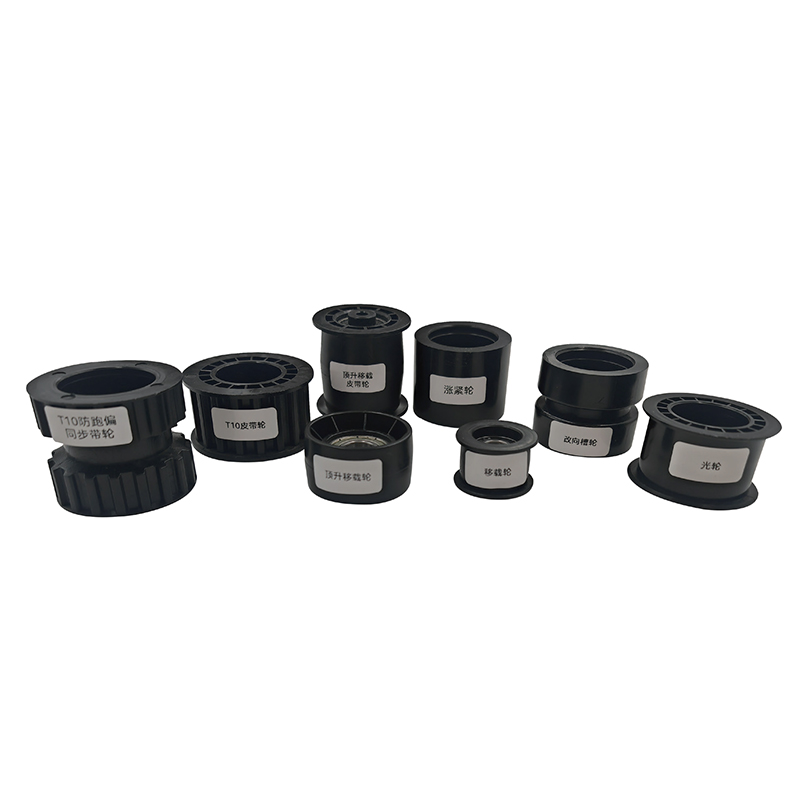
The TOP LIFTING TRANSFER WHEEL integrates lifting and transferring functions, typically co...

Top Lifting Transfer Wheel Series
About Us
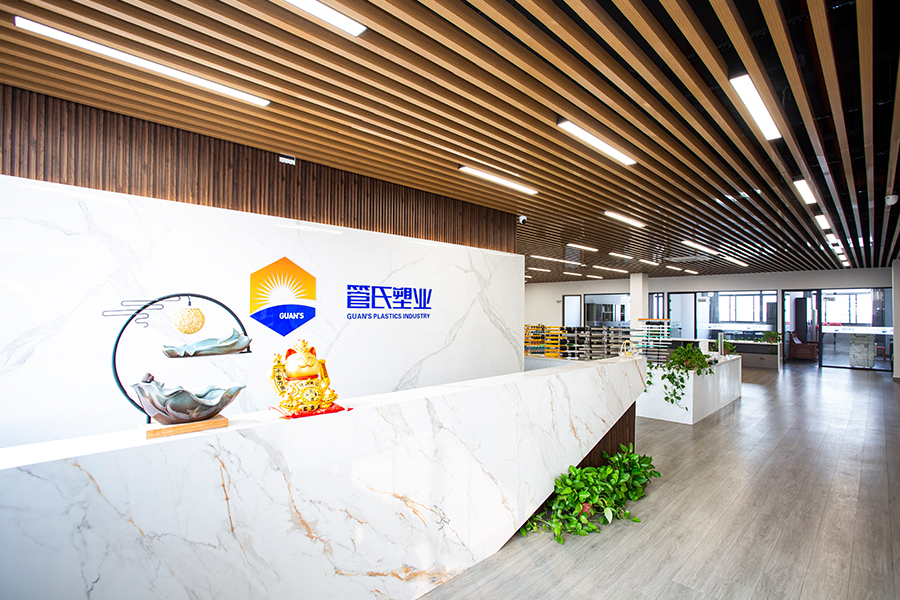
Huzhou Nanxun Guan's Plastic Industry Co., Ltd.
Huzhou Nanxun Guan's Plastic Industry Co., Ltd. was established in 2006, with its headquarters located in Huzhou, Zhejiang. Since its inception, the company has established three plastic product manufacturing bases and a laser cutting workshop in Zhejiang and Jiangsu provinces. We now have a large production, R&D, and operational space, with a growing team of employees. Our annual production volume has reached tens of millions of pieces, making us a well-known plastic product manufacturer and service provider both domestically and internationally.
As China Top Lifting Transfer Wheel Parts Manufacturers and custom Top Lifting Transfer Wheel Parts factory, our products and services are widely applied in various industries, including logistics, pharmaceuticals, food and beverages, warehousing, organic produce, tobacco, tire manufacturing, and airport ground services. To meet the ever-growing demands of our customers, we have also developed a laser cutting project to further enhance our production capacity and technical capabilities.
News
-
November 3–6, 2026 | Shanghai New International Expo Centre | Hall W5 Invitation Huzhou Nanxun Guanshi Plastic Industry Co., Ltd. cordially invites you to visit...
READ MORE -
A conveyor roller looks simple from the outside: a tube, a shaft and a few small fittings. But the parts that decide whether it runs quietly for years or start...
READ MORE -
If you have ever pulled a roller out of a conveyor frame, you already know that the part which gives up first is rarely the roller tube itself. It is the small...
READ MORE -
Most people who buy a conveyor line eventually see a finished frame. Behind it, there is a supply chain of molds, injection machines, extrusion lines and inspe...
READ MORE -
Conveyor lines rarely stop because of a frame or a motor. Far more often the culprit is a worn sleeve, a cracked roller seat, or a guide rail that has lost its...
READ MORE
Message Feedback
Industry knowledge
Functional Part Categories in Top Lifting Transfer Wheel Units
A top lifting transfer wheel unit is a mechanically compact assembly that must accomplish two distinct motion tasks within each cycle: raising the wheel array above the conveyor surface and driving the raised wheels to redirect the load. The top lifting transfer wheel parts that execute these tasks can be divided into three functional categories — lift mechanism parts, drive transmission parts, and the wheel sub-assembly parts — each of which has its own wear characteristics, failure modes, and replacement logic.
The lift mechanism parts (cam plates, eccentric shafts, connecting rods, and lift frames) convert actuator rotation or linear stroke into clean vertical displacement of the wheel array. The drive transmission parts (bevel gear sets, cross shafts, belt or chain drives, and motor coupling elements) route rotational power from a single drive source to all wheels in the array simultaneously. The wheel sub-assembly parts (wheel cores, bearing inserts, axle shafts, and tread elements) form the direct interface with the conveyed load.
Treating these three categories as separate maintenance domains — with distinct inspection intervals, spare part inventories, and replacement criteria — is more effective than managing the unit as a single opaque assembly. Degradation in one category rarely predicts degradation in another, and a unit that presents wheel tread wear does not necessarily need lift mechanism attention, and vice versa.
Lift Mechanism Parts: Eccentric Shafts, Cam Plates, and Lift Frame Integrity
The lift mechanism transforms continuous rotary or linear actuator motion into a precisely defined vertical stroke. The accuracy of this stroke — its total height, repeatability across cycles, and the smoothness of the dwell transition at the raised position — is governed entirely by the dimensional integrity of the lift mechanism parts. At Huzhou Nanxun Guan's Plastic Industry Co., Ltd., lift mechanism parts are produced to tolerances that maintain stroke repeatability within ±0.2 mm across the full designed service life of the unit.
Key parts and their specific failure characteristics:
- Eccentric shaft: The eccentricity dimension — the offset between the shaft centerline and the bearing journal centerline — directly sets the total lift stroke. Material fatigue at the journal radius and fretting wear at the bearing seat are the two degradation modes most likely to alter the effective eccentricity over service life. A shaft showing journal ovality exceeding 0.05 mm should be replaced rather than reground, as regrinding changes the eccentricity and alters the designed stroke height.
- Cam plate: The cam profile geometry defines the velocity and acceleration of the lift frame throughout the stroke. Abrasive wear on the dwell segment of the cam profile shortens the effective dwell angle, reducing the time the wheels spend at full lift height and causing premature retraction before the transferred load has fully cleared the primary conveyor surface.
- Lift frame: As the structural member that carries the wheel sub-assembly through its vertical travel, the lift frame is subject to bending loads each time the array contacts a load. Hairline cracks at stress concentration points — typically at the corners of cutouts for cross-shaft clearance — should be treated as replacement triggers rather than cosmetic observations, since fatigue crack propagation in a loaded frame is non-linear and accelerates rapidly once initiated.
- Connecting rod and pivot pins: Elongation of the pivot pin bore due to bearing wear increases the angular play in the connecting rod linkage, translating to a rounding of the stroke profile endpoints. The resulting soft stop at the raised and retracted positions increases impact energy at the mechanical end stops and accelerates wear across the entire lift mechanism parts set.
Drive Transmission Parts: Power Distribution Across the Wheel Array
Uniform surface speed across all wheels in the transfer array is the mechanical prerequisite for straight, controlled load redirection. Any speed differential between wheels — caused by gear backlash variation, unequal belt tension, or differential wear across the drive transmission parts — produces a yaw moment on the transferred load that manifests as angular drift from the intended transfer direction.
| Transmission Part | Speed Uniformity Risk | Primary Wear Mode | Measurable Replacement Trigger |
|---|---|---|---|
| Bevel Gear Set | High (ratio change with wear) | Tooth flank pitting | Backlash >0.4° per mesh |
| Cross Shaft | Moderate (torsional wind-up) | Journal fretting | Runout >0.08 mm at mid-span |
| Drive Belt / O-Ring | High (slip under tension loss) | Cord fatigue / stretch | Tension loss >15% of installation value |
| Motor Coupling Element | Low (torque transmitted, not ratio) | Spider element cracking | Visible cracking or angular play >1° |
In multi-unit installations — such as 90° divert stations with two or more transfer wheel units in sequence — drive transmission parts from the same production batch should be installed together wherever possible. Batch-matched gears and belts have near-identical wear curves, meaning they approach their replacement threshold at roughly the same time and can be replaced in a single maintenance event rather than triggering successive single-unit shutdowns that fragment maintenance scheduling.
Wheel Sub-Assembly Parts: Bearing Inserts, Axle Shafts, and Wheel Core Selection
The wheel sub-assembly is the part of the transfer unit that experiences the most varied loading conditions — intermittent contact force from each arriving load, rotational loads from the drive transmission, and lateral forces generated whenever a load enters the transfer zone at a slight angle. Specifying the right combination of bearing insert, axle shaft, and wheel core for the application load and environment is the single most consequential parts decision for long-term transfer unit reliability.
Selection criteria for the principal wheel sub-assembly parts:
- Bearing insert type and preload: Deep-groove ball bearings with a light preload are the standard selection for transfer wheel applications running at surface speeds up to 1.2 m/s under loads below 80 kg per wheel. For heavier loads or higher speeds, angular contact bearings in a back-to-back arrangement provide superior combined radial and axial load capacity without significantly increasing the housing envelope. Sealed-for-life bearing inserts with factory-packed grease are preferred in pharmaceutical and food environments where field lubrication introduces contamination risk.
- Axle shaft material and surface finish: Axle shafts in polymer wheel housings experience bending rather than pure torsion, making section modulus the governing design parameter rather than shear strength. A shaft diameter increase of 25% reduces maximum bending stress by approximately 60%, making modest upsizing the most cost-effective response to recurring shaft fatigue failures. Surface finish at the bearing seat should be Ra 0.4–0.8 µm to ensure consistent bearing inner race seating without fretting.
- Wheel core geometry and drive interface: The interface between the wheel core and the drive element — whether a flat-sided bore, a keyway, or a splined connection — determines how torque is transmitted into the wheel without slip. Flat-sided bores are adequate for low-torque applications but tend to develop rocking play once the flat surfaces show measurable wear; keyed or splined interfaces maintain zero-slip torque transmission well into the service life of the core and are preferred in high-speed divert applications in airport baggage handling and logistics sortation.
With production facilities in Zhejiang and Jiangsu and an annual output in the tens of millions of pieces, our capability to supply top lifting transfer wheel parts at the volumes and lead times required by large-scale logistics, pharmaceutical, and airport ground service operations is backed by manufacturing depth that smaller specialized suppliers cannot match.


+86-13250912999
Huzhou Nanxun Guan's Plastic Industry Co., Ltd.
Email: [email protected]
Address: Building 8, North Zone, Dehao Industrial Park, Linghu Town, Nanxun District, Huzhou City, Zhejiang Province, China
Navigation
Products
About us
Copyright © Huzhou Nanxun Guan's Plastic Industry Co., Ltd.
All Rights Reserved.
Privacy
 Custom Top Lifting Transfer Wheel Parts Manufacturers