
 English
 中文简体
中文简体 русский
 Español

Lifting Transplanter Series
About Us
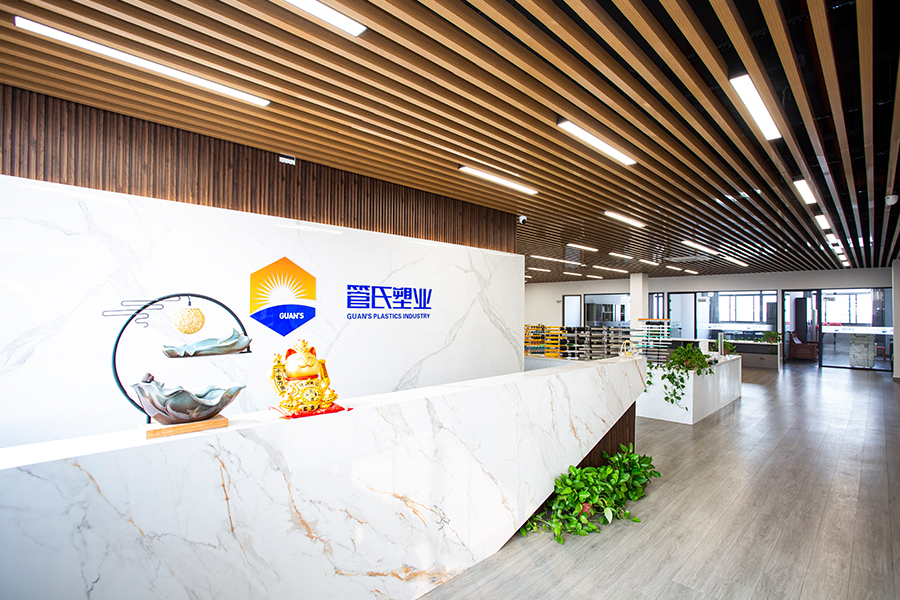
Huzhou Nanxun Guan's Plastic Industry Co., Ltd.
Huzhou Nanxun Guan's Plastic Industry Co., Ltd. was established in 2006, with its headquarters located in Huzhou, Zhejiang. Since its inception, the company has established three plastic product manufacturing bases and a laser cutting workshop in Zhejiang and Jiangsu provinces. We now have a large production, R&D, and operational space, with a growing team of employees. Our annual production volume has reached tens of millions of pieces, making us a well-known plastic product manufacturer and service provider both domestically and internationally.
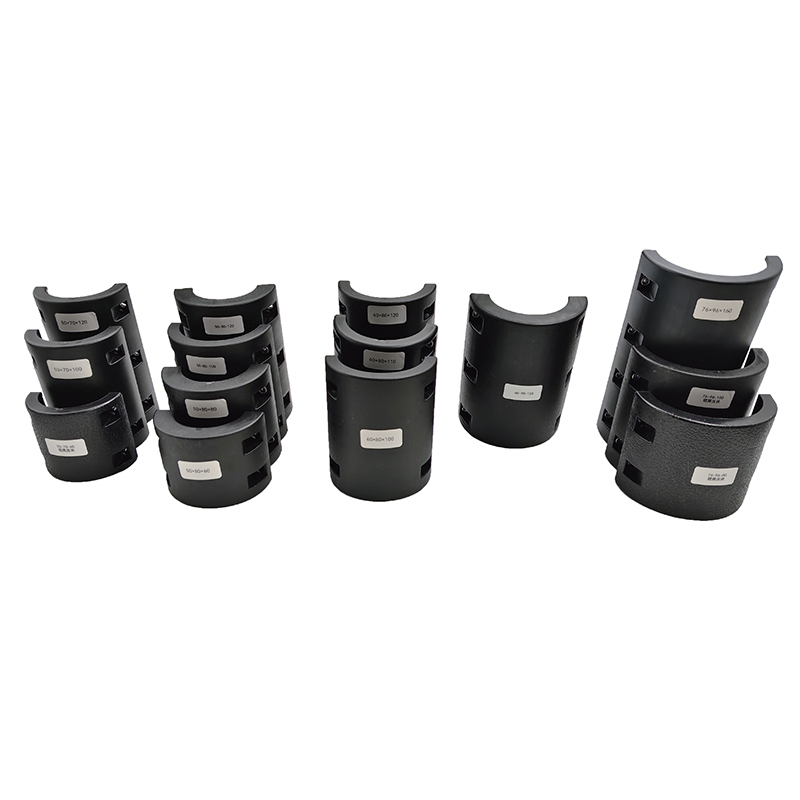
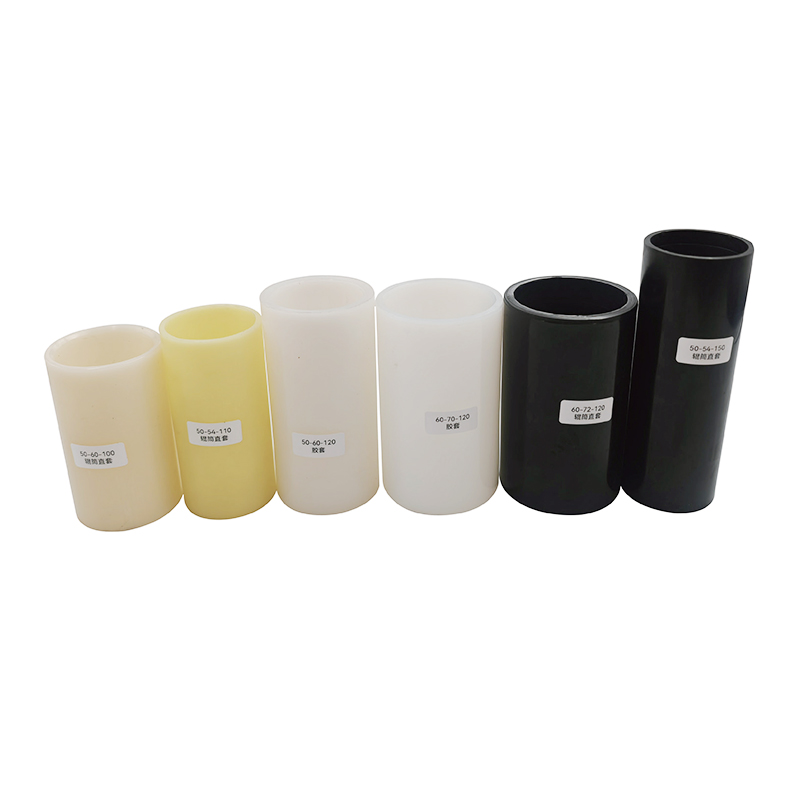
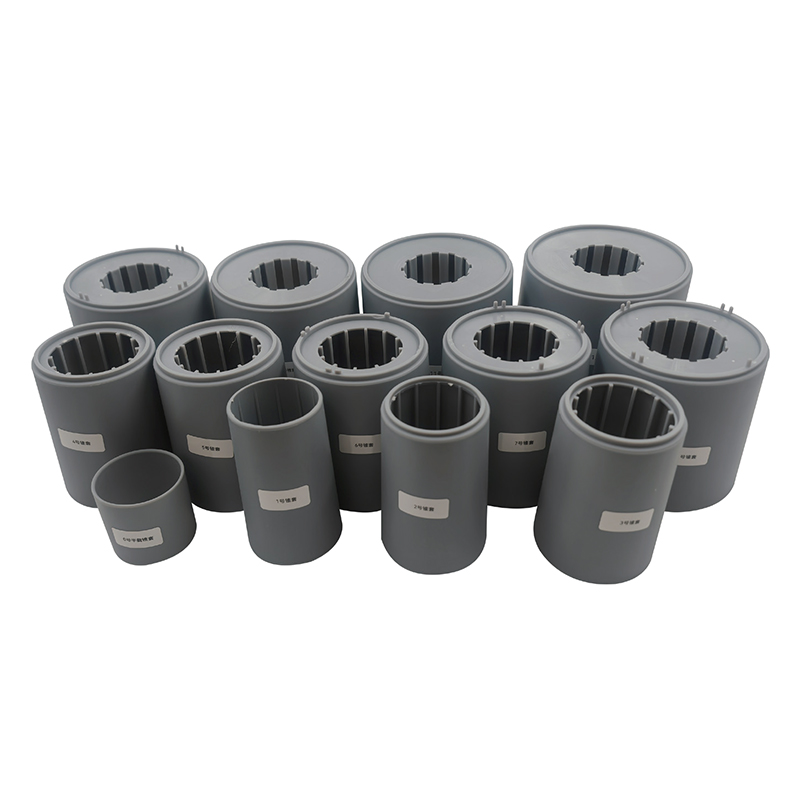
As China Lifting Transplanter Parts Manufacturers and custom Lifting Transplanter Parts factory, our products and services are widely applied in various industries, including logistics, pharmaceuticals, food and beverages, warehousing, organic produce, tobacco, tire manufacturing, and airport ground services. To meet the ever-growing demands of our customers, we have also developed a laser cutting project to further enhance our production capacity and technical capabilities.
News
-
November 3–6, 2026 | Shanghai New International Expo Centre | Hall W5 Invitation Huzhou Nanxun Guanshi Plastic Industry Co., Ltd. cordially invites you to visit...
READ MORE -
A conveyor roller looks simple from the outside: a tube, a shaft and a few small fittings. But the parts that decide whether it runs quietly for years or start...
READ MORE -
If you have ever pulled a roller out of a conveyor frame, you already know that the part which gives up first is rarely the roller tube itself. It is the small...
READ MORE -
Most people who buy a conveyor line eventually see a finished frame. Behind it, there is a supply chain of molds, injection machines, extrusion lines and inspe...
READ MORE -
Conveyor lines rarely stop because of a frame or a motor. Far more often the culprit is a worn sleeve, a cracked roller seat, or a guide rail that has lost its...
READ MORE
Message Feedback
Industry knowledge
The Role of Lifting Transplanters in Conveyor System Layout
A lifting transplanter is the junction device that allows goods to move between conveyor lines running at different heights or perpendicular orientations — without manual intervention. In modern automated distribution and production facilities, the ability to transfer unit loads vertically and laterally at speed is what makes multi-tier conveyor networks practical. Where a simple merge or divert can redirect a box within a single plane, a lifting transplanter changes the plane itself, connecting floor-level accumulation lanes to elevated sortation loops, or feeding goods from one production line level into palletizing cells on another.
The mechanical complexity of this function — synchronized vertical lift combined with horizontal transfer, repeated thousands of times per shift — places exceptional demands on every component in the assembly. Lifting Transplanter Parts must maintain precise dimensional stability under dynamic loading conditions that far exceed what static guide or wear components in a straight conveyor run would ever encounter. Huzhou Nanxun Guan's Plastic Industry Co., Ltd. produces these components across dedicated manufacturing bases, with annual output in the tens of millions of pieces supporting the replacement and upgrade cycle of high-intensity conveyor installations globally.
Key Components and What They Must Withstand
The component architecture of a lifting transplanter differs from a standard conveyor section in one fundamental respect: nearly every part experiences cyclic stress rather than continuous steady-state load. Each lift cycle imposes an acceleration load on upward travel, a deceleration load at the transfer height, and a reverse sequence on descent — all within a cycle time that may be as short as 2–4 seconds in high-throughput logistics applications.
- Lift platform rollers and bearings: The rollers on the lift platform carry the full unit load during the transfer phase and must maintain their rotational resistance within tight tolerances across millions of cycles. Bearing seal integrity is critical — contamination ingress during vertical travel causes premature bearing failure that manifests as platform vibration and positional inaccuracy at the transfer point.
- Guide bushings and linear bearings: Vertical travel accuracy depends on the clearance between the lift carriage and its guide columns. Worn or oversized bushings introduce lateral play that causes the platform to rock during ascent, misaligning the transfer surface relative to the receiving conveyor and generating impact loads on goods and downstream equipment.
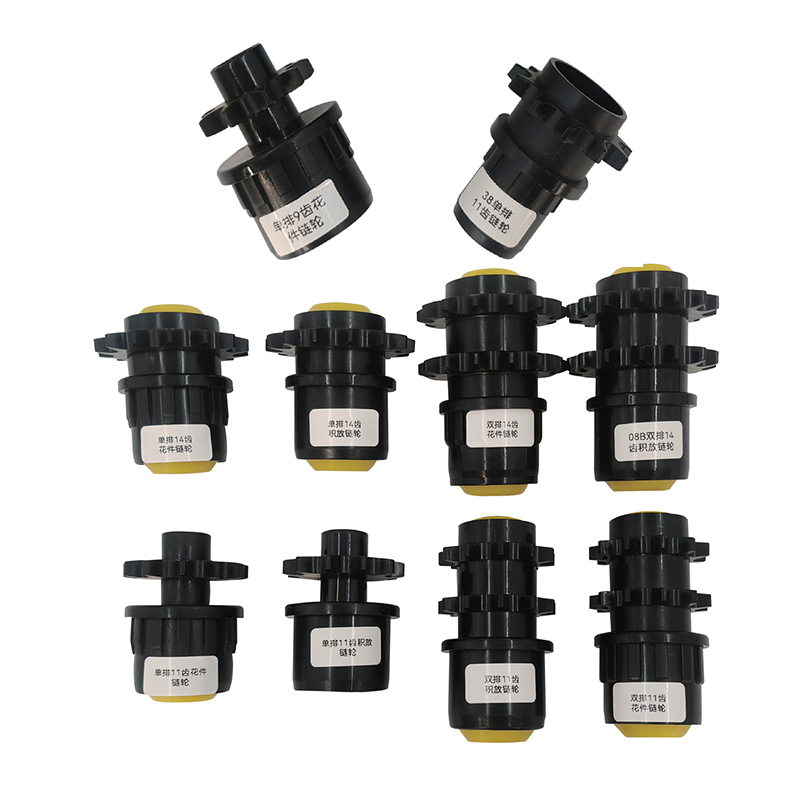
- Chain and sprocket assemblies: The drive mechanism for the vertical lift typically uses precision roller chain and hardened sprockets. Chain elongation — the primary wear indicator — must be monitored at shorter intervals than in horizontal conveyor applications because the consequences of chain failure under load are more severe: an uncontrolled descent rather than a simple line stoppage.
- Transfer rollers and pop-up belt modules: At the transfer height, goods move from the lift platform to the receiving conveyor via a brief powered transfer. The surface condition, drive speed synchronization, and alignment of these transfer components determine whether boxes arrive at the receiving line square or skewed — a distinction that separates smooth downstream sortation from repeated jam clearance.
- Wear pads and buffer elements: Contact points between the lift carriage and frame absorb repeated impact at the top and bottom of each stroke. Undersized or low-quality buffer materials transmit shock into the frame structure, accelerating fastener loosening and frame fatigue across the broader conveyor installation.
Material and Tolerance Requirements Specific to Lifting Applications
The material selection logic for lifting transplanter components differs from horizontal conveyor parts in two important ways: fatigue resistance takes precedence over abrasion resistance, and dimensional stability under dynamic load matters more than static compressive strength. A wear strip that performs reliably on a flat accumulation section may creep or deform unacceptably when subjected to the cyclic compressive and tensile loads of a vertical lift mechanism.
Engineering plastics used in lifting transplanter components are typically selected from a narrower range than the broader conveyor portfolio:
- Glass-filled nylon (PA66-GF30): The addition of 30% glass fiber to standard nylon roughly doubles the flexural modulus and significantly reduces creep under sustained load, making it the preferred material for guide bushings, carriage brackets, and structural wear components in lifting mechanisms. The trade-off is reduced impact toughness compared to unfilled grades, so wall thickness and fillet geometry must be designed accordingly.
- Acetal copolymer (POM-C): Preferred over homopolymer acetal in lifting applications due to its superior fatigue resistance and lower notch sensitivity. POM-C maintains dimensional accuracy through thermal cycling better than most alternative engineering plastics and is the standard choice for precision-fit components such as drive sprocket hubs and roller end caps.
- UHMW-PE with anti-static additive: Used for buffer pads and impact surfaces where energy absorption rather than stiffness is the design objective. The anti-static grade is specified in logistics and pharmaceutical environments where electrostatic discharge could damage packaged electronics or trigger dust ignition risks.
Tolerance requirements for lifting transplanter components are typically one grade tighter than equivalent horizontal conveyor parts. A dimensional deviation acceptable on a guide rail section becomes a source of positional error in a vertical lift mechanism where accumulated clearance across multiple components translates directly into transfer misalignment.
Maintenance Priorities and Replacement Scheduling for Lifting Transplanters
Lifting transplanters are among the highest-value maintenance targets in any automated conveyor system. Their failure rate per operating hour is lower than many simpler components, but the consequence of failure — typically a full line stoppage affecting multiple upstream and downstream conveyor sections simultaneously — is disproportionate. Maintenance scheduling should reflect this asymmetry.
Practical maintenance priorities for lifting transplanter assemblies:
- Cycle count-based replacement rather than time-based: For high-frequency applications (500+ cycles/hour), component wear correlates more closely with total lift cycles than with calendar time. Tracking cycle counts via the machine controller and setting component replacement thresholds in cycles rather than months produces more predictable maintenance intervals and avoids both premature replacement and in-service failure.
- Paired replacement of wear partners: Guide bushings and their mating columns, chain and sprocket sets, and transfer roller pairs should be replaced simultaneously. Fitting a new component against a worn wear partner accelerates the new part's wear rate to match the old, negating the replacement benefit within a fraction of the normal service interval.
- Vibration monitoring as an early indicator: Increased vibration amplitude during lift cycles — measurable with a basic accelerometer or detectable as audible change in operating noise — precedes visible component failure in most lifting transplanter assemblies. Establishing a vibration baseline at commissioning and trending against it during scheduled inspections gives maintenance teams advance warning of 2–4 weeks before failure in most cases.
- Stock critical parts on-site: The lead time for non-standard lifting transplanter components from a cold supply chain can exceed the acceptable downtime window for high-throughput logistics operations. Facilities running peak-season volumes in e-commerce fulfillment, pharmaceutical distribution, or airport ground services should maintain on-site stock of the highest-cycle wear parts for each transplanter model in the installation.
With three manufacturing bases and laser cutting capabilities enabling rapid production of custom-profiled components, Guan's Plastic supports the replacement part requirements of Lifting Transplanter Parts across the full range of industries it serves — from high-cycle logistics sortation facilities to controlled pharmaceutical distribution environments where both performance and material compliance are non-negotiable.


+86-13250912999
Huzhou Nanxun Guan's Plastic Industry Co., Ltd.
Email: [email protected]
Address: Building 8, North Zone, Dehao Industrial Park, Linghu Town, Nanxun District, Huzhou City, Zhejiang Province, China
Navigation
Products
About us
Copyright © Huzhou Nanxun Guan's Plastic Industry Co., Ltd.
All Rights Reserved.
Privacy
 Custom Lifting Transplanter Parts Manufacturers