
 English
 中文简体
中文简体 русский
 Español
1. Product Definition The chain conveyor head frame serves as the primary drive-...

Industry News
Home / News / Industry News / Conveyor Plastic Chain Plate Selection: Types, Materials, and Buying Guide
Conveyor Plastic Chain Plate Selection: Types, Materials, and Buying Guide
Author: admin / 2026-09-02
Content
- 1 What Is a Conveyor Plastic Chain Plate?
- 2 Why Plastic Chain Plates Are a Practical Choice
- 3 Key Selection Criteria for Plastic Chain Plates
- 4 Common Chain Plate Types and Configurations
- 5 How Plastic Chain Plates Compare with Other Conveyor Options
- 6 Installation and Maintenance Considerations
- 7 Sourcing Considerations for Conveyor Plastic Chain Plates
Plastic chain plates are among the most widely used conveyor components in modern production and logistics lines. In many applications, they outperform metal belts because they are lighter, quieter, and more resistant to corrosion and chemical exposure. Selecting the right chain plate is not simply a matter of picking a part number. The material, pitch, width, and load rating must match the product being conveyed, the ambient temperature, and the cleaning procedure used in your facility. The good news is that once you understand a few core parameters, you can make a confident decision that reduces downtime and lowers total ownership cost.
What Is a Conveyor Plastic Chain Plate?
A conveyor plastic chain plate is a modular conveying surface built from interlocking plastic modules. Each module forms a plate, and adjacent plates are joined with pins to create a continuous, flexible belt. The belt runs over sprockets that engage with the underside, producing a positive drive that keeps the surface moving at a steady speed without slip. This construction is a subset of industrial conveyor components, typically used for handling lightweight-to-medium loads in food, beverage, pharmaceutical, and warehouse applications.
Unlike a flat fabric or rubber belt, plastic chain plates do not rely on friction to carry the load. The sprocket drive gives them positional accuracy and makes them suitable for stop-and-start operations, inclined runs, and accumulating product without backward pull. This is why they are often the default choice in case packers, palletizers, and inspection lines.
Why Plastic Chain Plates Are a Practical Choice
The advantages of plastic chain plates become evident when compared to steel belts or mesh belts.
Lower Weight and Higher Efficiency
Plastic modules are typically one-third to one-fifth the weight of an equivalent steel chain. That reduces the driving torque required, so a smaller motor can be used. Lower weight also means less inertia, which shortens stop-and-start cycles and lets the line reach operating speed faster.
Corrosion and Chemical Resistance
Thermoplastic materials such as POM (polyoxymethylene) and PP (polypropylene) resist moisture, mild acids, alkaline cleaning solutions, and many process chemicals that would attack carbon steel or even stainless steel over time. For food and pharmaceutical lines that require daily washdown, plastic is a practical material choice.
Noise Reduction
Plastic-to-plastic contact at the transfer points generates significantly less noise than metal chain running in a steel track. On production floors where operators work close to the line, reducing sound pressure by several decibels can make a noticeable difference in workplace comfort.
Low or No Lubrication
Most POM-based chain plates are designed to run dry, which eliminates lubricant contamination on the product and keeps conveyor maintenance straightforward. In contrast to roller chains that need periodic oiling, plastic chain plates can often operate with only a clean, dry track.
Key Selection Criteria for Plastic Chain Plates
Before placing an order, you should review the parameters summarized in Table 1. These are the factors that most often cause problems early in a conveyor line’s life.
| Criterion | What to Check | Typical Consideration |
|---|---|---|
| Module Material | POM, PP, or PEEK | POM for wear resistance and low friction; PP for chemical resistance; PEEK for high temperatures. |
| Load Capacity | Dynamic load per plate | Rated load depends on temperature, speed, and supported area; verify with the manufacturer. |
| Pitch | Distance between pin centers | Smaller pitch gives a smoother surface; larger pitch supports heavier loads and longer spans. |
| Module Width | Overall chain width | Match product footprint and transfer dimensions; wider belts increase load capacity. |
| Operating Temperature | Continuous service temperature | POM generally works well below 80–100°C; PP has a lower ceiling; PEEK is used for much higher ranges. |
| Surface Type | Solid or perforated | Solid plates handle small parts; perforated or mesh surfaces allow drainage and air circulation. |
| Chemical Exposure | Cleaning agents and process chemicals | Check compatibility with sanitizers, steam, oils, and acids used in your plant. |
The single most common misstep is choosing a chain plate rated only for ambient temperature when the line will be exposed to hot washdown water, steam cleaning, or oven-infeed conditions. Always check the manufacturer’s derating curve for elevated temperatures.
Common Chain Plate Types and Configurations
Two configurations dominate the practical range of conveyor plastic chain plate products. The 7705-type flat chain mesh provides a flat, stable surface with a comparatively small pitch. It is commonly used for product transport on straight runs where the conveyed item is small, delicate, or needs a continuous support surface.
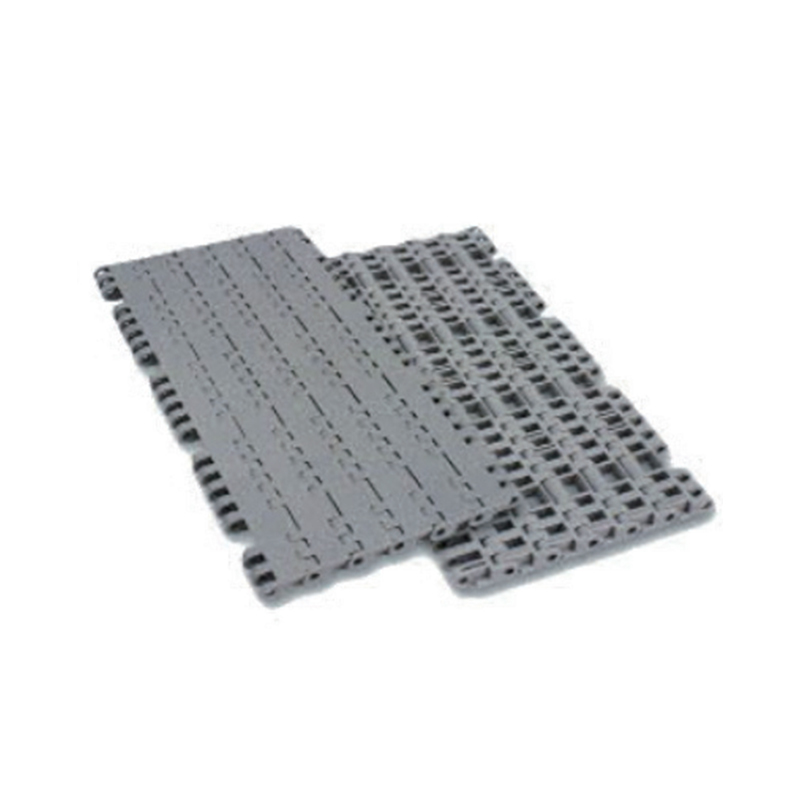 7705 Type Flat Chain Mesh for Stable ConveyingA modular plastic conveyor belt with a closed, smooth top surface that provides continuous support and prevents tipping for small or fragile products. Its low friction and corrosion resistance make it suitable for food and beverage processing and other sanitary applications.View Product →
The 880 guide side bending chain is designed with side flexibility, allowing the chain to travel through horizontal curves without additional turning devices. It is a good fit for compact layouts that require changing direction and for conveying bottles or cartons around corners while maintaining consistent product spacing.
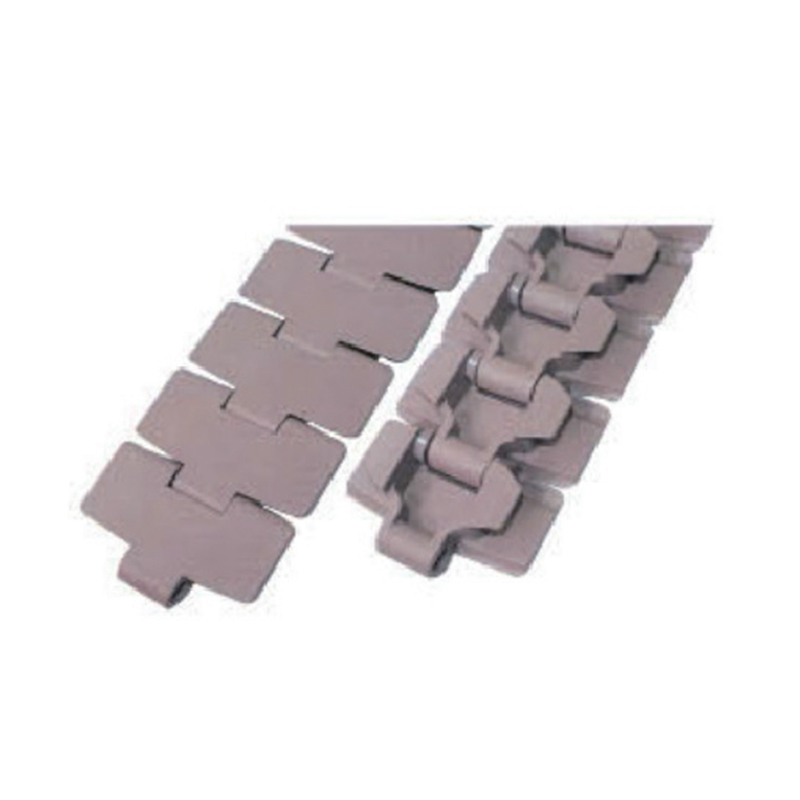 880 Guide Side Bending Chain for Curved ConveyorsThis chain is engineered for side-guided and curved conveying, allowing smooth directional changes in compact layouts. It works with guide rails to maintain consistent product spacing and is ideal for transporting bottles or cartons around corners.View Product →
When selecting between these families, consider whether the line needs a zero-transition surface for fragile items, or whether a curved path is necessary to save floor space. The chain plate material, not just the geometry, affects how easily the product slides across the surface, especially when the line is dry or when the product is a shrink-wrapped case with a slightly sticky underside.
How Plastic Chain Plates Compare with Other Conveyor Options
The purpose of the comparison is not to declare one conveyor type universally superior but to show where plastic chain plates make sense.
- Plastic chain plates versus flat fabric or rubber belts: Fabric belts rely on friction and can slip when wet or when the load is heavy. Chain plates give positive drive, so they maintain speed and position even when the line is being stopped repeatedly.
- Plastic chain plates versus stainless steel mesh belts: Steel mesh handles very high temperatures and heavy loads, but it needs regular cleaning, can rust in humid environments, and produces far more noise. Plastic chain plates are usually the better choice in wet or chemically washed lines below the plastic’s temperature limit.
- Plastic chain plates versus roller conveyors: Rollers are well suited for gravity or powered transport of firm, flat-bottomed items. Chain plates offer a continuous moving surface with no gaps, which makes them safer for small parts that could fall between rollers.
The decision boundary is often temperature. If the product must pass through a cooling tunnel at below 0°C or a baking oven above 150°C, stainless steel may be the only reliable option. Otherwise, plastic chain plates will usually deliver a better balance of cleanliness, noise, and maintenance cost.
Installation and Maintenance Considerations
A good chain plate system depends on precise alignment and sensible operating practices. Use these points when planning your line setup.
- Align the sprockets accurately. Misalignment is the leading cause of premature pin wear. Sprockets must be positioned so that the chain plates travel over them without struggling or jumping.
- Maintain proper tension. The belt should run snug but not tight. Overtensioning stretches plastic modules, increases pin friction, and reduces the life of the bearing points.
- Check cleaning chemical compatibility. A chain plate that passes the temperature check can still fail if it is washed with a solvent that is incompatible with POM or PP. Document the cleaning agents used and confirm them with the supplier before installation.
- Inspect for wear at the pin holes. If you see elongated holes in the modules, the chain has reached the end of its useful life. A visible gap in belt width is another clear sign that replacement is necessary.
- Avoid shock loading. Dropping heavy crates onto the chain plates can crack modules or damage the pins. Use a ramp or a resilient transfer point for heavy products.
Keeping a spare set of modules and pins in stock is a low-cost way to avoid a long stoppage. A single damaged module can be replaced in minutes, whereas waiting for a replacement can shut down an entire line.
Sourcing Considerations for Conveyor Plastic Chain Plates
Purchasing plastic chain plates from a reliable manufacturer matters more than the initial unit price. Consistency of material properties, dimensional tolerance, and the ability to deliver repeatable quantities are key factors. A plastic component manufacturer with dedicated production capacity and multiple molding bases can be a better partner for maintaining stock and supporting routine replacement needs.
When comparing suppliers, ask about the base resin used, whether the chain plate is molded in accordance with the standard pitch, and how the modules are quality-tested before shipment. If the line relies on chain conveyor accessories such as wear strips, rails, and sprockets, ensure they can be supplied from the same source to avoid compatibility issues.
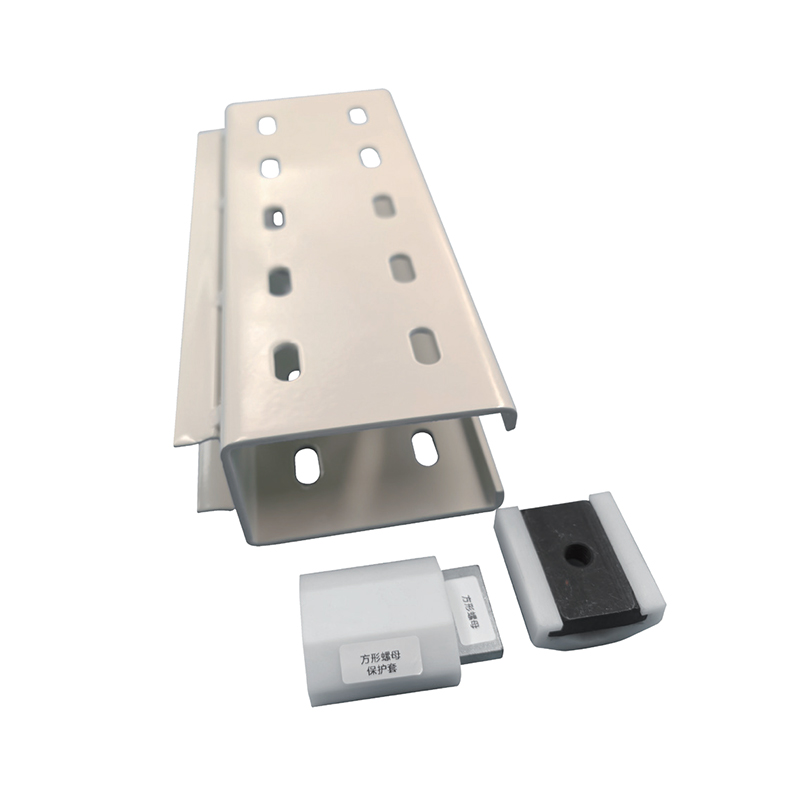 Chain Conveyor Accessories for System MaintenanceA comprehensive range of functional components, including tensioning devices, guidance components, cleaning units, lubrication systems, and safety protections, designed to extend service life and address common issues like deviation, wear, and noise.View Product →
Also clarify how the manufacturer handles tolerance variations. In a modular chain system, small differences in pin hole position can cause the chain to track to one side. Trustworthy suppliers inspect the plates after molding and control the pin hole alignment to keep the belt running straight across the track.
Verified, practical selection is a straightforward process when you start with the operating environment. Define the maximum temperature, the cleaning chemistry, the expected load, and the layout constraints. Those four inputs will determine whether you need a solid or perforated surface, which base material is appropriate, and whether the chain must navigate curves. With the right supplier, the choice becomes a repeatable engineering decision rather than a gambling exercise, and the line runs smoothly from the first day onward.
Related products
-
-
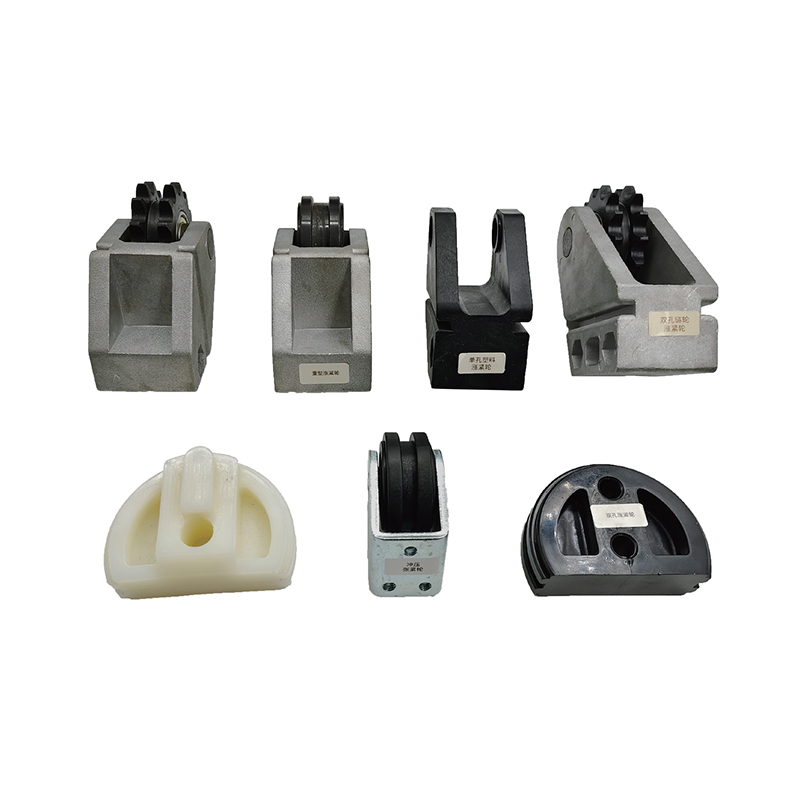 Chain Conveyor Tension Wheel
The chain conveyor tension wheel is a tension adjustment device used in chain dr...
-
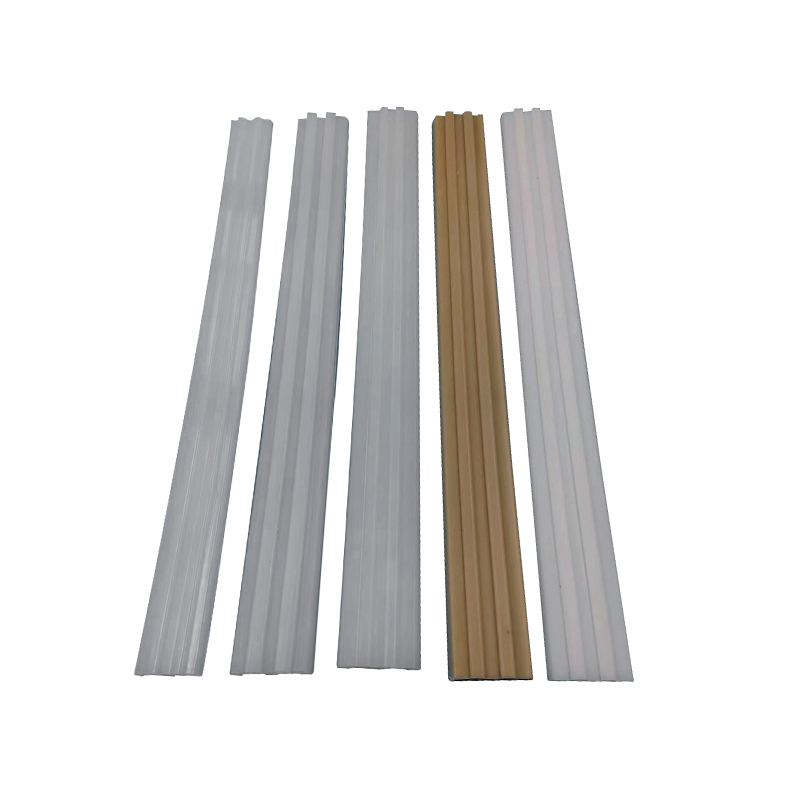 Chain Conveyor Chain Support
The chain conveyor chain support is a structural component designed to support a...
-
 Chain Conveyor Accessories
Chain conveyor accessories are functional components designed for use with chain...
-
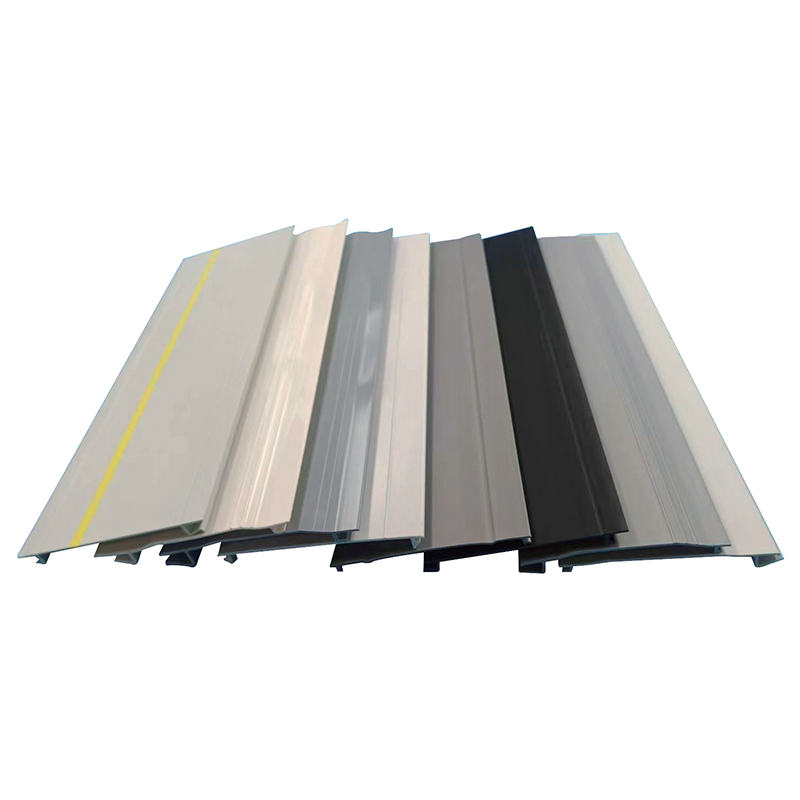 Conveyor Sealing Plate
The conveyor sealing plate is a side enclosure component designed for conveyor e...
-
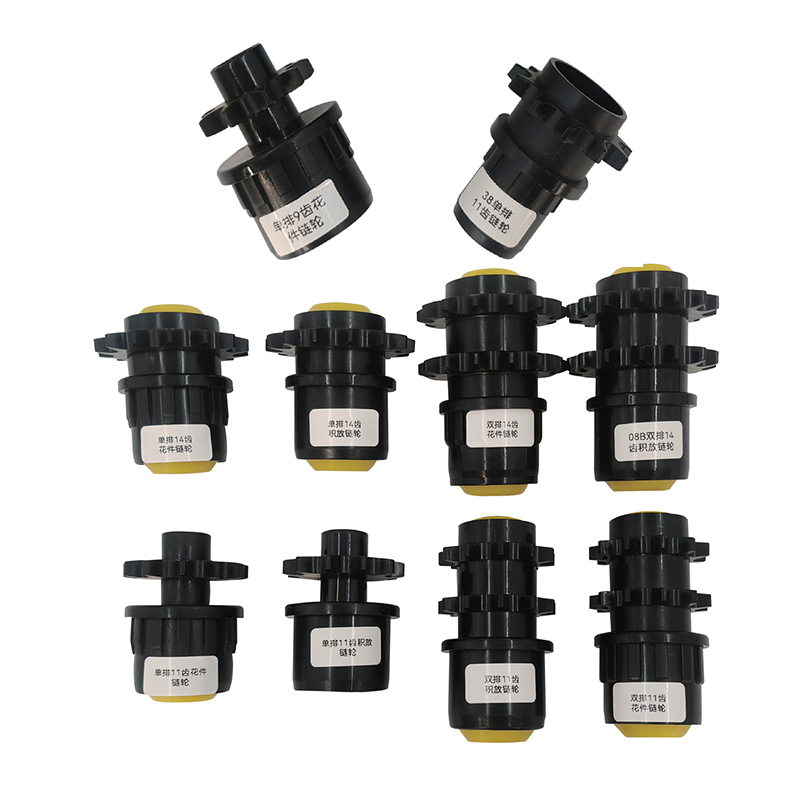 Chain Wheel
A chain wheel is a transmission component used in combination with chains to tra...


+86-13250912999
Huzhou Nanxun Guan's Plastic Industry Co., Ltd.
Email: [email protected]
Address: Building 8, North Zone, Dehao Industrial Park, Linghu Town, Nanxun District, Huzhou City, Zhejiang Province, China
Navigation
Products
About us
Copyright © Huzhou Nanxun Guan's Plastic Industry Co., Ltd.
All Rights Reserved.
 Privacy
Wholesale Plastic Conveyor Parts Manufacturers
Privacy
Wholesale Plastic Conveyor Parts Manufacturers