
 English
 中文简体
中文简体 русский
 Español
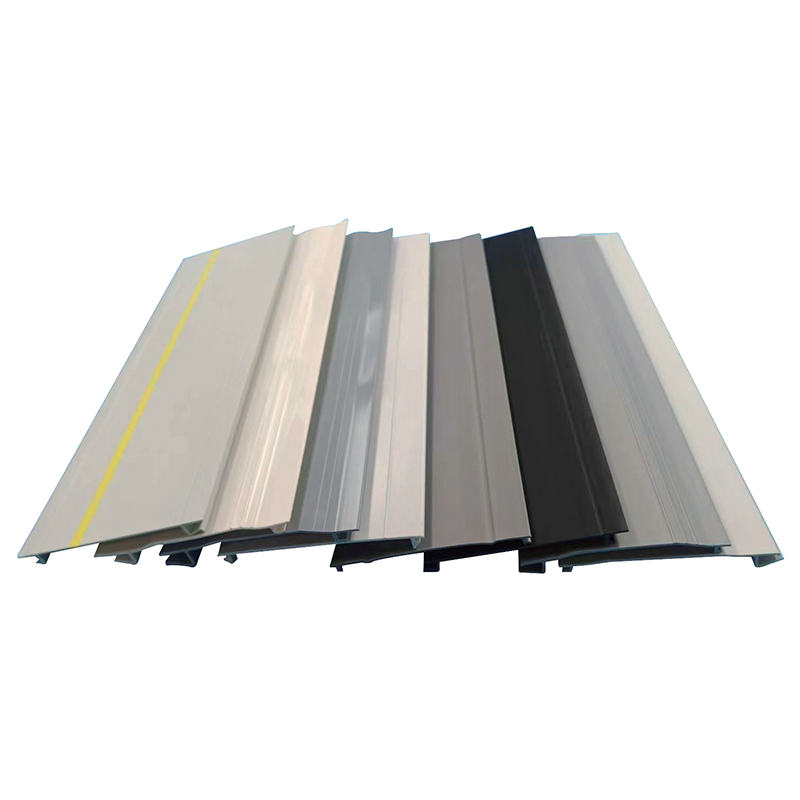
The conveyor sealing plate is a side enclosure component designed for conveyor e...

Industry News
Home / News / Industry News / What Are Industrial Conveyor Components and Why Are They Critical to Conveyor System Performance?
What Are Industrial Conveyor Components and Why Are They Critical to Conveyor System Performance?
Author: admin / 2026-06-10
Content
- 0.1 Understanding the Function of Industrial Conveyor Components
- 0.2 Why Conveyor Components Have a Direct Impact on System Performance
- 0.3 Key Categories of Industrial Conveyor Components
- 0.4 The Relationship Between Component Quality and Productivity
- 0.5 Critical Performance Factors When Evaluating Conveyor Components
- 0.6 How Industrial Conveyor Components Support Long-Term Cost Efficiency
- 0.7 Conclusion
- 1 What Are the Main Types of Industrial Conveyor Components?
- 2 How Do Different Conveyor Components Affect System Efficiency and Reliability?
- 2.1 Load Distribution and Structural Stability
- 2.2 Friction Management and Energy Consumption
- 2.3 Component Alignment and Operational Accuracy
- 2.4 Power Transmission Efficiency
- 2.5 Wear Resistance and Service Life
- 2.6 Noise Reduction and Workplace Performance
- 2.7 Environmental Resistance and Reliability
- 2.8 How Component Compatibility Influences Overall System Reliability
- 2.9 Conclusion
- 3 Which Materials Are Commonly Used in Industrial Conveyor Components?
- 3.1 Why Material Selection Matters in Conveyor Systems
- 3.2 Engineering Plastics
- 3.3 Comparison of Common Engineering Plastics
- 3.4 Metal Components
- 3.5 Comparison of Common Metal Materials
- 3.6 Composite and Specialty Materials
- 3.7 Factors to Consider When Selecting Conveyor Component Materials
- 3.8 Conclusion
- 4 How Can You Select the Right Industrial Conveyor Components for Different Industries?
- 4.1 Key Factors to Evaluate Before Selecting Conveyor Components
- 4.2 Manufacturing and Assembly Lines
- 4.3 Logistics and Warehousing Facilities
- 4.4 Food and Beverage Processing
- 4.5 Packaging Equipment
- 4.6 Pharmaceutical and Cleanroom Applications
- 4.7 Mining and Heavy-Duty Material Handling
- 4.8 Industry Comparison: Conveyor Component Priorities
- 4.9 Common Selection Mistakes to Avoid
- 4.10 Conclusion
Industrial conveyor components are the individual mechanical, structural, and motion-control elements that work together to transport materials efficiently throughout manufacturing plants, warehouses, packaging facilities, distribution centers, food processing lines, and automated production systems. While the conveyor system is often viewed as a single piece of equipment, its overall performance depends heavily on the quality, compatibility, and reliability of each component.
From rollers and bearings to chains, sprockets, guide rails, wear strips, and drive assemblies, every component plays a specific role in maintaining smooth material flow. Even a minor failure in one component can lead to increased downtime, reduced throughput, product damage, higher maintenance costs, and safety risks.
Understanding the Function of Industrial Conveyor Components
Industrial conveyor components serve four primary functions within a material handling system:
- Supporting loads throughout transportation and processing operations.
- Transmitting motion and power from motors and drives to moving sections of the conveyor.
- Guiding and positioning products accurately along predefined paths.
- Reducing friction and wear to improve operational efficiency and service life.
Each component must be selected according to operating conditions such as load weight, conveyor speed, environmental exposure, temperature, humidity, and maintenance requirements.
Why Conveyor Components Have a Direct Impact on System Performance
The performance of a conveyor system is determined not only by its design but also by the quality and suitability of its components. Properly engineered components help ensure:
- Consistent product flow and throughput.
- Reduced equipment downtime.
- Lower energy consumption.
- Improved worker safety.
- Extended equipment lifespan.
- Reduced maintenance frequency.
- Higher operational efficiency.
Conversely, poorly matched or worn components can create excessive friction, vibration, noise, misalignment, and mechanical stress, ultimately leading to premature equipment failure.
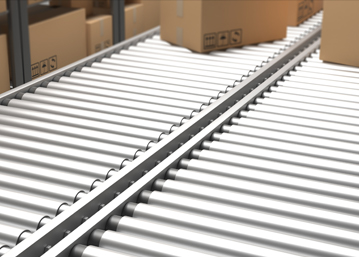
Key Categories of Industrial Conveyor Components
A modern conveyor system typically consists of several major component groups:
| Component Category | Primary Function |
| Conveyor Rollers | Support and move products or bulk materials |
| Bearings | Reduce rotational friction and support loads |
| Chains and Sprockets | Transmit power and motion |
| Pulleys | Drive and guide conveyor belts |
| Guide Rails | Maintain product positioning and alignment |
| Wear Strips | Minimize friction between moving surfaces |
| Belts and Modular Chains | Transport products through the system |
| Support Structures | Provide mechanical stability and load support |
The Relationship Between Component Quality and Productivity
Production facilities increasingly depend on automation and continuous material flow. As conveyor operating speeds rise and production schedules become more demanding, component reliability becomes a critical factor in maintaining productivity.
For example, a high-quality bearing with proper sealing can significantly reduce contamination-related failures, while precision-engineered rollers can improve tracking accuracy and decrease energy losses. Similarly, wear-resistant guide components help maintain product positioning over extended operating periods.
When conveyor components are selected correctly and maintained properly, facilities can achieve higher throughput, lower operating costs, and greater overall equipment effectiveness (OEE).
Critical Performance Factors When Evaluating Conveyor Components
Engineers and maintenance professionals typically evaluate conveyor components based on several key performance indicators:
| Performance Factor | Importance |
| Load Capacity | Determines ability to handle operational weight |
| Wear Resistance | Affects component lifespan and maintenance intervals |
| Friction Coefficient | Influences energy efficiency and operating smoothness |
| Impact Resistance | Protects against shock loading and sudden forces |
| Corrosion Resistance | Improves durability in wet or chemical environments |
| Noise Reduction | Enhances workplace comfort and compliance |
| Temperature Resistance | Ensures stable operation under extreme conditions |
| Maintenance Requirements | Influences operating costs and downtime |
How Industrial Conveyor Components Support Long-Term Cost Efficiency
Although component selection is often viewed as a purchasing decision, it has a long-term impact on total cost of ownership. High-performance conveyor components typically deliver value through:
- Longer service intervals.
- Reduced replacement frequency.
- Lower energy consumption.
- Less unplanned downtime.
- Improved production consistency.
- Reduced maintenance labor requirements.
In high-volume industrial environments, even small improvements in component efficiency can generate substantial operational savings over the lifetime of a conveyor system.
Conclusion
Industrial conveyor components are the foundation of efficient material handling systems. Every roller, bearing, chain, pulley, guide rail, and wear strip contributes directly to system reliability, productivity, safety, and operating costs. Understanding the role and performance requirements of these components allows manufacturers and facility operators to optimize conveyor performance, extend equipment life, and maximize return on investment.
What Are the Main Types of Industrial Conveyor Components?
Industrial conveyor systems rely on a wide range of components working together to ensure smooth, efficient, and reliable material movement. Each component performs a specific function, from supporting loads and transmitting power to guiding products and reducing friction. Understanding the main types of industrial conveyor components is essential for selecting the right configuration, improving system performance, and minimizing maintenance costs.
The most common industrial conveyor components can be grouped into six major categories: conveyor rollers, conveyor belts, bearings and bearing housings, sprockets and pulleys, conveyor chains, and guiding or wear components.
Conveyor Rollers
Conveyor rollers are among the most visible and widely used conveyor components. They support products, reduce friction, and facilitate material transportation throughout the conveyor system.
Depending on the application, rollers may be designed for carrying loads, absorbing impact, guiding products, or returning conveyor belts.
| Roller Type | Primary Function | Typical Application |
| Carrying Roller | Supports conveyed materials | General material handling |
| Return Roller | Supports return side of belt | Belt conveyor systems |
| Impact Roller | Absorbs loading shocks | Loading and transfer points |
| Guide Roller | Maintains belt alignment | Tracking control systems |
Key roller selection factors include load capacity, diameter, rotational speed, bearing quality, and environmental resistance.
Conveyor Belts
Conveyor belts form the carrying surface that transports products or bulk materials between processing stages. The belt material directly affects durability, hygiene, flexibility, chemical resistance, and operating efficiency.
| Belt Type | Main Advantages | Typical Industries |
| Rubber Belt | High durability and impact resistance | Mining, bulk handling |
| PVC Belt | Cost-effective and versatile | Packaging, logistics |
| PU Belt | Excellent hygiene and wear resistance | Food processing |
| Modular Plastic Belt | Easy maintenance and flexibility | Automation and manufacturing |
The choice of belt depends on factors such as product weight, conveyor speed, operating temperature, sanitation requirements, and exposure to chemicals or moisture.
Bearings and Bearing Housings
Bearings are critical components that enable smooth rotation while reducing friction between moving parts. They support radial and axial loads generated during conveyor operation and significantly influence equipment efficiency and service life.
Bearing housings provide structural support, protection from contamination, and proper alignment of bearing assemblies.
| Parameter | Importance |
| Load Rating | Determines carrying capacity |
| Rotational Speed | Affects operational performance |
| Seal Design | Protects against dust and moisture |
| Lubrication Method | Influences maintenance intervals |
| Corrosion Resistance | Extends lifespan in harsh environments |
Proper bearing selection helps reduce downtime, vibration, energy loss, and premature wear.
Sprockets, Pulleys, and Drive Components
Drive components transfer mechanical power from motors to conveyor belts, chains, or rollers. Their efficiency directly impacts throughput, positioning accuracy, and energy consumption.
Pulleys are commonly used in belt-driven systems, while sprockets engage with conveyor chains to transmit motion.
| Component | Function |
| Drive Pulley | Transfers power to conveyor belt |
| Tail Pulley | Provides belt return path |
| Bend Pulley | Changes belt direction |
| Sprocket | Drives conveyor chains |
| Coupling | Connects rotating shafts |
Important considerations include torque requirements, shaft size, alignment precision, and wear resistance.
Conveyor Chains and Chain Attachments
Conveyor chains are commonly used in systems requiring positive drive engagement, high load capacity, and accurate positioning. Compared with friction-driven systems, chains provide reliable power transmission under demanding operating conditions.
| Chain Type | Characteristics | Application |
| Roller Chain | High strength and efficiency | General conveying |
| Engineering Chain | Heavy-duty performance | Industrial processing |
| Plastic Chain | Low noise and corrosion resistance | Food and packaging lines |
| Attachment Chain | Customized product handling | Specialized automation systems |
Chain selection should consider tensile strength, wear resistance, lubrication requirements, and environmental exposure.
Wear Strips and Guide Rails
Wear strips and guide rails play a crucial role in controlling product movement and minimizing friction between moving components. Although often overlooked, these components significantly affect conveyor lifespan and operational efficiency.
Wear strips provide low-friction sliding surfaces for chains and belts, while guide rails maintain accurate product positioning throughout transportation.
| Component | Main Purpose |
| Wear Strip | Reduces sliding friction and wear |
| Guide Rail | Controls product direction and stability |
| Side Guide | Prevents product displacement |
| Corner Guide | Maintains smooth flow through curves |
Engineering plastics are frequently used for these applications because of their low friction coefficients, excellent wear resistance, and reduced maintenance requirements.
How These Components Work Together
A conveyor system achieves optimal performance only when all components operate as an integrated system. Rollers support loads, belts or chains transport products, bearings reduce friction, sprockets and pulleys transmit power, and guide components maintain alignment and positioning.
When component specifications are properly matched, facilities can improve throughput, reduce energy consumption, minimize maintenance requirements, and extend overall equipment life. Conversely, selecting incompatible or underperforming components can create bottlenecks, accelerate wear, and increase operating costs.
Conclusion
The main types of industrial conveyor components include rollers, belts, bearings, sprockets, pulleys, chains, wear strips, and guide rails. Each component contributes to the efficiency, reliability, and longevity of the conveyor system. Understanding their functions and performance characteristics enables engineers and facility managers to design more reliable material handling solutions while reducing lifecycle costs.
How Do Different Conveyor Components Affect System Efficiency and Reliability?
The efficiency and reliability of an industrial conveyor system depend not only on its overall design but also on the performance of each individual component. Every conveyor component contributes to load handling, power transmission, motion control, product stability, and wear management. When these components are properly selected and integrated, the system can achieve higher throughput, lower energy consumption, reduced downtime, and a longer service life.
Conversely, poorly matched or low-performance components can increase friction, accelerate wear, cause misalignment, and create operational bottlenecks that negatively impact productivity.
Load Distribution and Structural Stability
One of the most important factors influencing conveyor performance is how effectively the system distributes loads. Components such as rollers, bearings, support frames, and shafts must work together to evenly support the weight of conveyed materials.
Uneven load distribution can create excessive stress concentrations, leading to premature component failure and increased maintenance costs.
| Load Distribution Factor | Effect on Efficiency | Effect on Reliability |
| Proper Roller Spacing | Improves material flow | Reduces roller deformation |
| Uniform Load Support | Reduces energy loss | Extends component lifespan |
| Balanced Shaft Loading | Maintains smooth operation | Minimizes bearing wear |
| Stable Frame Design | Improves system accuracy | Reduces vibration-related failures |
For heavy-duty applications, load distribution becomes increasingly critical because dynamic forces generated during operation can significantly exceed static load values.
Friction Management and Energy Consumption
Friction is one of the largest contributors to energy loss in conveyor systems. Bearings, rollers, wear strips, guide rails, chains, and belts all influence the amount of resistance encountered during operation.
Reducing friction improves mechanical efficiency and decreases power requirements, allowing motors to operate more effectively while lowering overall operating costs.
| Component | Role in Friction Reduction | Efficiency Impact |
| Precision Bearings | Reduce rotational resistance | Lower energy consumption |
| Quality Rollers | Enable smooth product movement | Increase throughput |
| Wear Strips | Reduce sliding friction | Extend chain and belt life |
| Guide Rails | Maintain alignment | Prevent unnecessary drag |
| Low-Friction Chains | Minimize transmission losses | Improve drive efficiency |
Even small reductions in friction can generate significant energy savings in conveyor systems operating continuously for extended periods.
Component Alignment and Operational Accuracy
Proper alignment is essential for maintaining stable conveyor performance. Components such as guide rollers, pulleys, sprockets, shafts, and guide rails must operate within precise tolerances to prevent tracking problems and uneven wear.
Misalignment often results in:
- Increased vibration.
- Premature bearing failure.
- Excessive belt wear.
- Chain elongation.
- Higher energy consumption.
- Reduced conveying accuracy.
Accurate alignment not only improves efficiency but also enhances product handling consistency in automated production environments.
Power Transmission Efficiency
Drive components such as motors, sprockets, pulleys, couplings, and conveyor chains determine how effectively mechanical energy is transferred throughout the system.
Inefficient power transmission can result in energy loss, excessive heat generation, and accelerated component wear.
| Power Transmission Parameter | Impact on Performance |
| Sprocket Accuracy | Ensures smooth chain engagement |
| Pulley Balance | Reduces vibration and noise |
| Shaft Alignment | Improves torque transfer |
| Chain Condition | Maintains consistent speed |
| Coupling Precision | Minimizes mechanical losses |
Efficient power transmission directly contributes to higher productivity and reduced operating expenses.
Wear Resistance and Service Life
Wear resistance is a key factor affecting conveyor reliability. Components exposed to continuous contact, abrasion, impact, or contamination must maintain their dimensional stability and mechanical properties over time.
High-wear areas typically include:
- Conveyor chains.
- Sprockets.
- Wear strips.
- Rollers.
- Guide rails.
- Bearings.
Materials with superior wear resistance help reduce replacement frequency and maintenance downtime while maintaining consistent conveyor performance.
| Wear-Related Factor | Benefit to Reliability |
| High Surface Hardness | Slower material degradation |
| Abrasion Resistance | Longer service life |
| Impact Resistance | Reduced cracking and breakage |
| Dimensional Stability | Maintains alignment accuracy |
Noise Reduction and Workplace Performance
Noise levels are increasingly important in modern industrial facilities. Excessive noise often indicates mechanical inefficiencies such as poor alignment, worn bearings, damaged chains, or inadequate lubrication.
Low-noise conveyor components contribute to:
- Improved operator comfort.
- Enhanced workplace safety.
- Reduced vibration.
- Better equipment condition monitoring.
- Longer component lifespan.
Engineering plastics and precision-machined components are frequently used to reduce operational noise while maintaining performance.
Environmental Resistance and Reliability
Industrial conveyor systems often operate in challenging environments involving moisture, chemicals, dust, extreme temperatures, or corrosive substances. Component material selection directly affects reliability under these conditions.
| Environmental Condition | Required Component Property |
| High Humidity | Corrosion resistance |
| Chemical Exposure | Chemical compatibility |
| Dusty Conditions | Effective sealing systems |
| Low Temperatures | Impact toughness |
| High Temperatures | Thermal stability |
Components designed for the specific operating environment maintain performance consistency and reduce unexpected failures.
How Component Compatibility Influences Overall System Reliability
Individual component quality is important, but compatibility between components is equally critical. Bearings, rollers, chains, sprockets, guide systems, and structural elements must be designed to operate within compatible load, speed, and dimensional parameters.
When components are properly matched, the system experiences:
- Lower mechanical stress.
- Improved operating efficiency.
- More stable product flow.
- Reduced maintenance requirements.
- Longer equipment lifespan.
- Higher overall equipment effectiveness (OEE).
Incompatible components can create cascading failures, where excessive wear in one area leads to accelerated damage throughout the conveyor system.
Conclusion
Different conveyor components directly influence system efficiency and reliability through their effects on load distribution, friction reduction, power transmission, alignment accuracy, wear resistance, environmental adaptability, and component compatibility. By selecting high-quality components that are properly engineered for the application, manufacturers can maximize conveyor performance, reduce operating costs, minimize downtime, and achieve long-term operational stability.
Which Materials Are Commonly Used in Industrial Conveyor Components?
Material selection is one of the most important factors in the design and performance of industrial conveyor components. The material used in rollers, bearings, sprockets, guide rails, wear strips, chains, and structural parts directly affects durability, load capacity, wear resistance, corrosion resistance, operating noise, and maintenance requirements.
Modern conveyor systems utilize a combination of engineering plastics, metals, and advanced composite materials to achieve the optimal balance between performance, cost, and service life. Selecting the appropriate material requires careful consideration of operating conditions, including load weight, conveyor speed, environmental exposure, temperature range, and industry-specific requirements.
Why Material Selection Matters in Conveyor Systems
Every conveyor component experiences mechanical stress during operation. Improper material selection can result in excessive wear, deformation, corrosion, or premature failure, while the right material can significantly improve efficiency and reduce lifecycle costs.
Key benefits of proper material selection include:
- Extended component lifespan.
- Reduced maintenance frequency.
- Improved operational efficiency.
- Lower energy consumption.
- Enhanced corrosion resistance.
- Better product handling performance.
- Reduced downtime and replacement costs.
Engineering Plastics
Engineering plastics have become increasingly important in conveyor systems because they offer low friction, excellent wear resistance, corrosion resistance, and reduced operating noise. They are commonly used for guide rails, wear strips, conveyor chains, rollers, sprockets, and various motion-control components.
UHMW-PE (Ultra-High Molecular Weight Polyethylene)
UHMW-PE is widely used in conveyor wear components due to its exceptional abrasion resistance and extremely low coefficient of friction.
| Property | Typical Performance |
| Wear Resistance | Excellent |
| Friction Coefficient | Very Low |
| Chemical Resistance | Excellent |
| Impact Strength | Very High |
| Moisture Absorption | Very Low |
Typical applications include chain guides, wear strips, side guides, and sliding surfaces.
Nylon (PA)
Nylon offers high mechanical strength and excellent load-bearing capabilities, making it suitable for gears, rollers, bushings, and conveyor sprockets.
| Property | Typical Performance |
| Mechanical Strength | High |
| Wear Resistance | Very Good |
| Load Capacity | High |
| Impact Resistance | Good |
| Moisture Absorption | Moderate |
Nylon is often selected when strength and durability are more important than dimensional stability in humid environments.
Acetal (POM)
Acetal provides excellent dimensional stability, low moisture absorption, and high precision, making it ideal for components requiring tight tolerances.
| Property | Typical Performance |
| Dimensional Stability | Excellent |
| Friction Performance | Very Good |
| Moisture Absorption | Very Low |
| Machining Precision | Excellent |
| Wear Resistance | Very Good |
Common applications include conveyor bearings, precision sprockets, guide components, and modular conveyor systems.
Polypropylene (PP)
Polypropylene is valued for its excellent chemical resistance and lightweight characteristics.
| Property | Typical Performance |
| Chemical Resistance | Excellent |
| Weight | Very Light |
| Corrosion Resistance | Excellent |
| Cost Efficiency | High |
| Mechanical Strength | Moderate |
It is commonly used in food processing, chemical handling, and lightweight conveyor applications.
Comparison of Common Engineering Plastics
| Property | UHMW-PE | Nylon (PA) | Acetal (POM) | Polypropylene (PP) |
| Wear Resistance | Excellent | Very Good | Very Good | Good |
| Mechanical Strength | Moderate | High | High | Moderate |
| Dimensional Stability | Good | Good | Excellent | Good |
| Chemical Resistance | Excellent | Good | Good | Excellent |
| Impact Resistance | Excellent | Good | Good | Moderate |
Metal Components
Metal materials remain essential in conveyor systems due to their superior strength, rigidity, and ability to withstand heavy loads. Metals are commonly used for shafts, frames, bearings, pulleys, rollers, chains, and structural supports.
Carbon Steel
Carbon steel is widely used because it offers high strength and cost-effectiveness for general industrial applications.
- High load-bearing capacity.
- Excellent structural strength.
- Good machinability.
- Economical for large-scale systems.
However, carbon steel may require protective coatings in corrosive environments.
Stainless Steel
Stainless steel provides superior corrosion resistance and hygiene, making it suitable for demanding environments.
- Excellent corrosion resistance.
- High strength.
- Easy cleaning and sanitation.
- Long service life.
It is frequently used in food processing, pharmaceutical production, and wet operating environments.
Aluminum Alloys
Aluminum alloys offer an excellent balance between strength and lightweight construction.
- Low density.
- Good corrosion resistance.
- Easy fabrication.
- Reduced overall conveyor weight.
Aluminum is commonly used in conveyor frames, support structures, and automation systems where weight reduction is beneficial.
Comparison of Common Metal Materials
| Property | Carbon Steel | Stainless Steel | Aluminum Alloy |
| Mechanical Strength | High | High | Moderate |
| Corrosion Resistance | Moderate | Excellent | Good |
| Weight | Heavy | Heavy | Light |
| Maintenance Requirement | Moderate | Low | Low |
| Cost Efficiency | High | Moderate | Moderate |
Composite and Specialty Materials
As conveyor systems become more specialized, composite and advanced materials are increasingly used to meet unique performance requirements.
Fiber-Reinforced Composites
These materials combine lightweight characteristics with enhanced strength and stiffness. They are often used in applications where weight reduction and structural performance are both critical.
High-Temperature Materials
Certain conveyor environments require materials capable of maintaining performance under elevated temperatures. These materials are selected for heat resistance, dimensional stability, and long-term durability.
Chemical-Resistant Materials
Chemical processing facilities often require components capable of resisting acids, alkalis, solvents, and cleaning agents without degradation.
Food-Grade Materials
Food-contact conveyor systems typically utilize materials that support hygienic operation, easy cleaning, and compliance with food safety standards.
Factors to Consider When Selecting Conveyor Component Materials
Material selection should be based on a complete evaluation of operating conditions and performance objectives.
| Selection Factor | Importance |
| Load Capacity | Determines structural requirements |
| Operating Speed | Affects wear and friction performance |
| Temperature Range | Influences material stability |
| Chemical Exposure | Determines corrosion resistance needs |
| Moisture Conditions | Affects dimensional stability |
| Maintenance Goals | Impacts lifecycle costs |
| Industry Standards | Ensures regulatory compliance |
Conclusion
Industrial conveyor components are manufactured from a variety of materials, including engineering plastics, metals, and advanced composites. Engineering plastics provide low friction, corrosion resistance, and noise reduction, while metals deliver superior strength and load-bearing capability. Composite and specialty materials address demanding requirements such as extreme temperatures, chemical exposure, and weight reduction. By carefully matching material properties to operating conditions, engineers can maximize conveyor efficiency, reliability, and service life while minimizing maintenance and operational costs.
How Can You Select the Right Industrial Conveyor Components for Different Industries?
Selecting the right industrial conveyor components is a critical step in designing a reliable, efficient, and cost-effective material handling system. Different industries operate under unique conditions involving load characteristics, production speeds, environmental factors, hygiene requirements, and maintenance expectations. As a result, conveyor components that perform well in one industry may not be suitable for another.
A successful component selection process requires a thorough understanding of operational demands, material properties, equipment compatibility, and long-term performance objectives. By matching component specifications to industry-specific requirements, businesses can improve productivity, reduce downtime, and lower total ownership costs.
Key Factors to Evaluate Before Selecting Conveyor Components
Regardless of industry, several fundamental criteria should be evaluated during the selection process.
| Selection Factor | Why It Matters |
| Load Capacity | Determines whether components can safely support operational loads |
| Operating Speed | Affects wear rates, friction, and power transmission requirements |
| Environmental Conditions | Influences material and corrosion resistance requirements |
| Maintenance Accessibility | Impacts downtime and servicing costs |
| Temperature Range | Determines material stability and durability |
| Product Characteristics | Affects conveyor design and handling requirements |
| Industry Compliance | Ensures adherence to operational and safety standards |
Once these factors are defined, component selection can be optimized for the specific industry application.
Manufacturing and Assembly Lines
Manufacturing environments typically require precise product positioning, continuous operation, and high throughput. Conveyor components must support repetitive movement while maintaining dimensional accuracy and reliability.
Recommended characteristics include:
- High-precision rollers for smooth transportation.
- Wear-resistant guide rails for accurate product tracking.
- Low-maintenance bearings to reduce downtime.
- Durable sprockets and chains for continuous operation.
- Components capable of handling variable production speeds.
| Requirement | Recommended Component Feature |
| High Throughput | Low-friction rollers and bearings |
| Precision Positioning | Accurate guide systems |
| Continuous Operation | Long-life wear components |
| Automation Integration | Dimensionally stable materials |
Logistics and Warehousing Facilities
Distribution centers and warehouses often handle large volumes of packages with varying sizes and weights. Conveyor systems must provide reliable transportation while minimizing maintenance interruptions.
Key component priorities include:
- High-capacity rollers.
- Durable bearings with effective sealing.
- Impact-resistant transfer components.
- Energy-efficient drive systems.
- Low-noise operation for large facilities.
| Operational Challenge | Component Solution |
| High Package Volume | Heavy-duty rollers |
| Frequent Start-Stop Cycles | Reliable drive components |
| Long Operating Hours | Low-maintenance bearings |
| Variable Load Sizes | Flexible conveyor configurations |
Food and Beverage Processing
Food processing facilities require conveyor components that support hygiene, sanitation, and resistance to cleaning chemicals. Materials must be easy to clean and resistant to corrosion and moisture.
Critical selection criteria include:
- Corrosion-resistant materials.
- Smooth, easy-to-clean surfaces.
- Moisture-resistant components.
- Low-contamination designs.
- Chemical-resistant guide and wear components.
| Requirement | Preferred Feature |
| Frequent Washdowns | Corrosion-resistant materials |
| Food Safety | Hygienic component design |
| Chemical Cleaning | Chemical-resistant plastics |
| Moist Environments | Low moisture absorption materials |
Packaging Equipment
Packaging systems demand high speed, accurate product positioning, and reliable synchronization between conveyor sections and automated machinery.
Suitable components should provide:
- High-speed performance.
- Precise product guidance.
- Low vibration operation.
- Minimal maintenance requirements.
- Consistent tracking accuracy.
| Packaging Requirement | Recommended Component Characteristic |
| High Speed Operation | Precision bearings and rollers |
| Product Stability | Effective guide systems |
| Machine Synchronization | Accurate drive components |
| Reduced Downtime | Wear-resistant materials |
Pharmaceutical and Cleanroom Applications
Pharmaceutical production environments require exceptional cleanliness, precision, and contamination control. Conveyor components must support stringent hygiene standards while maintaining operational reliability.
Important component characteristics include:
- Non-contaminating materials.
- Smooth and cleanable surfaces.
- Corrosion resistance.
- Dimensional stability.
- Low particle generation.
| Requirement | Selection Priority |
| Cleanroom Compatibility | Low-particle materials |
| Precision Handling | Dimensionally stable components |
| Frequent Sanitization | Chemical-resistant materials |
| Regulatory Compliance | Hygienic component design |
Mining and Heavy-Duty Material Handling
Mining, aggregate processing, and bulk material handling systems operate under some of the most demanding conditions. Conveyor components must withstand heavy loads, abrasive materials, impact forces, and harsh environmental conditions.
Key requirements include:
- Maximum wear resistance.
- High load-bearing capability.
- Impact-resistant rollers.
- Heavy-duty chains and sprockets.
- Dust-resistant bearing systems.
| Heavy-Duty Challenge | Recommended Component Feature |
| Abrasive Materials | High wear resistance |
| Heavy Loads | Reinforced structural components |
| Shock Loading | Impact-resistant rollers |
| Dust Exposure | Sealed bearing systems |
| Continuous Operation | Long-service-life components |
Industry Comparison: Conveyor Component Priorities
| Industry | Primary Priority | Key Component Focus |
| Manufacturing | Precision and productivity | Rollers, guide rails, bearings |
| Warehousing | Throughput and reliability | Rollers, drives, bearings |
| Food Processing | Hygiene and corrosion resistance | Chains, guides, wear strips |
| Packaging | Speed and positioning accuracy | Bearings, rollers, guides |
| Pharmaceutical | Cleanliness and precision | Low-particle components |
| Mining | Durability and load capacity | Heavy-duty rollers and chains |
Common Selection Mistakes to Avoid
Even well-designed conveyor systems can experience performance issues if component selection is based solely on initial cost rather than long-term operational requirements.
- Underestimating actual load conditions.
- Ignoring environmental exposure factors.
- Selecting materials without considering wear resistance.
- Overlooking maintenance accessibility.
- Failing to match component specifications across the system.
- Using components not designed for industry-specific requirements.
A lifecycle-focused selection strategy typically delivers better performance and lower total ownership costs over time.
Conclusion
Selecting the right industrial conveyor components requires a detailed understanding of industry-specific operating conditions, performance objectives, and environmental challenges. Manufacturing facilities prioritize precision, warehouses focus on throughput, food processing emphasizes hygiene, pharmaceutical operations require contamination control, and mining applications demand maximum durability. By carefully evaluating load capacity, environmental conditions, maintenance requirements, and material properties, businesses can build conveyor systems that achieve superior efficiency, reliability, and long-term value.
Related products
-
-
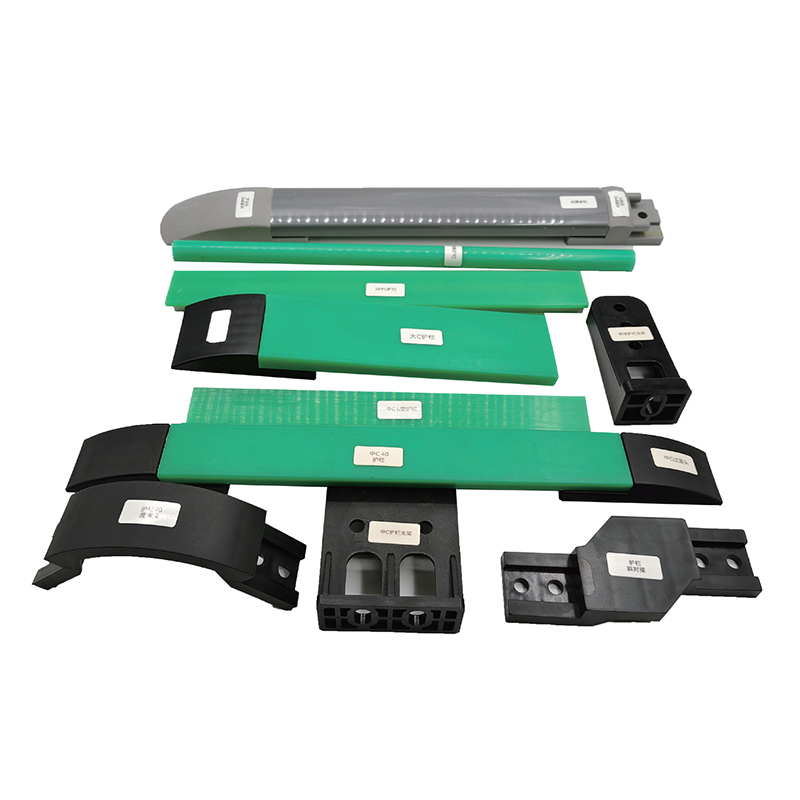 Conveyor Guardrail
The conveyor guardrail is a modular protective structure installed along the per...
-
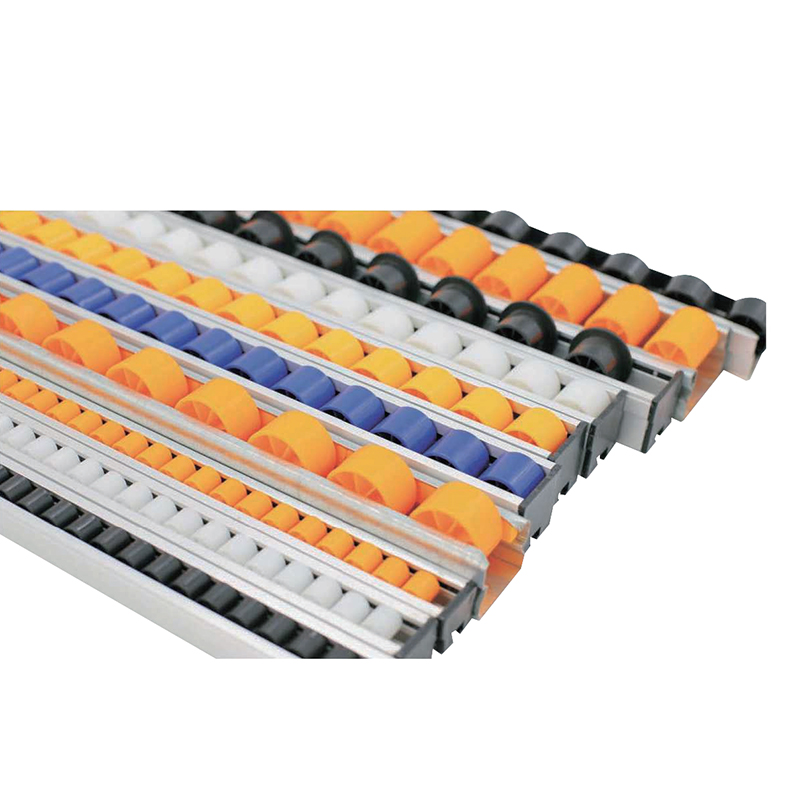 Conveyor Flow Bar
The conveyor flow bar is a rolling component designed for gravity-driven or assi...
-
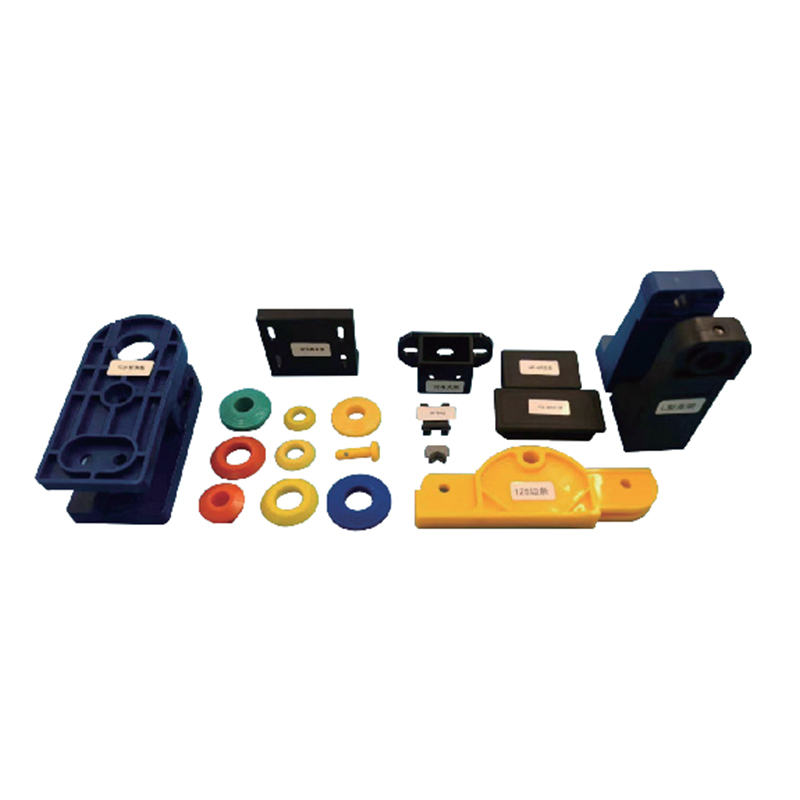 Conveyor Accessories
Conveyor accessories are a collection of functional components designed for indu...
-
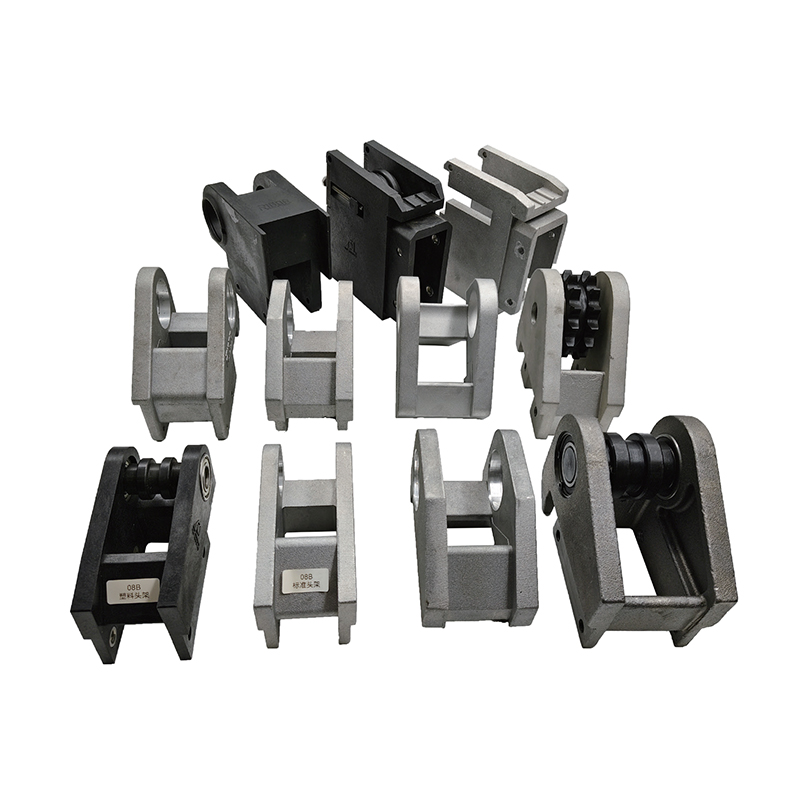 Chain Conveyor Head Frame
1. Product Definition The chain conveyor head frame serves as the primary drive-...
-
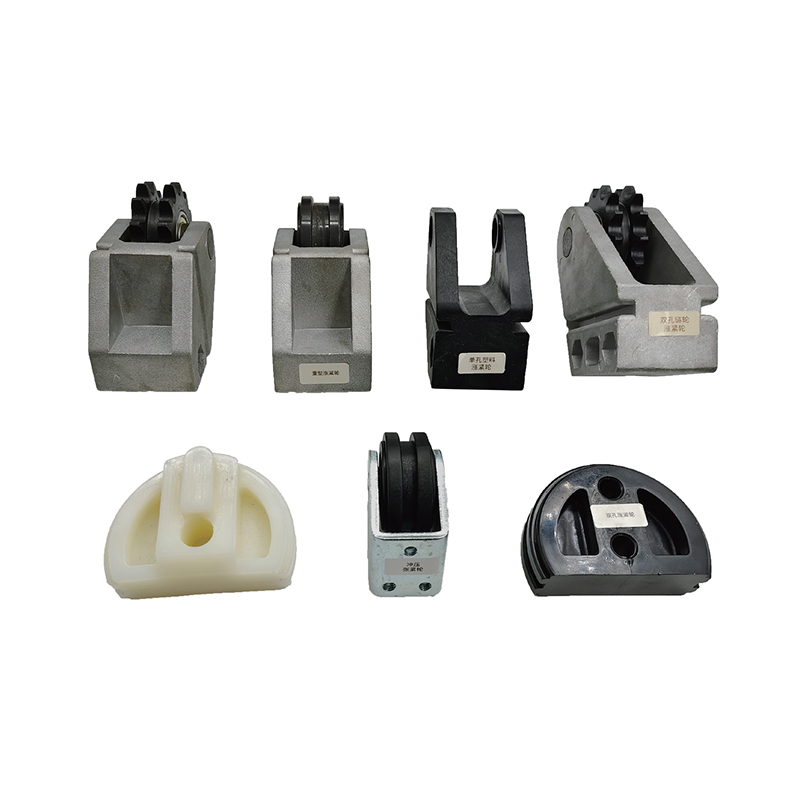 Chain Conveyor Tension Wheel
The chain conveyor tension wheel is a tension adjustment device used in chain dr...


+86-13250912999
Huzhou Nanxun Guan's Plastic Industry Co., Ltd.
Email: [email protected]
Address: Building 8, North Zone, Dehao Industrial Park, Linghu Town, Nanxun District, Huzhou City, Zhejiang Province, China
Navigation
Products
About us
Copyright © Huzhou Nanxun Guan's Plastic Industry Co., Ltd.
All Rights Reserved.
 Privacy
Wholesale Plastic Conveyor Parts Manufacturers
Privacy
Wholesale Plastic Conveyor Parts Manufacturers