
 English
 中文简体
 русский
 Español

The guide wheel serves as a critical directional component in industrial conveyi...

Industry News
Home / News / Industry News / Tapered Conveyor Roller Bushing Guide: Fit, Materials and Sizing Decisions
Tapered Conveyor Roller Bushing Guide: Fit, Materials and Sizing Decisions
Author: admin / 2026-11-20
Content
- 1 What a Tapered Conveyor Roller Bushing Actually Does
- 2 Why the Taper Matters More Than the Plastic
- 3 Where You Will Find Them on a Conveyor Line
- 4 Choosing the Right Plastic for the Job
- 5 A Short Specification Checklist
- 6 Fitting, Running In and Replacing
- 7 Working With a Supplier Who Has Seen the Failure Modes
A conveyor line rarely goes down because of its biggest components. More often the trouble starts with a small plastic part nobody looks at — a tapered conveyor roller bushing that has worn oval, gone brittle, or was never quite the right shape to begin with. We have been moulding parts like this since 2006, and the pattern repeats across every industry we serve: the bushing costs very little, but a stopped line costs a great deal.
What follows is a practical walk through what a tapered bushing does, why the cone angle matters more than most buyers expect, which plastic compounds hold up where, and how to specify the part so it seats correctly the first time.
What a Tapered Conveyor Roller Bushing Actually Does
A tapered bushing sits at the end of a roller tube, between the shaft and either the roller seat or the end cap. Its outer surface is conical; its bore is cylindrical and sized for the shaft. When the roller is pressed home, the taper wedges gently inward and pulls the assembly into alignment as it travels.
That single design choice does three jobs at once. It centres the shaft, it takes up the small differences in tube length and frame width that accumulate on any real conveyor, and it gives the joint a slightly compliant feel, so vibration and shock load are absorbed instead of being passed straight into the bearing.
Most of the bushings we produce fall into a few families: plain cone sleeves, flanged cone sleeves that add a thrust face, and split versions that squeeze into a seat for a firmer grip. The right one depends on how the roller is retained and how much axial play the line can tolerate.
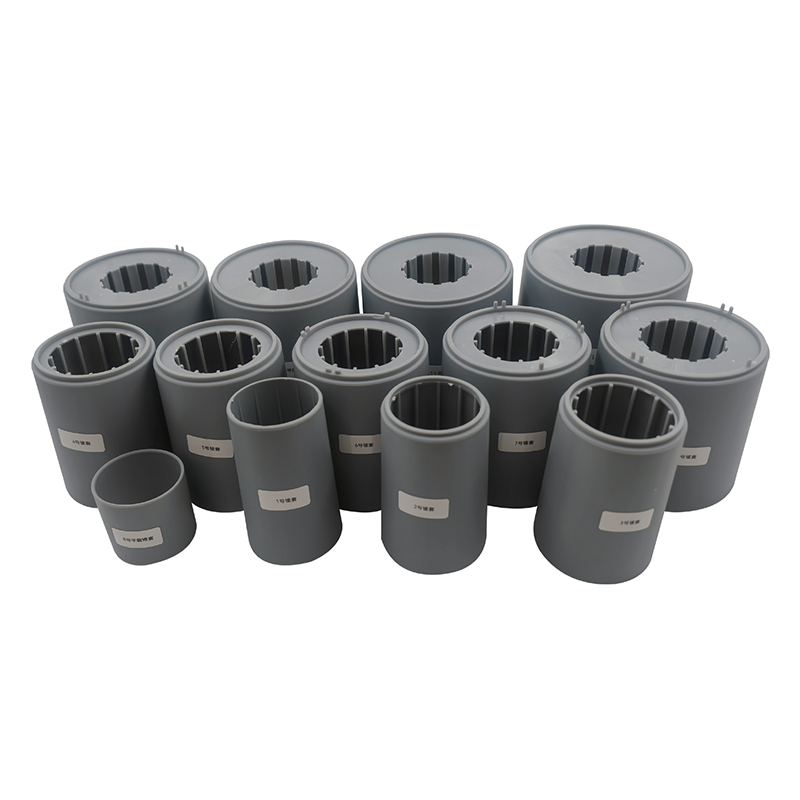 Roller Cone Sleeve for Keyless Tapered Shaft ConnectionsTapered sleeve creates a keyless interference fit for roller drive systems, supports repeated disassembly, and is available in 38 and 50 pipe series.View Product →
Why the Taper Matters More Than the Plastic
Buyers often spend their time comparing acetal with nylon and skip the geometry. In practice, a bushing with the wrong cone angle misbehaves in any material. The taper is what converts a loose push fit into a self-aligning joint.
- Self-centring action: the cone guides the shaft towards the bore axis, so a slightly off-square seat still produces a true-running roller.
- Tolerance absorption: a few tenths of a millimetre of frame width variation disappear into the taper rather than into shaft end-play.
- Faster assembly: parts drop in and settle instead of needing to be forced square by hand.
- Spread load: contact pressure is distributed along the cone rather than concentrated on a thin shoulder.
- Quieter running: a snug, aligned joint rattles far less than a loose cylindrical bush.
Matching the cone angle to the seat angle is therefore the first measurement to confirm. A one- or two-degree mismatch is enough to turn a press fit into a rocking fit after a few thousand cycles.
Where You Will Find Them on a Conveyor Line
Tapered bushings appear wherever roller tubes meet frames: gravity roller sections in picking areas, powered roller conveyors driven through sprockets or O-band pulleys, accumulation zones, and transfer points. In food, pharmaceutical and beverage plants they are usually specified in washdown-friendly grades. In baggage handling and tyre plants they have to survive shock loads and grit.
The bushing does not work alone. It sits inside a plastic seat or end cap, is often paired with a retaining ring, and may share the roller end with a drive wheel. If you want the wider picture of how these parts fit together, our guide to conveyor roller fittings covers the full family and how the pieces interact.
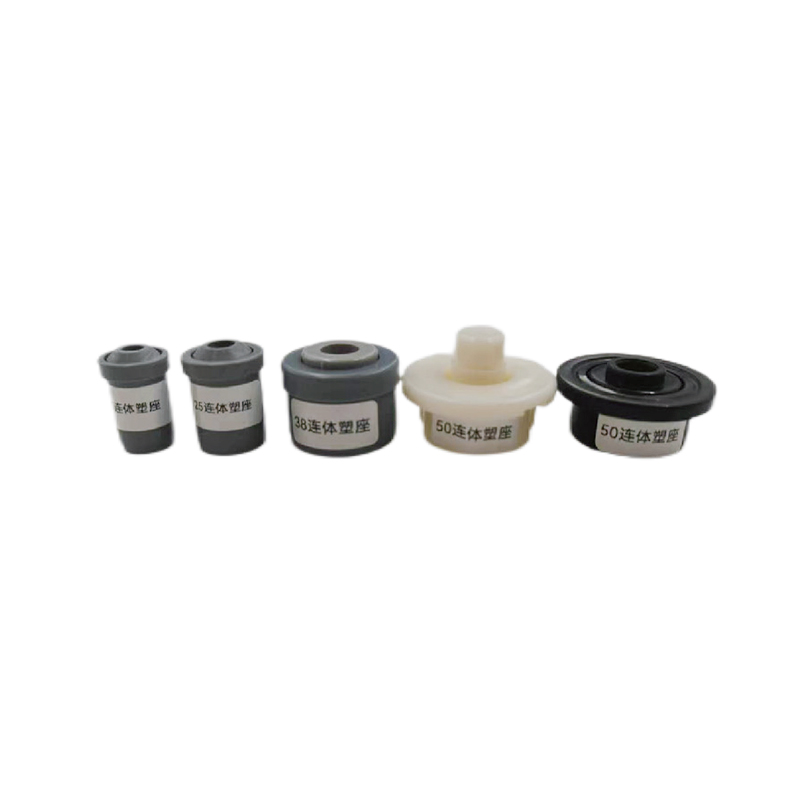 One-Piece Roller Plastic Seat with Integrated Bearing HousingInjection-molded seat combines bearing housing and mounting bracket, simplifies assembly, resists corrosion, and is available in 20–50 mm diameters for light-duty conveyors.View Product →
A common field complaint is a roller that starts to squeal after a few months. Nine times out of ten the seat has worn and the bushing is now moving with the shaft instead of holding it. Checking seat condition at the same time as bushing wear saves a second shutdown.
Choosing the Right Plastic for the Job
Once the geometry is settled, material selection decides service life. The table below reflects what we see on real lines rather than laboratory rankings.
| Material | Best suited to | Points to watch |
|---|---|---|
| POM (acetal) | General conveying, tight tolerance, low friction | Notch sensitive; avoid aggressive chemicals |
| PA6 / PA66 nylon | Higher loads, slightly misaligned seats, tough duty | Absorbs moisture; allow for dimensional change |
| UHMWPE | Quiet running, washdown, abrasive dust | Softer; creeps under sustained load |
| PP | Light duty, chemical exposure, cost-sensitive lines | Lower stiffness; limited high-temperature range |
| Glass-filled POM or PA | Heavy rollers with high radial load | More abrasive to the mating shaft surface |
Additives matter as much as the base resin. Antistatic grades are worth asking about for electronics and packaging lines, food-contact compliant compounds for anything that may see product spillage, and UV-stabilised grades for outdoor or skylight-lit buildings.
A Short Specification Checklist
When you send an enquiry, these details let a moulder quote and tool accurately in one round instead of three:
- Shaft diameter and the bore tolerance you can live with.
- Outer taper dimensions, including the angle and the two diameters.
- Seat or end-cap geometry the bushing presses into.
- Flange requirement and its thickness.
- Radial and axial load per roller, plus expected shock.
- Operating temperature range and any cleaning chemicals used.
- Colour coding, if maintenance staff identify sizes by colour.
- Annual quantity and whether the part is a spare or an OEM fit.
Small as it is, a bushing with a defined load figure and a defined chemical environment can usually be specified in a single conversation.
Fitting, Running In and Replacing
Installation habits decide how long a bushing lasts. The sequence we recommend to customers is straightforward:
- Clean the seat and the shaft; grit trapped under a cone will never seat evenly.
- Check the seat for ovality before fitting a new bushing.
- Press by hand or with a soft-faced tool on the flange, never on the cone.
- Confirm the roller turns freely with no detectable end-play.
- Record the fit date so wear intervals become predictable rather than surprising.
Typical wear signs are a polished, oval bore, a cracked flange, or a bushing that drops out of the seat on its own. Once any of these appear, replace in sets rather than one at a time — a mixed-age roller group runs unevenly and accelerates the next failure.
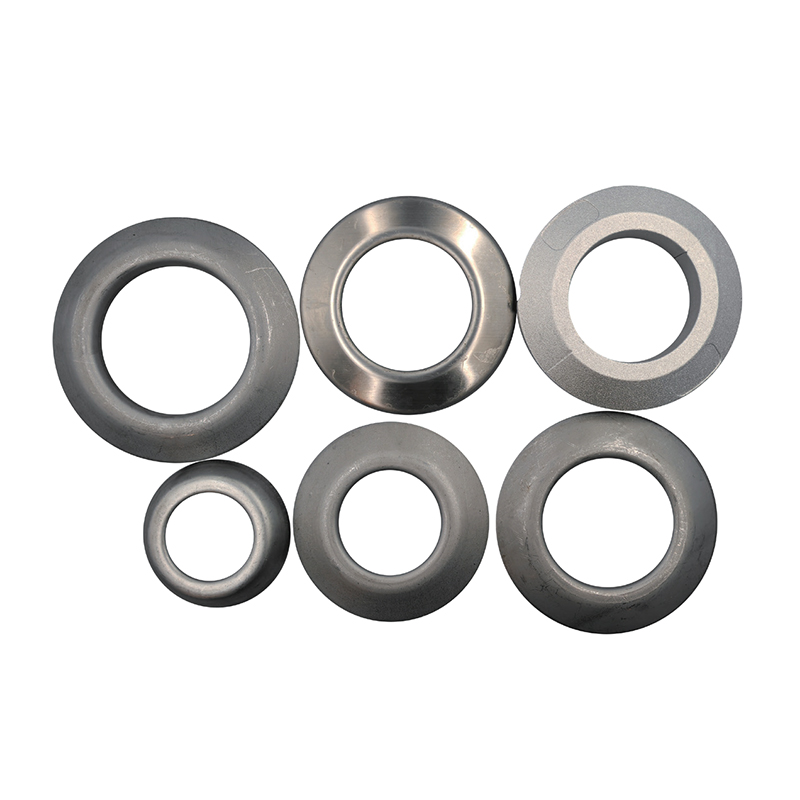 Roller Retaining Ring for Axial Positioning in ConveyorsRing-shaped axial stop keeps conveyor rollers and shafts correctly positioned, supports easy maintenance, and comes in 50–89 mm carbon or stainless steel sizes.View Product →
Working With a Supplier Who Has Seen the Failure Modes
We are a plastic parts manufacturer rather than a catalogue reseller, which means bushing geometry, resin choice and moulding tolerance are decided together with the customer. Our three production sites in Zhejiang and Jiangsu, plus an in-house laser cutting workshop, let us move from sample to batch without handing the job to a third party.
Alongside tapered bushings, we supply the surrounding parts that keep a roller end working as a system: the plastic seats, retaining rings, PVC roller tubes and drive pulleys. You can see the whole set in our roller fittings range. If you are unsure which combination suits your line, send us a drawing or a worn sample and we will tell you honestly whether a standard part will do or whether a small tooling change makes more sense.
A tapered conveyor roller bushing is a small purchase with an outsized effect on uptime. Get the cone angle right, choose the plastic for the environment rather than the price list, and fit it with the same care you would give a bearing. The reward is a quieter line, fewer unplanned stops, and a spare-parts drawer that stays closed.
Related products
-
-
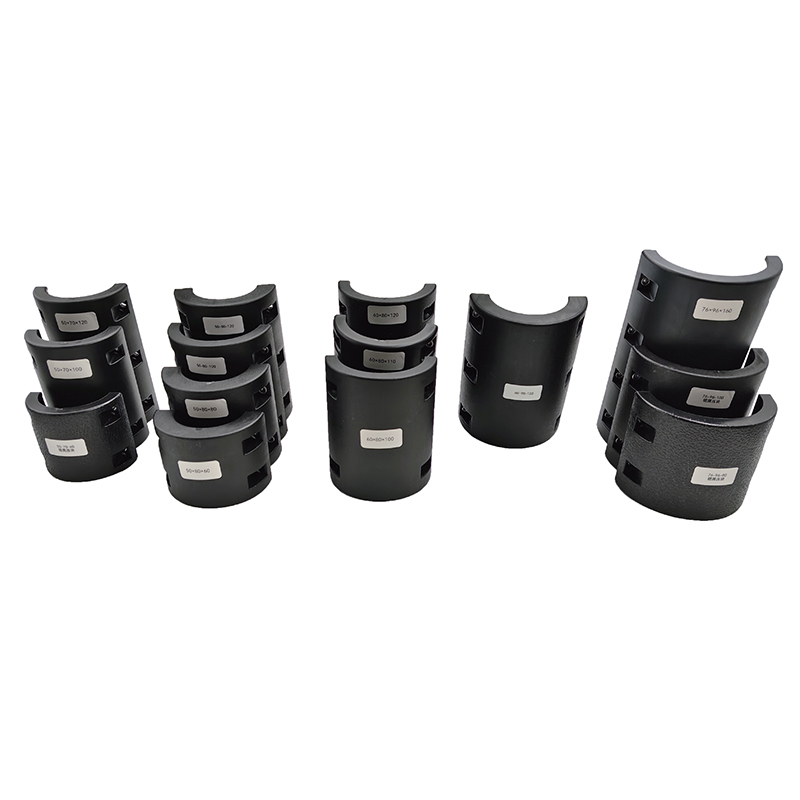 Roller Straight Sleeve
The Roller Straight Sleeve is a functional covering component installed on the o...
-
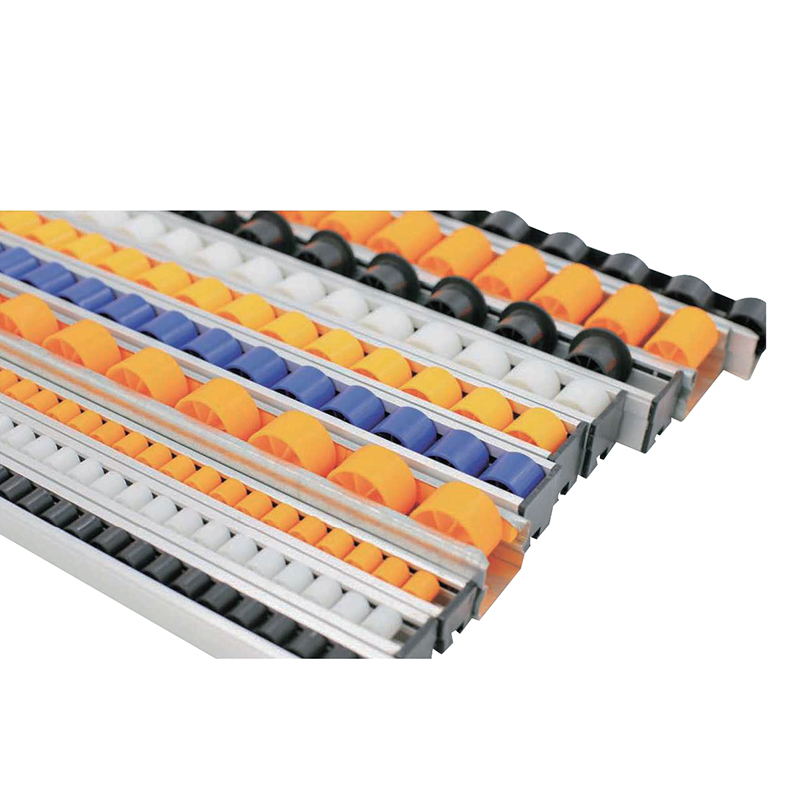 Conveyor Flow Bar
The conveyor flow bar is a rolling component designed for gravity-driven or assi...
-
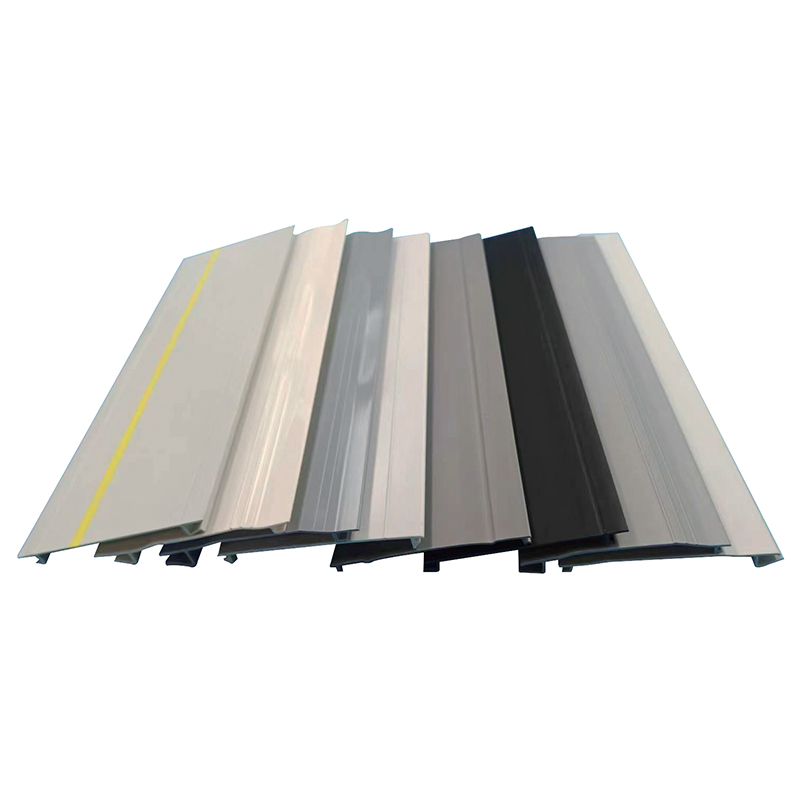 Conveyor Sealing Plate
The conveyor sealing plate is a side enclosure component designed for conveyor e...
-
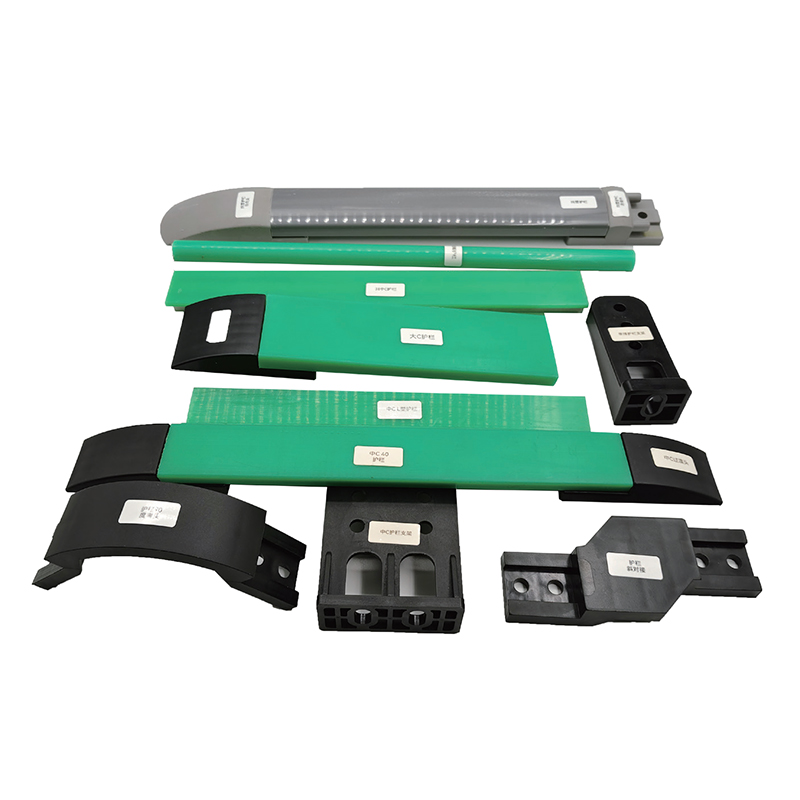 Conveyor Guardrail
The conveyor guardrail is a modular protective structure installed along the per...
-
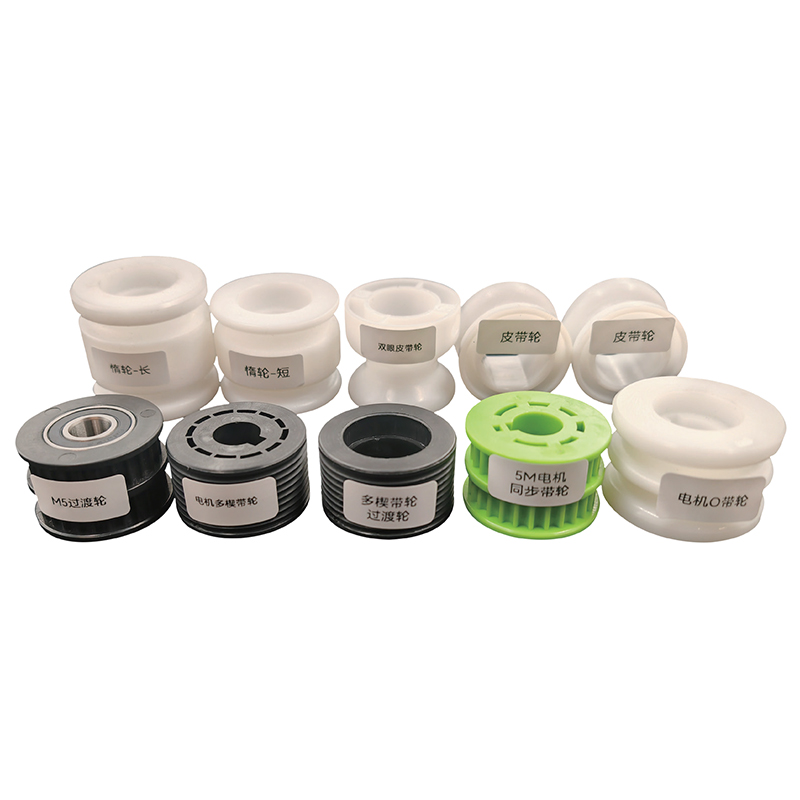 Roller Transition Wheel
The transition wheel is used in conveyor systems to support material transfer be...


+86-13250912999
Huzhou Nanxun Guan's Plastic Industry Co., Ltd.
Email: [email protected]
Address: Building 8, North Zone, Dehao Industrial Park, Linghu Town, Nanxun District, Huzhou City, Zhejiang Province, China
Navigation
Products
About us
Copyright © Huzhou Nanxun Guan's Plastic Industry Co., Ltd.
All Rights Reserved.
 Privacy
Wholesale Plastic Conveyor Parts Manufacturers