
 English
 中文简体
 русский
 Español

Definition and Structural Characteristics The Open Plastic Seat is a terminal su...

Industry News
Home / News / Industry News / Conveyor Roller End Cap: How Types, Materials and Fit Affect Roller Life
Conveyor Roller End Cap: How Types, Materials and Fit Affect Roller Life
Author: admin / 2026-11-13
Content
A conveyor roller looks simple from the outside: a tube, a shaft, a bearing at each end. What actually holds that assembly together and keeps it running quietly is the conveyor roller end cap — a small moulded part that closes the tube, centres the shaft and keeps dust out of the bearing. We have been moulding parts like this since 2006, and if there is one thing we have learned, it is that end caps are rarely the first component a buyer asks about and very often the one that decides whether a roller runs smoothly for years or starts rattling within a few months.
What a Conveyor Roller End Cap Actually Does
An end cap is a deceptively simple piece of plastic. In a well-designed roller it performs several jobs at once, and if any one of them is done badly, the whole roller suffers.
- Sealing the bearing. The cap covers the gap between the tube end and the shaft, blocking dust, grit, water and product debris that would otherwise work into the bearing race.
- Centring the shaft. A moulded bore keeps the shaft concentric with the tube, so the roller spins true instead of wobbling under load.
- Closing the tube. The cap gives the roller a clean, safe end face and stops the tube from filling with debris on open-frame conveyors.
- Setting the face position. The shoulder of the cap controls how far the roller sits from the frame, which affects whether product tracks properly or drifts against a guardrail.
- Damping noise and shock. Plastic in contact with metal absorbs a surprising amount of the rattle that appears when rollers are loaded and unloaded thousands of times a shift.
The Main End Cap Configurations
Most rollers in industrial use fall into a handful of patterns. The right one depends on how the roller is mounted, whether it is driven, and how often maintenance teams need to swap it out.
| Configuration | How it mounts | Typical use |
|---|---|---|
| Push-in end cap | Presses into the tube bore by hand or with light pressure | Gravity conveyors and general-purpose rollers |
| Spring-loaded push-in cap | Spring clip expands inside the tube for a friction hold | Lines where rollers are replaced frequently |
| End cap plastic seat | Moulded seat with an integrated cap, fixed to the frame | Driven rollers on modular conveyor frames |
| Non-end-cap plastic seat | Open seat used with a separate cap or bearing housing | Applications needing access or a custom closure |
Choosing between a loose cap and a seat-based design is usually a question of service strategy. If your team replaces rollers as complete units, a simple push-in cap is fast and cheap. If the seat stays on the frame and only the roller is swapped, an integrated seat keeps alignment consistent across every replacement.
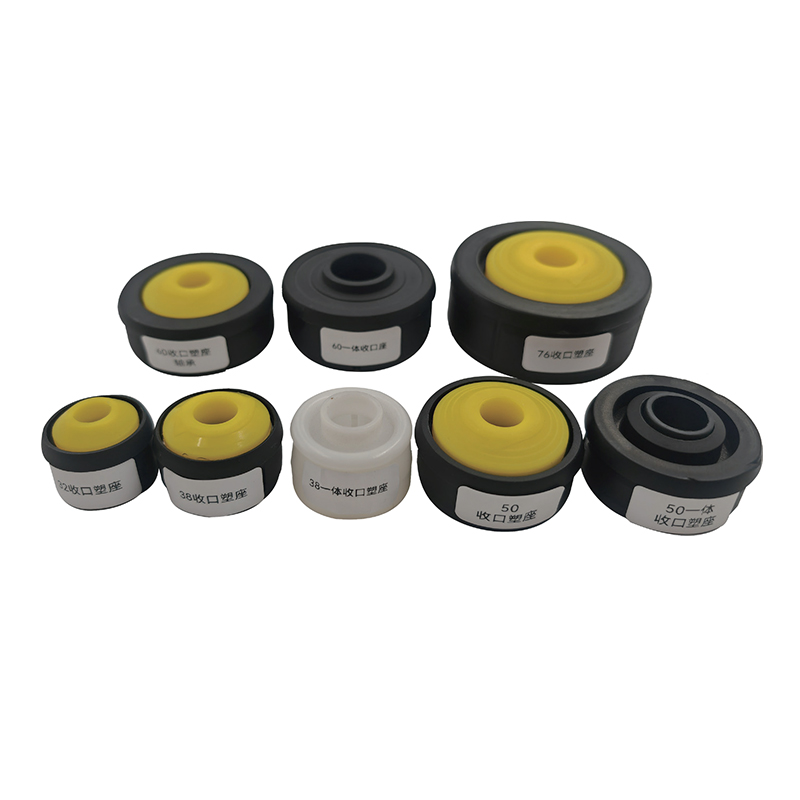 Plastic Roller End Cap with Integrated SeatFor seat-based roller service, this plastic end cap combines a bearing housing and labyrinth sealing in an open-frame design for faster replacement.View Product →
Which Plastic Suits Your Conveyor Line
End caps are almost always moulded rather than machined, so material choice is mostly about the environment the roller lives in. Four families cover the large majority of cases.
- Polypropylene (PP) — the workhorse. Good chemical resistance, low cost, adequate stiffness for light and medium rollers.
- Polyethylene (PE) — softer and more forgiving, useful where caps are pressed in and out repeatedly and you want to avoid cracking the rim.
- POM (acetal) — dimensionally stable with low friction and good wear resistance, a sensible choice for driven rollers and tight bore tolerances.
- PA (nylon) — tough and impact resistant, often picked for heavier loads or where the cap also acts as a bearing surface.
Temperature, washdown and cleaning chemicals matter more than people expect. A cap that fits perfectly at room temperature can loosen on a line running warm, and a cap that survives a dry warehouse can craze after repeated exposure to cleaning agents. It is worth describing the actual operating conditions to your supplier rather than only sending a drawing. If you want a broader view of how caps sit alongside sleeves, shafts and seats, our guide to conveyor roller fittings, their types and material selection covers the whole assembly.
Getting the Fit Right: Tube Bore, Shaft and Tolerance
Most end cap complaints — caps falling out, caps splitting, rollers running off-centre — trace back to fit rather than material. A few dimensions do most of the work:
- Tube inside diameter, measured at three points around the circumference. Tubes are not perfectly round, and a cap sized to the nominal bore will be loose on the wide axis.
- Wall thickness at the tube end, which determines how much engagement length the cap has to grip.
- Shaft diameter and the bore tolerance in the cap, which together control concentricity and how freely the roller turns.
- Retention force, tested as the pull-out load rather than judged by feel. A cap that pushes in comfortably should still resist being pulled out by hand.
- Axial clearance between cap shoulder and frame, which is what prevents rubbing when the frame expands or the roller shifts under load.
Batch variation is the quiet culprit. If your tube supplier changes wall thickness by a few tenths of a millimetre, a cap that was a snug push fit becomes a loose one. Designing in a small amount of compliance, or specifying the cap together with the tube, avoids that surprise.
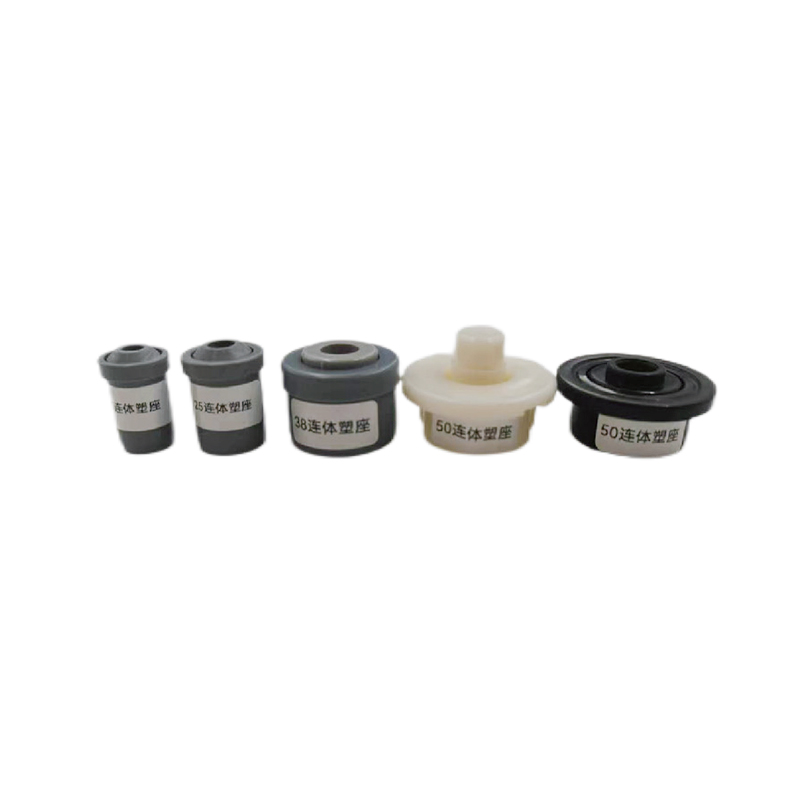 One-Piece Roller Plastic Seat for Conveyor FittingsA single molded seat that combines bearing housing and bracket, reducing components and assembly time while suiting light-duty conveyor and packaging equipment.View Product →
A Practical Selection Checklist
Before ordering, run through these points. Each one has caught out a buyer at some stage.
- Confirm whether the roller is free-running, driven, or part of a gravity section.
- Measure the tube bore and wall thickness on real production samples, not on a drawing alone.
- Decide whether the cap travels with the roller or stays on the frame as a seat.
- Match material to temperature, humidity and cleaning regime.
- Check the retention force requirement and how often the part will be removed.
- Ask what dimensional documentation and sample batches are available before committing to volume.
Fitting, Inspection and Replacement
Installation is quick, but a little care extends roller life noticeably. Push caps in squarely rather than tapping one side, and make sure the tube end is deburred — a sharp internal edge will shave plastic off the cap and shorten its grip. On seats, tighten to the frame evenly so the cap is not distorted.
During routine inspection, look for four signals: caps sitting proud of the tube, hairline cracks around the rim, dust trails radiating from the bearing, and a change in roller noise. Any of these usually means the cap is no longer sealing, and the bearing will follow soon after. Replacing caps on a planned schedule is far cheaper than replacing complete rollers after a bearing seizure.
Buying End Caps That Fit Your Rollers
End caps are small, low-value parts that cause a disproportionate amount of downtime when they are wrong. That is why it helps to buy them from someone who also moulds the seats, sleeves and retaining rings they work with. We run three plastics manufacturing bases across Zhejiang and Jiangsu plus a laser cutting workshop, producing tens of millions of parts a year for customers in logistics, warehousing, food and beverage, pharmaceuticals, tyre manufacturing and airport ground services. Because the cap, the seat and the tube are designed against each other rather than sourced separately, fit issues tend to surface at the sample stage rather than on the line.
If you are still narrowing down options, the roller plastic base series shows the seat formats our caps are built to match.
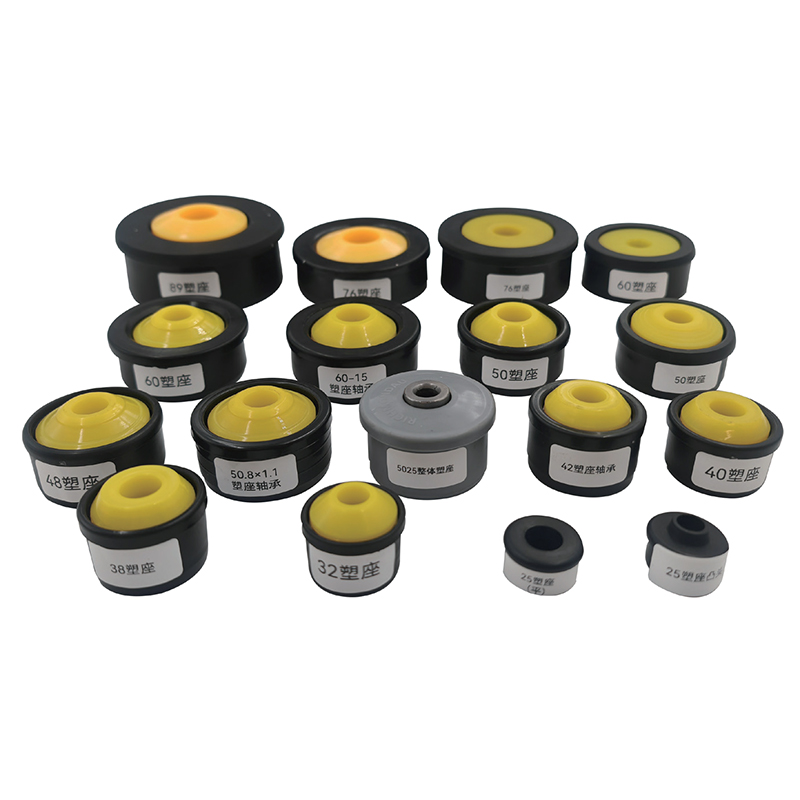 Open-End Roller Plastic Seat for Conveyor SupportAn open-end plastic seat for roller end support and axial positioning, available for multiple tube diameters and suited to conveyor line assembly.View Product →
Whether you are specifying a new conveyor line or replacing caps that keep working loose, the practical starting point is the same: measure the tube, describe the environment, and decide where the cap should live. Share your roller dimensions with us and we will tell you honestly which of our standard caps fits, and whether the job calls for a new mould instead.
Related products
-
-
Roller Non-end Cap Plastic Seat
The roller open-end plastic seat is a plastic structural component used for supp...
-
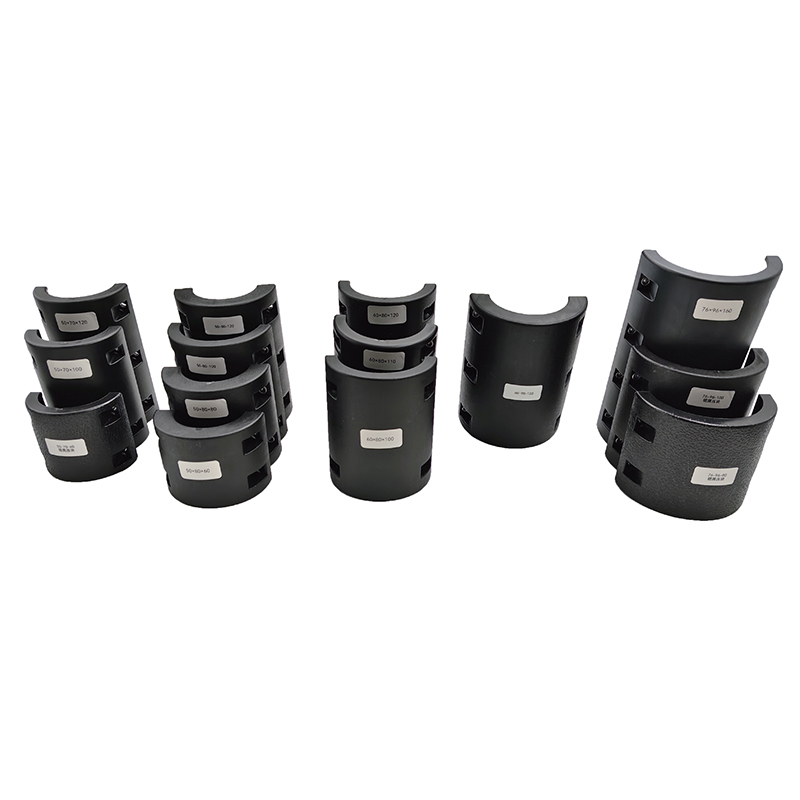 Roller Straight Sleeve
The Roller Straight Sleeve is a functional covering component installed on the o...
-
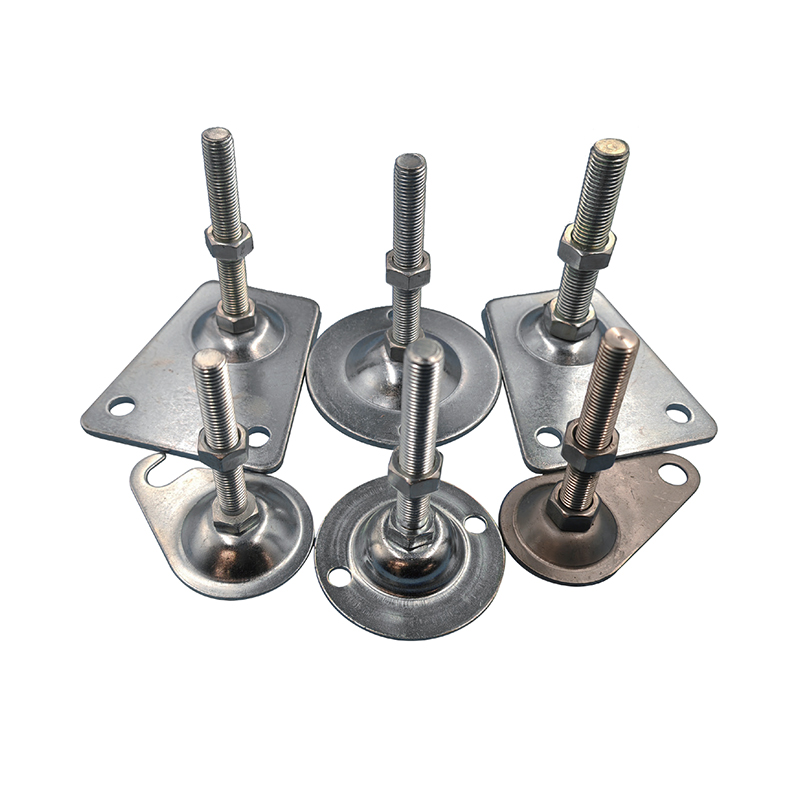 Roller Foot Cup
The SUPPORTING FOOT is composed primarily of a connecting stud, an adjustment ba...
-
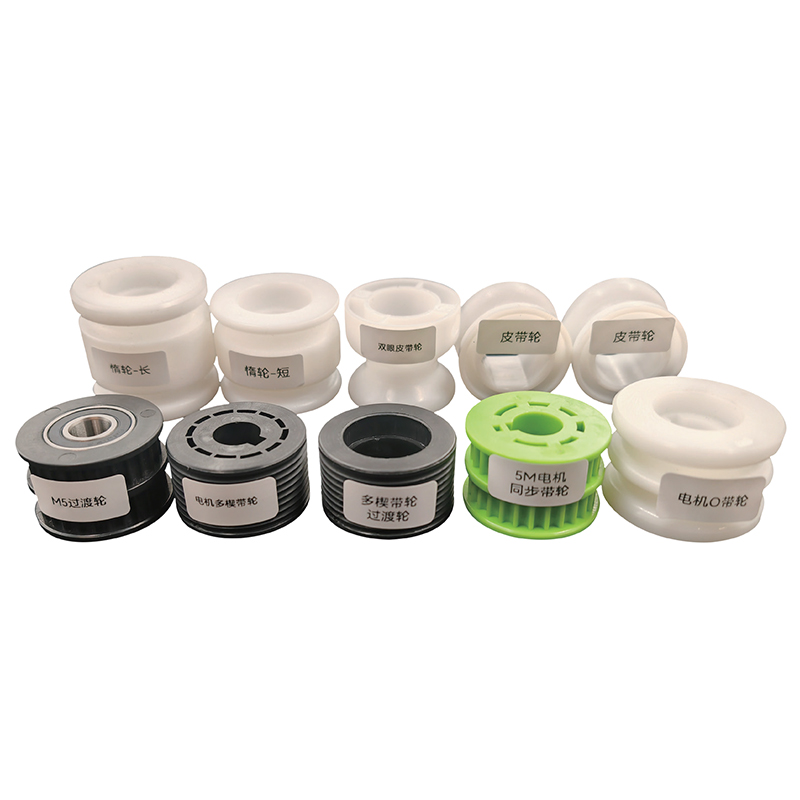 Roller Transition Wheel
The transition wheel is used in conveyor systems to support material transfer be...
-
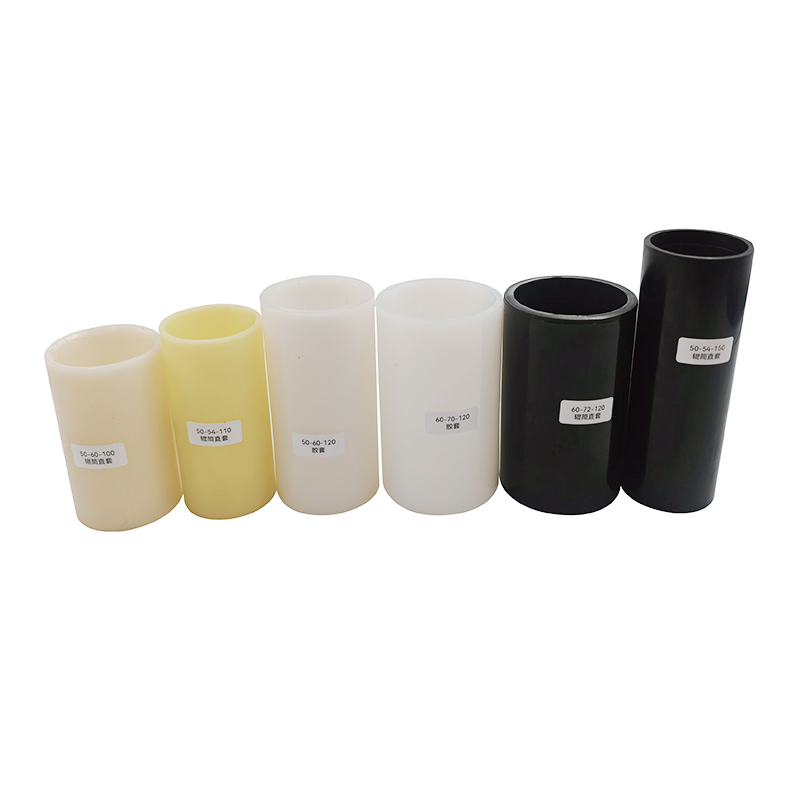 Roller Sleeve
ROLLER SLEEVE is manufactured from precision tube materials, utilizing CNC machi...


+86-13250912999
Huzhou Nanxun Guan's Plastic Industry Co., Ltd.
Email: [email protected]
Address: Building 8, North Zone, Dehao Industrial Park, Linghu Town, Nanxun District, Huzhou City, Zhejiang Province, China
Navigation
Products
About us
Copyright © Huzhou Nanxun Guan's Plastic Industry Co., Ltd.
All Rights Reserved.
 Privacy
Wholesale Plastic Conveyor Parts Manufacturers