
 English
 中文简体
中文简体 русский
 Español
The guide wheel serves as a critical directional component in industrial conveyi...

Industry News
Conveyor Roller Fittings: Types, Materials & Selection Guide
Author: admin / 2026-06-10
Content
What Conveyor Roller Fittings Actually Include
Conveyor roller fittings is a broad category that covers every component used to mount, connect, retain, and adjust rollers within a conveyor frame. The term encompasses bearing housings, axle end fittings, spring-loaded snap-in brackets, fixed side brackets, hex-end and round-end axle inserts, and the associated fasteners that secure the roller assembly to the frame side member.
The confusion around the term arises because different manufacturers and industries use it inconsistently — some apply it only to the end-mount hardware, others extend it to include the internal bearing insert and seal assembly within the roller tube itself. For procurement purposes, the safest approach is to specify conveyor roller fittings by function: what load each fitting carries, what adjustment it enables, and what interface it creates between the roller and the frame.
The functional categories most relevant to system selection and replacement planning are axle retention fittings, bearing end caps, frame-side mounting brackets, and tensioning or positional adjustment fittings. Each has its own dimensional standards, material requirements, and wear characteristics.
Axle End Fittings: Types, Load Ratings, and Dimensional Standards
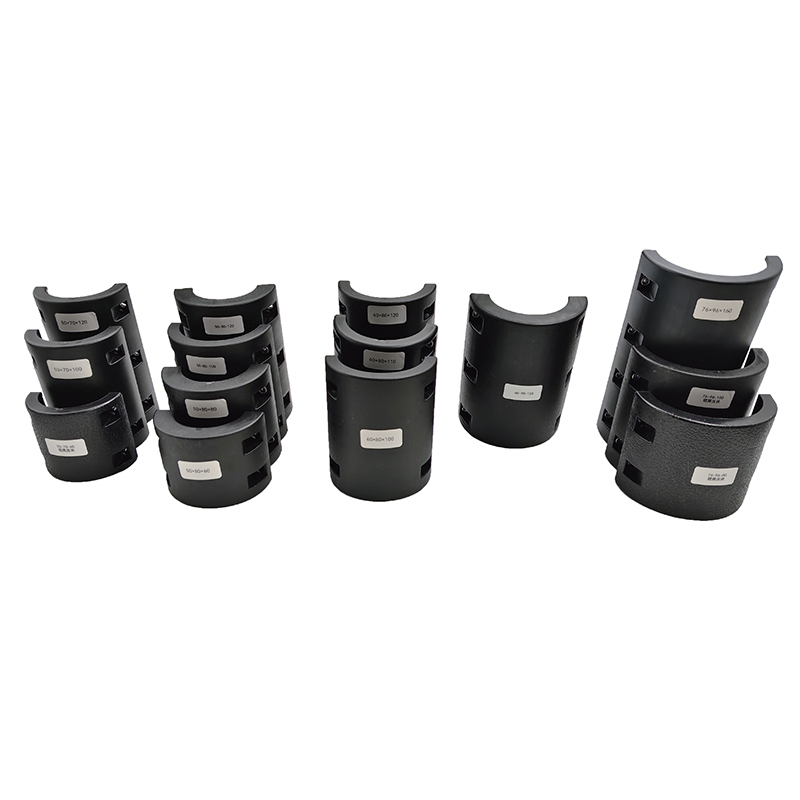
The axle end fitting is the component that transfers the roller's radial load into the conveyor frame. Its geometry — hex, round, square, or splined — must match the frame slot or bracket bore exactly, because any play at this interface introduces a rocking motion that generates fretting wear on the frame side member and progressive axle loosening over operational cycles.
The most widely used axle end fitting types across standard conveyor applications:
- Spring-loaded pin fittings: Used in gravity and light-duty powered conveyors. The spring mechanism allows tool-free roller removal by compressing the pin against the frame slot, making them the preferred choice in applications with frequent roller replacement or format changeover. Load capacity is generally limited to 80–120 kg per roller depending on pin diameter and spring specification.
- Hex-end fittings: The dominant standard in medium and heavy-duty roller conveyors. The hexagonal profile prevents axle rotation within the frame slot, eliminating the wear mode that affects round-end fittings under torque. Hex flat sizes of 11 mm and 17 mm cover the majority of standard roller diameters from 50 mm to 89 mm tube OD.
- Threaded end fittings: Applied where the roller must be positionally locked along the frame slot axis — particularly in accumulation conveyor zones where rollers are individually adjusted to set zone boundaries. The threaded fitting engages a captive nut in the frame channel and allows axial position adjustment in increments as fine as 0.5 mm per fastener turn.
- Grooved or circlip-retained fittings: Used in high-speed sortation and transfer applications where impact loads at the roller entry point could otherwise displace a spring-retained axle. The circlip or external groove retainer provides a positive mechanical lock that resists axial pull-out forces up to the rated shear strength of the retaining ring material.
Dimensional standards for axle end fittings are not globally unified, which creates sourcing complexity when replacing rollers on systems built to European, American, or Asian dimensional conventions. The ISO 1537 series provides guidance on roller shaft end dimensions for belt conveyors, but many gravity and chain-driven roller conveyors follow manufacturer-proprietary dimensions that require direct cross-referencing against the installed frame slot geometry before placing replacement orders.
Bearing End Caps and Seals: Material Selection and Environmental Compatibility
The bearing end cap and its integrated or separate seal element are the fittings that determine how long the roller bearing survives in its operating environment. An end cap that allows water, dust, or chemical ingress to reach the bearing raceway will cause bearing failure regardless of the bearing quality — the fitting, not the bearing, is the governing component for service life in contaminated environments.
| End Cap / Seal Type | IP Rating Achievable | Best-Fit Environment | Limitation |
|---|---|---|---|
| Open labyrinth cap | IP40 | Dry warehousing, logistics | No liquid ingress protection |
| Lip seal cap (NBR) | IP54–IP65 | Food processing, washdown zones | NBR degrades in ozone-rich environments |
| Lip seal cap (FKM/Viton) | IP65–IP67 | Chemical exposure, pharmaceutical | Higher cost; not required for standard use |
| Double-labyrinth sealed cap | IP55 | Dusty environments, tobacco, tire mfg | Not suitable for full water immersion |
In food and pharmaceutical applications, the end cap material must also be evaluated for chemical compatibility with the cleaning agents used during washdown cycles. Standard polypropylene and acetal end caps are compatible with most alkaline detergents (pH up to 12) and quaternary ammonium sanitizers but can craze or swell with sustained exposure to chlorinated solvents or peracetic acid above 2,000 ppm. Specifying FDA-compliant end cap materials and confirming chemical compatibility with the facility's actual cleaning protocol — not just a generic washdown resistance claim — is a necessary step for any food-contact conveyor installation.
Frame-Side Mounting Brackets and Positional Adjustment Fittings
Frame-side mounting brackets are the interface fittings between the roller axle and the conveyor side frame, and they carry both the static weight load and the dynamic impact load generated when products drop onto or accelerate against the roller surface. A bracket dimensioned only to static load without impact safety factor will survive acceptance testing but show progressive fastener loosening or bracket cracking in the first months of operation in any application involving product induction from an elevated pick-and-place or a high-speed merge zone.
Practical specification considerations for mounting bracket and adjustment fittings:
- Bracket foot geometry and frame engagement: Brackets with a foot geometry that positively locates into the frame profile slot — through a tab, a shoulder, or a captive nut feature — resist lateral displacement under side loads without relying solely on fastener friction. This is particularly relevant in systems using T-slot aluminum or polymer frame profiles, where the slot width tolerance allows enough bracket foot movement to misalign the roller axis from the designed perpendicular orientation if the foot geometry does not constrain the degree of freedom.
- Adjustable bracket travel range: In accumulation conveyor layouts where zone length is defined by roller spacing, adjustable mounting brackets with a ±15 mm longitudinal travel range allow zone length to be set during commissioning without cutting or repositioning the frame profile. This flexibility reduces installation time on multi-zone systems and allows zone boundary adjustment if product size ranges change after initial commissioning.
- Material selection for bracket fittings in regulated environments: Glass-fiber-reinforced polyamide (PA-GF30) provides the stiffness-to-weight ratio needed for heavily loaded brackets while meeting the non-metallic contamination requirements of food and pharmaceutical line audits. HDPE brackets offer greater chemical resistance at lower stiffness — appropriate for lightly loaded applications in aggressive chemical environments but unsuitable for mounting heavy rollers across spans exceeding 600 mm without additional cross-support.
- Replacement frequency planning: Bracket fittings in high-impact zones — end-of-line stop sections, merge induction points, and divert entry rollers — wear at two to four times the rate of brackets in straight-run sections carrying the same product. Maintaining a separate inventory count for high-impact zone brackets and scheduling their replacement at half the interval of standard brackets eliminates the reactive procurement events that disrupt planned maintenance budgets in high-utilization facilities.
Related products
-
-
Roller Straight Sleeve
The Roller Straight Sleeve is a functional covering component installed on the o...
-
 Conveyor Flow Bar
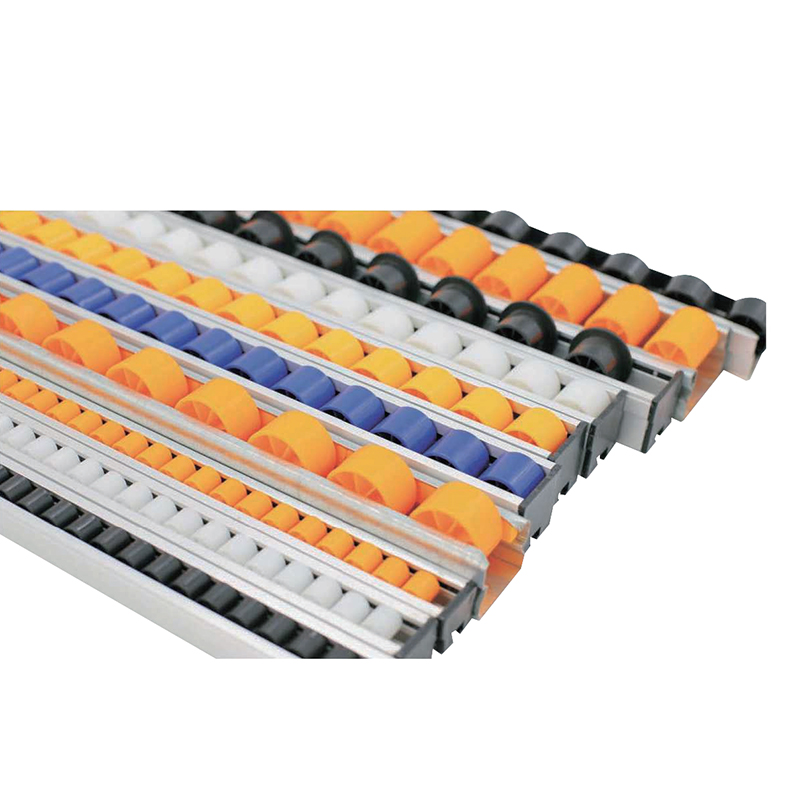
The conveyor flow bar is a rolling component designed for gravity-driven or assi...
-
 Conveyor Sealing Plate
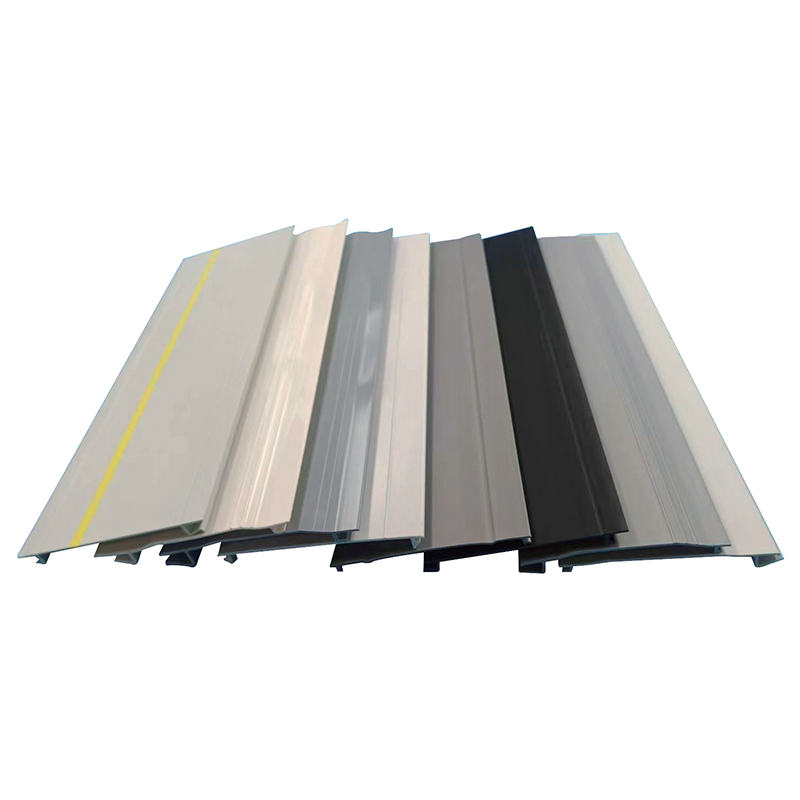
The conveyor sealing plate is a side enclosure component designed for conveyor e...
-
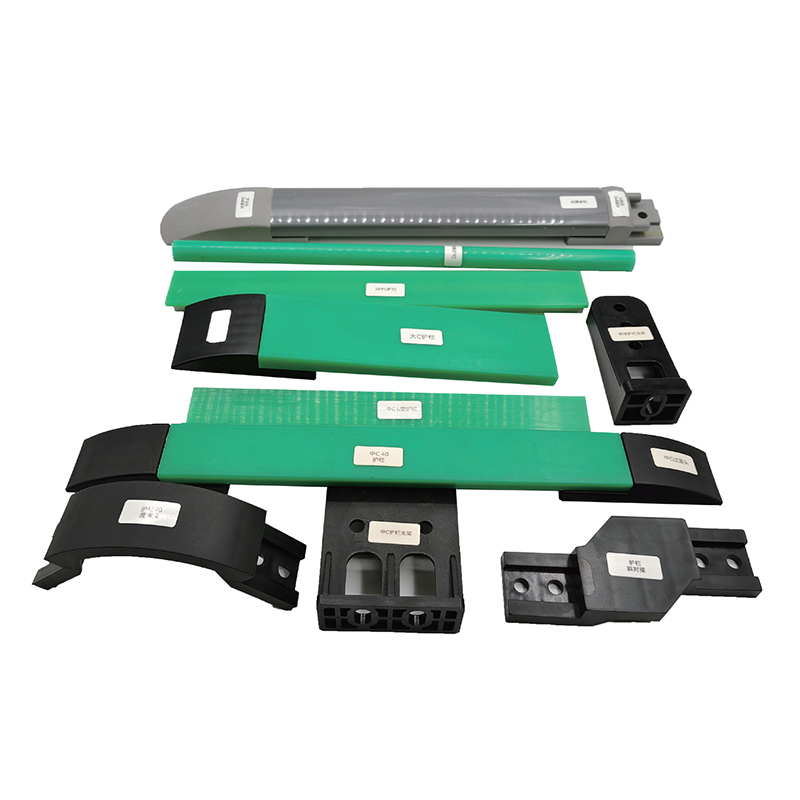 Conveyor Guardrail
The conveyor guardrail is a modular protective structure installed along the per...
-
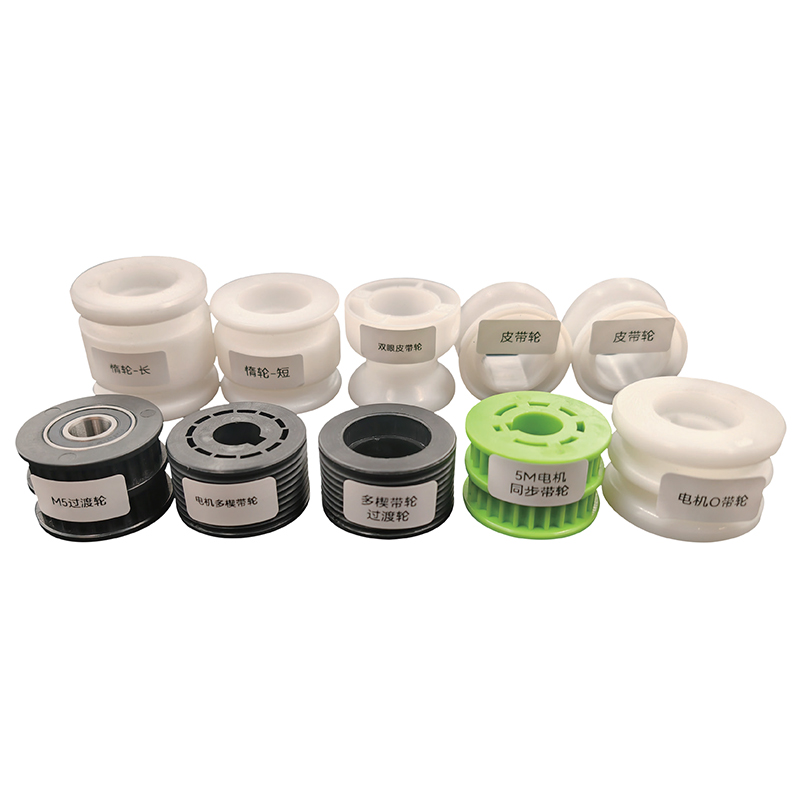 Roller Transition Wheel
The transition wheel is used in conveyor systems to support material transfer be...


+86-13250912999
Huzhou Nanxun Guan's Plastic Industry Co., Ltd.
Email: [email protected]
Address: Building 8, North Zone, Dehao Industrial Park, Linghu Town, Nanxun District, Huzhou City, Zhejiang Province, China
Navigation
Products
About us
Copyright © Huzhou Nanxun Guan's Plastic Industry Co., Ltd.
All Rights Reserved.
 Privacy
Wholesale Plastic Conveyor Parts Manufacturers
Privacy
Wholesale Plastic Conveyor Parts Manufacturers