
 English
 中文简体
 русский
 Español

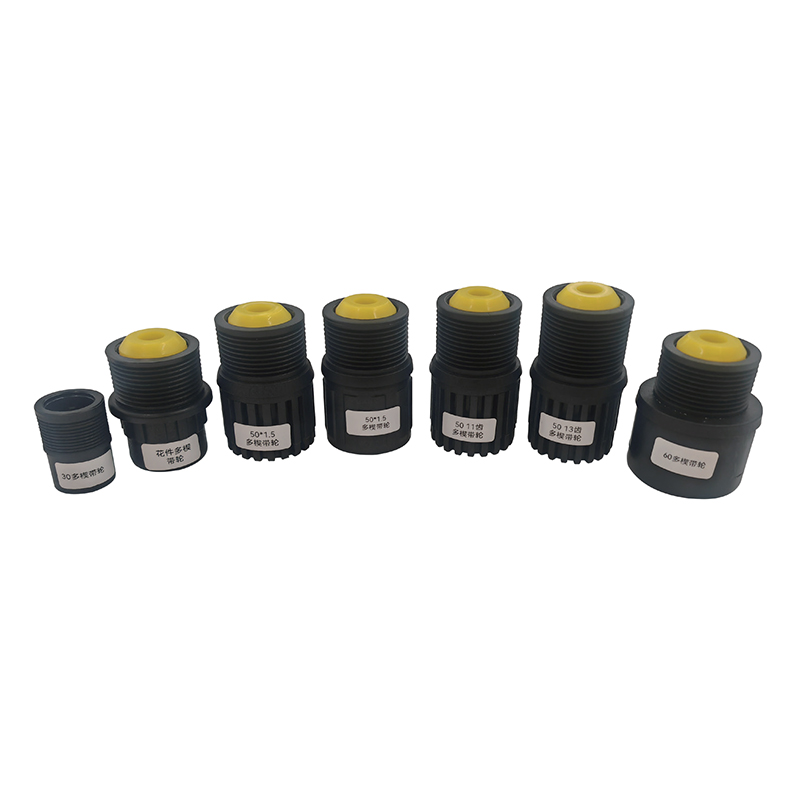
A Poly-wedge pulley, also known as a Multi-V pulley, is a specialized power tran...

Industry News
Home / News / Industry News / Plastic Pulley Bearing Cover Selection: Materials, Fit, and Performance
Plastic Pulley Bearing Cover Selection: Materials, Fit, and Performance
Author: admin / 2026-11-06
Content
- 1 What a Plastic Pulley Bearing Cover Actually Does
- 2 Where These Covers Show Up
- 3 Materials: The Part of the Decision That Lasts
- 4 Fit and Tolerance: Where Covers Usually Go Wrong
- 5 Pairing the Cover with the Sleeve
- 6 Failure Modes We See on Conveyor Lines
- 7 A Short Selection Checklist
- 8 Questions We Get Asked
Bearings rarely fail because the steel was poor. They fail because grit got in, grease went out, or the housing let the outer ring creep. A plastic pulley bearing cover sits right at that boundary, and in our experience it decides more about service life than its size suggests. We have been moulding plastic components for conveying and automation equipment since 2006, and covers, caps and retaining rings pass across our benches almost every day. Here is what we have learned about choosing them well.
What a Plastic Pulley Bearing Cover Actually Does
A cover is not simply a lid. On a pulley or a conveyor roller it performs several jobs at once, and a design that only does one of them is usually the design that comes back to us as a complaint.
- It keeps contamination out. Dust, metal fines, cardboard fibre and washdown spray all find the narrow gap between the rotating part and the bearing shield.
- It keeps lubricant in. Even a sealed bearing benefits, because a covered assembly runs cooler and weeps less grease onto the product below.
- It locates the bearing. A small shoulder or lip takes up axial play so the outer ring stays where the designer put it.
- It takes the edge off noise. A softer cover absorbs the light chatter that a bare bearing edge makes on a fast roller line.
- It protects hands and product. The bearing edge is sharp, and in food or pharmaceutical areas an exposed edge is also a cleaning problem.
Where These Covers Show Up
You will find them at the ends of conveyor rollers under gravity flow racks, on drive pulleys inside chain conveyors, on sliding door carriages, on gym cable stacks, and on tensioner pulleys in packaging lines. In conveying equipment the same function often carries a different name, so the part you call a cover may be ordered as an end cap, a bearing cover disc, or a retaining ring pressed into the roller tube. We produce the whole family, from the retainers that hold the bearing inside the tube to the seats that locate the roller end, so we tend to view the cover and its neighbours as one assembly rather than as separate purchases. You can see the full set of mating parts in our roller fittings series.
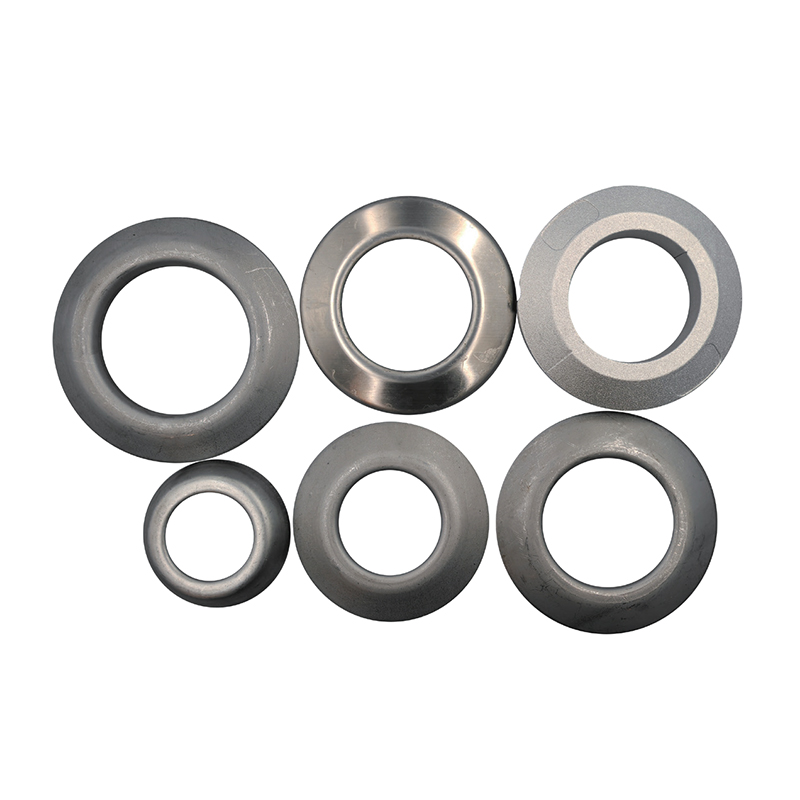 Roller Retaining Rings for Conveyor Axial PositioningAxial positioning rings for conveyor rollers and shafts, available in multiple sizes and carbon or stainless steel for stable roller alignment.View Product →
Materials: The Part of the Decision That Lasts
Material choice is usually settled by three questions. How dirty is the environment? How hot does the assembly run? How often is it washed down? Everything else is detail.
| Material | Sealing behaviour | Wear and creep | Noise | Where it earns its place |
|---|---|---|---|---|
| PA6 / PA66 | Good; slight flexibility helps the lip seat | Good wear, absorbs moisture | Low | General conveyor roller end caps |
| POM (acetal) | Excellent dimensional stability | Very good, low friction | Moderate | Precision pulleys with tight bores |
| Glass-filled PA66 | Good, stiffer lip | High strength, more abrasive to mates | Higher | Heavily loaded drive pulleys |
| PP | Fair; creeps under sustained load | Moderate | Low | Low-cost covers and light dust shielding |
| TPU / soft PVC | Best conformability | Lower, but very forgiving | Lowest | Washdown lines and noise-sensitive equipment |
Nylon and acetal cover most conveyor work. Where a cover has to flex over a lip during assembly, unfilled PA6 is kinder than a glass-filled grade, which is stiffer and more likely to craze at the snap feature. Where the bore must stay round after a season of vibration, POM holds its shape better. If the line is cleaned with hot water every shift, a soft TPU cover will outlast a rigid one simply because it moves with the housing instead of fighting it.
Fit and Tolerance: Where Covers Usually Go Wrong
Most of the covers we are asked to replace failed at the fit, not at the material. The moulding was fine; the interface was not.
- Bore and interference. Aim for 0.05 to 0.15 mm interference on the bearing outer diameter. Below that the cover walks out; above it the housing may split on press-fit.
- Wall thickness. Between 1.2 and 2.5 mm covers most roller sizes. Thin walls deflect and leak dust; thick walls shrink unevenly and distort the bore.
- Lip engagement. A snap depth of 0.3 to 0.8 mm gives a positive click without needing a press.
- Running clearance. Keep at least 0.3 mm between the cover and the rotating sleeve. Contact here is the most common cause of a polished wear ring and a warm end.
- Concentricity. Total runout under 0.1 mm keeps the seal gap even all the way round.
When a roller needs a proper mounting interface rather than a simple cap, the cover alone is not enough and the roller end needs a seat to sit in. That is a different part with a different tolerance chain, and we usually design the two together.
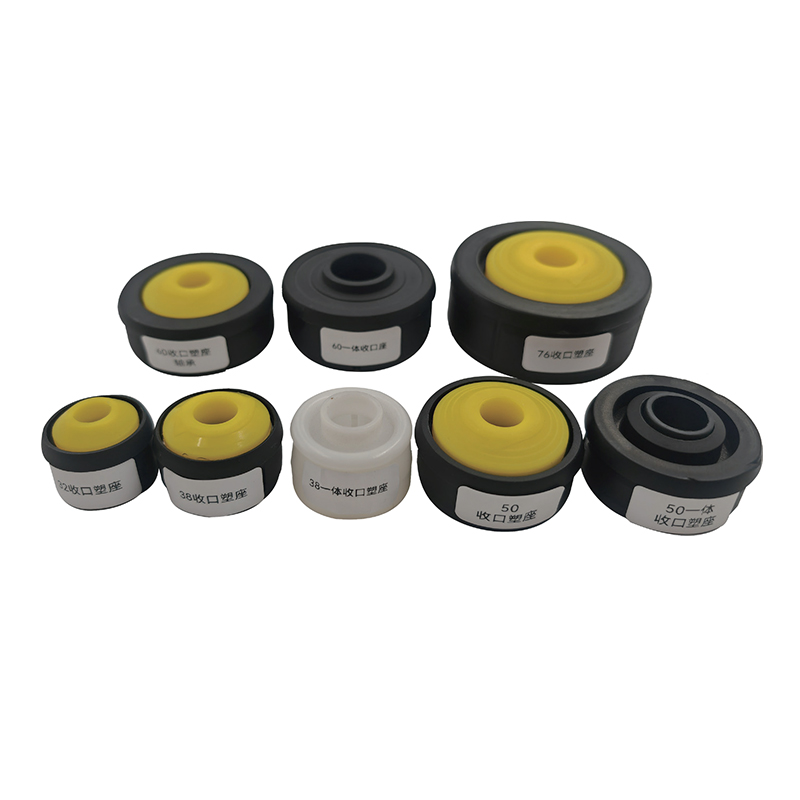 Plastic Roller End Cap Seats with Integrated SealingInjection-molded end cap seats combine bearing housing and labyrinth sealing for roller mounting, with lightweight, low-friction support across multiple tube diameters.View Product →
Pairing the Cover with the Sleeve
A cover rarely works alone. On a roller it sits beside the sleeve or tube that carries the load, and the two share the same air gap. If the sleeve runs out of true, the cover will rub, wear through and start passing dust within weeks. Check the sleeve before blaming the cap.
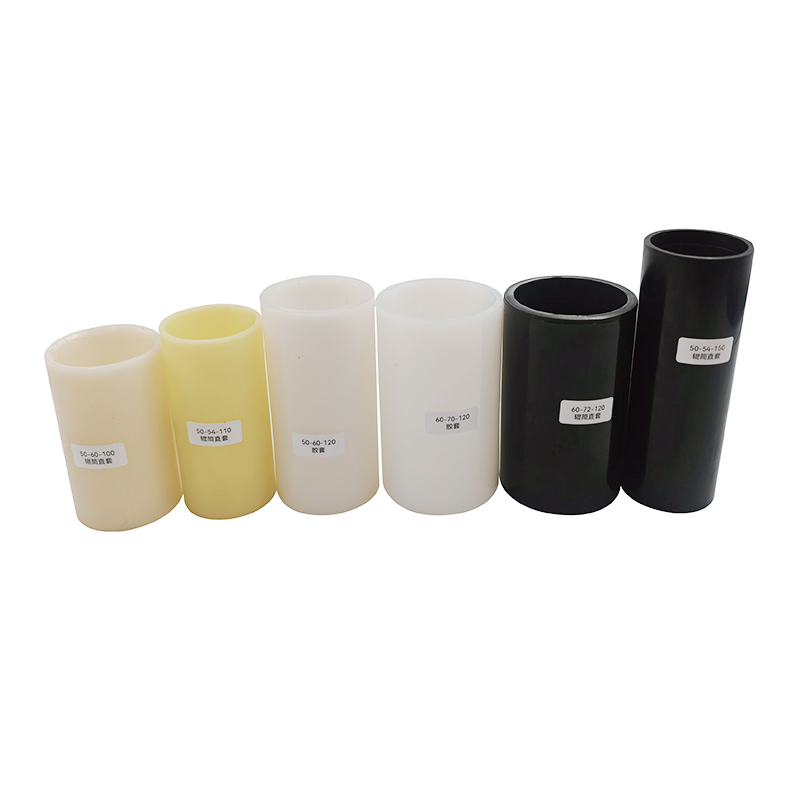 Precision Roller Sleeves for Conveyor and Machinery ApplicationsCNC-machined tubular sleeves with polished, chrome, or ceramic surface options, providing coaxial mounting and wear resistance for high-speed roller assemblies.View Product →
Failure Modes We See on Conveyor Lines
- Walking out of the bore. Usually too little interference or a lip that never engaged, made worse by vibration and thermal cycling.
- Cracking at the lip. Sharp internal corners, glass-filled grades, or assembly with a hammer rather than a flat press pad.
- A polished ring on the outer face. The cover is touching something that rotates. Recheck clearance, not material.
- Dust trails from under the edge. The seating face was not flat, or the housing has a moulding witness line that holds the cover off by a few tenths.
- Grease weeping past the cover. Often an overfilled bearing rather than a bad cap, but a softer cover material will tolerate it for longer.
A Short Selection Checklist
- Measure the bearing outer diameter and the housing bore, not the old cover, which may already be deformed.
- Confirm the operating temperature and cleaning chemicals before choosing a resin.
- Decide whether the cover must be removable for relubrication or is fit-and-forget.
- Check the concentricity of the mating sleeve, since the cover can only be as even as the part beside it.
- Ask for samples in the intended grade and run them on the line for a full cleaning cycle.
- Agree on the inspection points up front: bore diameter, wall thickness, lip depth and runout.
If you are still mapping out which components belong on your line, our overview of conveyor roller fittings, types and materials is a useful companion to this one.
Questions We Get Asked
Should the cover touch the rotating sleeve?
No. A light gap of a few tenths of a millimetre is what you want. Contact creates drag, heat and a wear track that eventually becomes a dust path.
Can a cover be added to an existing roller?
Often yes, provided the bore is clean and round and there is enough wall to hold the interference. Measure first, because an oversized bore in a used tube is the usual reason a retrofit cap falls out.
Does the cover need lubrication?
A thin film of grease compatible with the bearing fill helps seating and reduces fretting. It is not a substitute for the bearing's own lubricant, and excess grease on the lip will only attract dust.
None of this is complicated, but it is easy to skip when a line is down and a bin of parts is close at hand. We mould these components across three production bases in Zhejiang and Jiangsu, with an annual output in the tens of millions of pieces, and we also run a laser cutting workshop for short-run and custom work. If you are uncertain about a bore, a lip depth or a resin for a particular washdown regime, send us the drawing and the working conditions. We would rather talk through the fit than ship a part that walks out of the housing three months later.
Related products
-
-
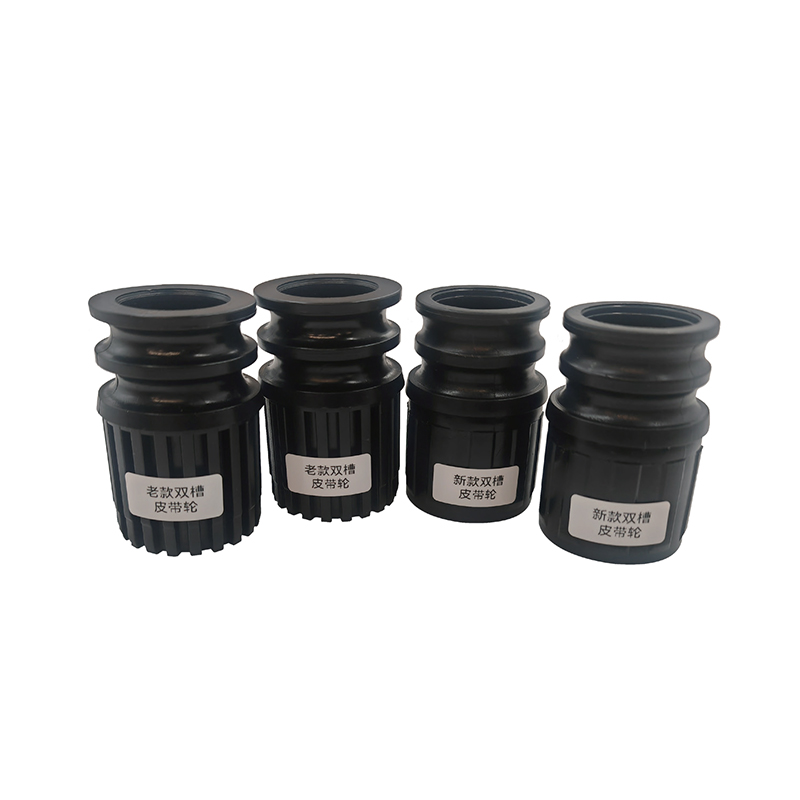 Double Slot O Pulley
The DOUBLE SLOT O PULLEY features two parallel grooves specifically designed for...
-
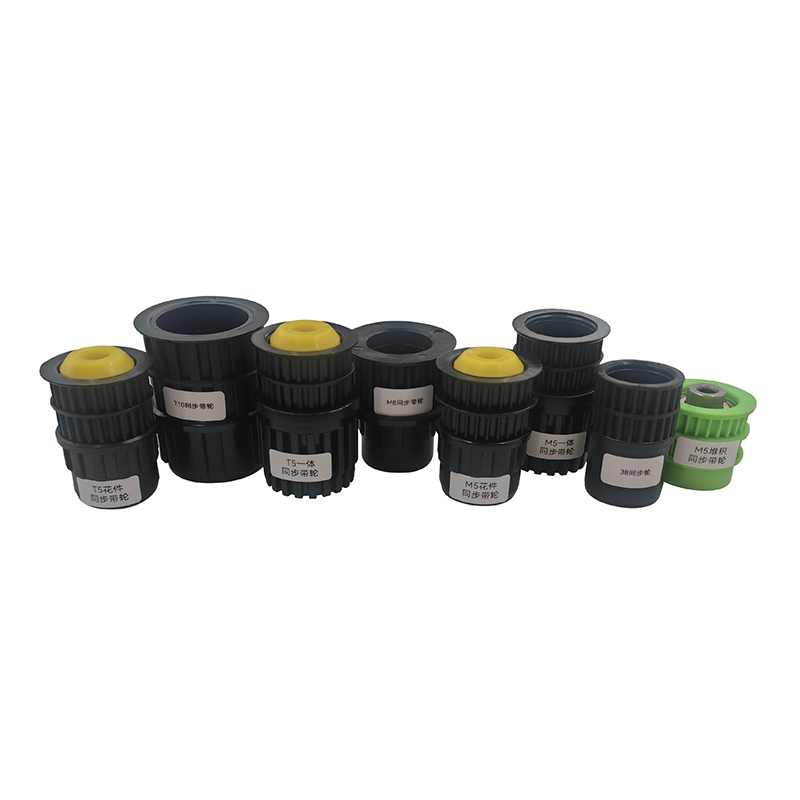 Synchronous Pulley
A synchronous pulley is a transmission component used in conjunction with synchr...
-
Roller End Cap Plastic Seat
Definition and Structural Characteristics The Open Plastic Seat is a terminal su...
-
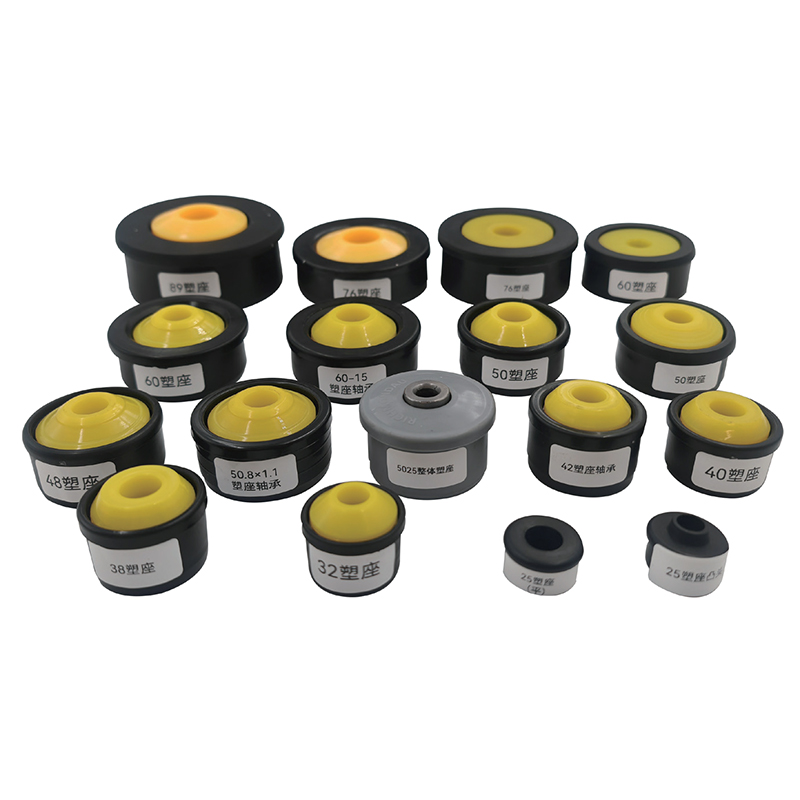 Roller Non-end Cap Plastic Seat
The roller open-end plastic seat is a plastic structural component used for supp...
-
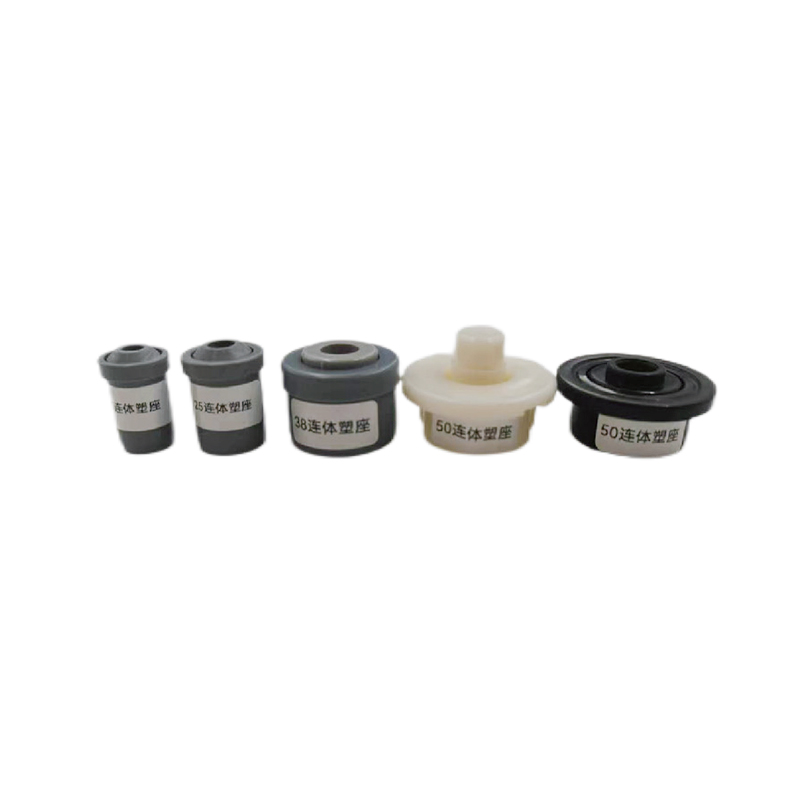 One-piece Roller Plastic Seat
The ONE-PIECE PLASTIC SEAT integrates the bearing housing and mounting bracket i...


+86-13250912999
Huzhou Nanxun Guan's Plastic Industry Co., Ltd.
Email: [email protected]
Address: Building 8, North Zone, Dehao Industrial Park, Linghu Town, Nanxun District, Huzhou City, Zhejiang Province, China
Navigation
Products
About us
Copyright © Huzhou Nanxun Guan's Plastic Industry Co., Ltd.
All Rights Reserved.
 Privacy
Wholesale Plastic Conveyor Parts Manufacturers