
 English
 中文简体
 русский
 Español

The conveyor flow bar is a rolling component designed for gravity-driven or assi...

Industry News
Home / News / Industry News / Conveyor Flow Bar Guide: Choosing Plastic Flow Rails for Gravity Racks
Conveyor Flow Bar Guide: Choosing Plastic Flow Rails for Gravity Racks
Author: admin / 2026-10-30
Content
- 1 What a Conveyor Flow Bar Actually Does
- 2 Reading the Specification Before You Order
- 3 Plastic or Steel? A Question of Load and Noise
- 4 Slope, Pitch and Lane Width: The Three Settings That Matter
- 5 Where Flow Bars Give Trouble First
- 6 Matching the Bar to the Rest of the Line
- 7 Questions We Hear From Buyers
A carton that stalls halfway down a flow rack usually points to one component. The conveyor flow bar underneath it — the narrow rail of small free-spinning rollers that lets stock glide toward the picker — is either the wrong pitch, the wrong material, or sitting at a slope that stopped making sense the day the carton size changed. We have been moulding plastic conveyor parts in Huzhou since 2006, and flow bars are one of those quiet items where a decision of two millimetres shows up months later as a jam at three in the morning.
What follows is a practical walk-through: what a flow bar actually does, how to read its specification without a catalogue in hand, and where the wear points appear first. It comes from the questions our customers bring us out of warehouses, food plants, parcel hubs and airport baggage halls.
What a Conveyor Flow Bar Actually Does
Strictly speaking, a conveyor flow bar is a low-profile rail holding a row of small rollers in a plastic profile, bolted across the beams of a flow rack, a pick-to-light module or a simple gravity line. It has no motor and no drive. Its whole job is to let a carton, tote or tray travel downhill at a speed a picker can work with — fast enough to keep the lane full, slow enough that the front box does not slam into the stop.
Because nothing drives it, every characteristic of the bar becomes a friction decision. Roller diameter, roller pitch, axle finish and the hardness of the roller body all feed into whether a 4 kg carton accelerates away or stalls two metres in. That is why we usually ask about the load and the carton base first and the profile second — the opposite of how a catalogue is laid out.
It is also worth separating flow bars from skate wheel rails, since the two are often confused. Skate wheels carry heavier totes and tolerate rougher handling; small-diameter rollers inside a flow bar suit lighter cartons, soft packaging and tighter pitches. On a mixed pallet of goods, the bar you choose for the lightest carton usually sets the standard for the whole lane.
Reading the Specification Before You Order
Most enquiries we receive start with a photograph of a rack and a carton weight. That is enough to get close, but four numbers do most of the real work: profile width, roller pitch, roller diameter and the load the bar must carry per metre. Get those right and the rest — colour, end caps, mounting brackets — is detail.
| Parameter | Common range | What it changes |
|---|---|---|
| Profile width | 40 – 100 mm | Number of roller rows and how much of the carton base is supported |
| Roller pitch | 25 – 75 mm | Contact frequency; tighter pitch for small or soft cartons, wider for rigid totes |
| Roller diameter | Ø 12 – 25 mm | Rolling resistance and the ability to bridge gaps between bars |
| Load per bar | 10 – 60 kg/m | Span between supports and the number of bars needed per lane |
| Roller material | PE, POM, PVC, steel | Noise, marking, chemical resistance and cold-store behaviour |
One habit saves a lot of rework: design the lane for the smallest carton in the mix, not the average. A bar chosen for a 400 mm carton will let a 200 mm box drop between rollers, and no amount of extra slope fixes that.
Plastic or Steel? A Question of Load and Noise
Steel rails survive abuse and shrug off heat, but they are loud, they mark white cartons, and in a chilled or washdown area they bring their own problems. Plastic flow bars — PE and POM roller bodies in a matching profile — run quieter, weigh less, will not scratch product, and can be moulded with features that steel cannot offer cheaply, such as integrated end stops and clip-in mounting feet.
Material choice is rarely about strength alone. Below roughly −5 °C some grades turn brittle, so a cold-store installation calls for a different compound than an ambient warehouse. Where acidic washdown is routine, PVC earns its place despite a lower load rating. Our guide to roller fitting types and materials covers those trade-offs in more depth if you are comparing compounds for a specific environment.
Slope, Pitch and Lane Width: The Three Settings That Matter
Once the bar is on site, three adjustments decide whether the lane behaves. None of them is fixed forever, and all three should be revisited whenever the carton mix changes.
- Slope. Carton flow racks commonly run at 3 to 5 percent. Start around 4 percent for a mixed carton set, then reduce it if light boxes are arriving too fast and increase it if heavy ones creep.
- Number of bars per lane. Three bars is the practical minimum; wide or soft cartons need four or five so the base cannot sag between supports. Support the profile every 800 to 1000 mm to stop it bowing under load.
- Roller pitch against carton size. Aim for at least three rollers in contact with the smallest carton at any moment. Fewer than that and the box will rock, drift sideways and eventually wedge.
- Lane width and guides. Keep side clearance modest so the carton tracks straight. Loose lanes cost more in jams than they save in flexibility.
Where Flow Bars Give Trouble First
After enough installations, the failure list becomes predictable. When a lane misbehaves, these are the points we check in order:
- Flat spots on rollers, almost always from cartons left standing on a loaded lane overnight.
- Axle pins pushed out of the profile after repeated side impact at the load end.
- Cardboard fibre and dust bridging the pitch, which raises friction unevenly across the lane.
- Sagging profiles on long spans where supports were spaced for appearance rather than load.
- Steps and misalignment where two bars butt together, enough to catch a carton edge.
- Slope drift after a rack is re-picked or moved, quietly changing the speed of every lane.
Matching the Bar to the Rest of the Line
Flow bars rarely travel alone. The same rack usually needs end caps, mounting brackets and stop plates, and the surrounding conveyor needs roller sleeves, plastic bearing seats, guardrail or a lift unit where the lane meets a powered section. Sourcing those from one moulder keeps tolerances, colour and material grades consistent, which matters more than it sounds when two suppliers each send "black POM" that behaves differently.
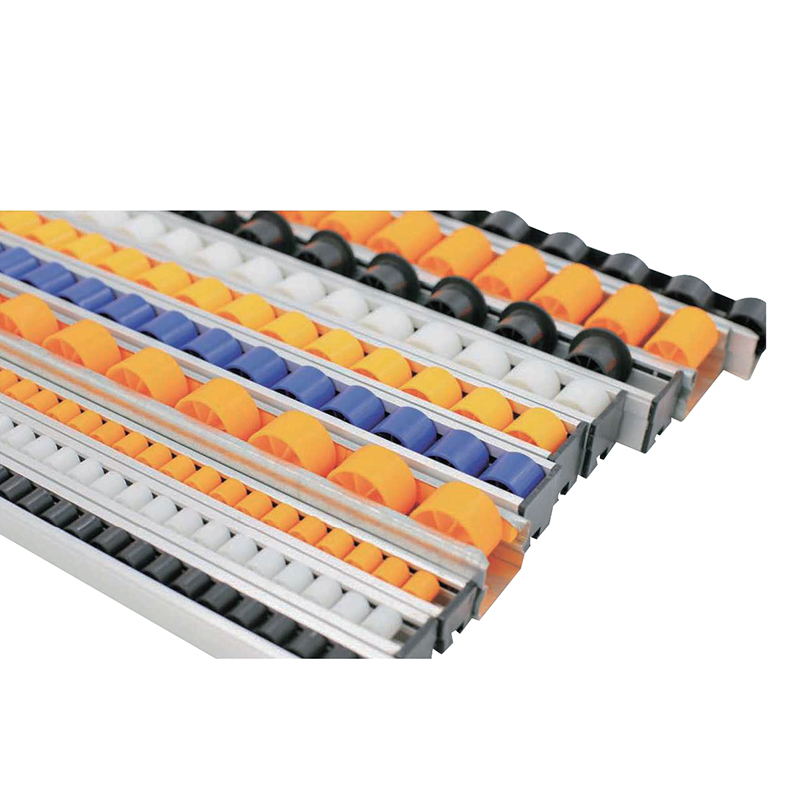 PE and POM Conveyor Flow Bar for Gravity LinesMoulded in PE and POM with roller pitches for carton flow and light-duty gravity lines, it suits racks and conveyor lanes.View Product →
Our standard flow bar is moulded in PE and POM with roller pitches suited to carton flow and light-duty gravity lines. It is produced in our own plants across Zhejiang and Jiangsu, alongside the rest of the components that make up a lane.
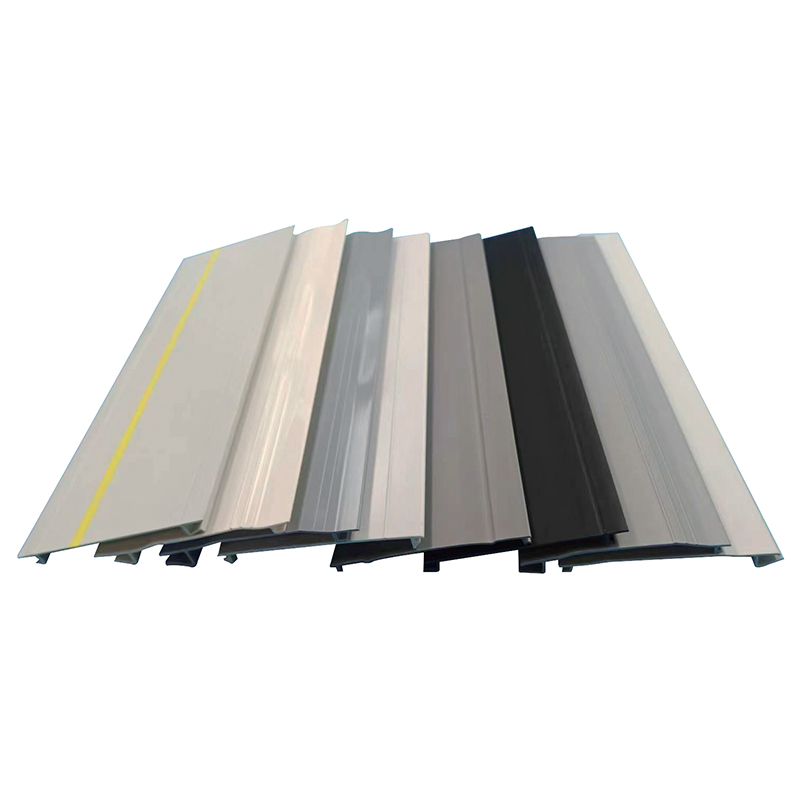 Modular Conveyor Accessories for Complete Lane AssemblyFunctional components such as end caps, brackets and buckles support conveyor integration, helping plan the flow bar and adjoining fittings as one set.View Product →
If you are assembling a full lane rather than replacing a single rail, it helps to plan the bar, the accessories and the adjoining roller fittings as one set. Mixing brands is possible, but the joints are where problems start.
Questions We Hear From Buyers
Can plastic flow bars replace steel rails on an existing rack?
Usually yes, provided the beam spacing and load per lane are checked first. The profile height often differs from the steel rail it replaces, so mounting brackets and the stop position at the pick face may need adjusting. Send the beam centres and carton weights and the comparison takes a few minutes.
How many bars does one lane need?
Three is the floor for narrow cartons, four or five for wide or soft packaging. The test is simple: look at the smallest carton the lane will ever carry and confirm three rollers touch it at all times, including when it is pushed against the stop.
Do flow bars need maintenance?
Less than most people expect, but not none. A quarterly brush-out of the pitch and a check that rollers still spin freely will prevent most of the trouble listed above. Replacing a single damaged bar is far cheaper than replacing a lane of cartons crushed behind it.
If you are refitting a flow rack or designing a new pick module, the fastest route to a sensible answer is a short message with the carton sizes, the load per lane and a photograph of the beam spacing. We will tell you which bar and pitch we would use, and where a different approach — skate wheels, a powered section, a lift unit — would serve the lane better. Twenty years of moulding conveyor parts has taught us that the honest recommendation is the one that keeps the cartons moving long after the invoice is filed.
Related products
-
-
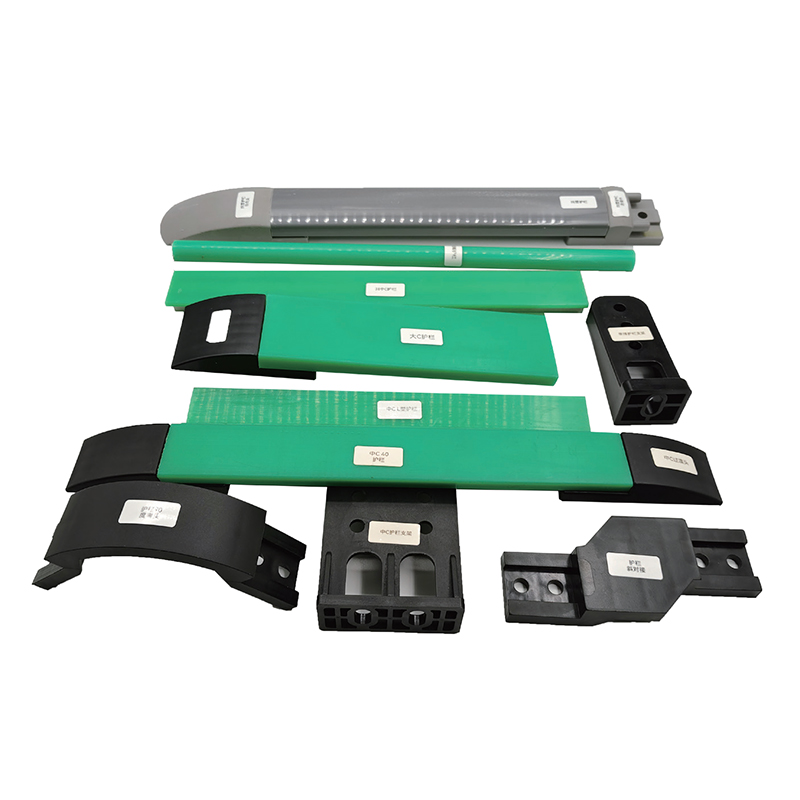 Conveyor Guardrail
The conveyor guardrail is a modular protective structure installed along the per...
-
Conveyor Sealing Plate
The conveyor sealing plate is a side enclosure component designed for conveyor e...
-
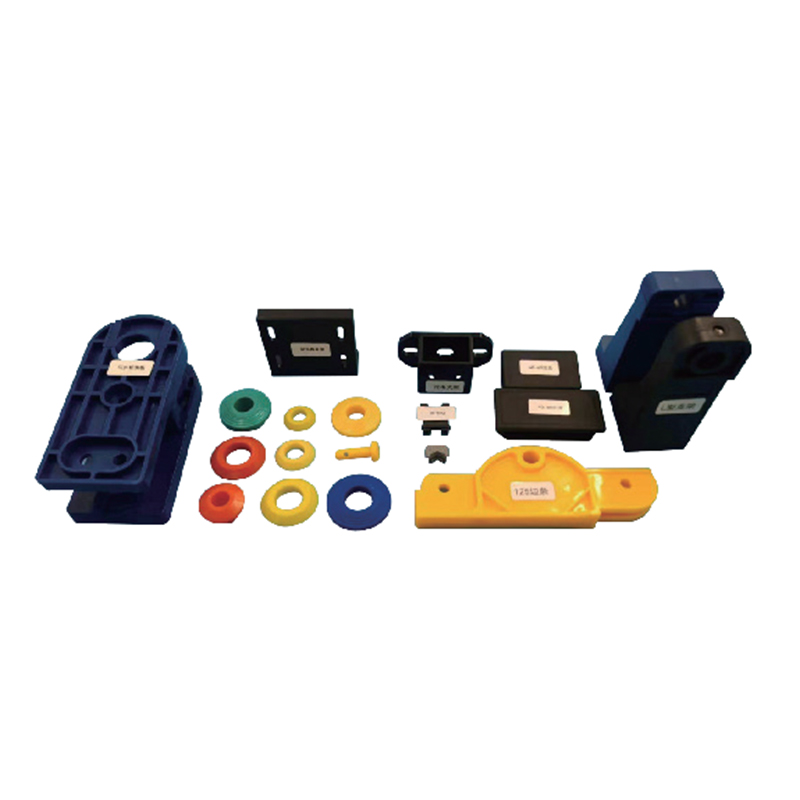 Conveyor Accessories
Conveyor accessories are a collection of functional components designed for indu...
-
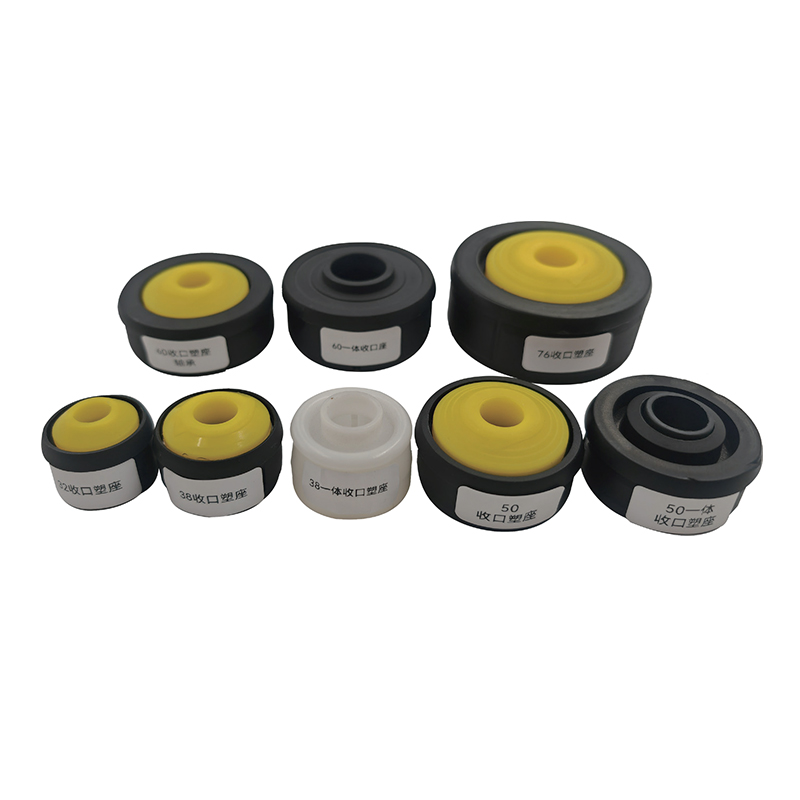 Roller End Cap Plastic Seat
Definition and Structural Characteristics The Open Plastic Seat is a terminal su...
-
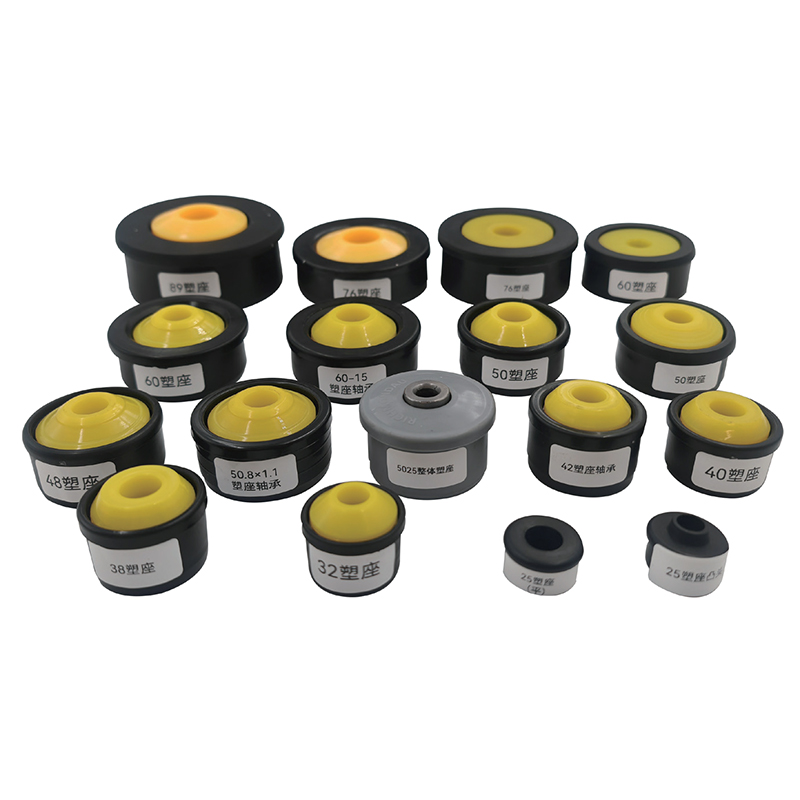 Roller Non-end Cap Plastic Seat
The roller open-end plastic seat is a plastic structural component used for supp...


+86-13250912999
Huzhou Nanxun Guan's Plastic Industry Co., Ltd.
Email: [email protected]
Address: Building 8, North Zone, Dehao Industrial Park, Linghu Town, Nanxun District, Huzhou City, Zhejiang Province, China
Navigation
Products
About us
Copyright © Huzhou Nanxun Guan's Plastic Industry Co., Ltd.
All Rights Reserved.
 Privacy
Wholesale Plastic Conveyor Parts Manufacturers