
 English
 中文简体
 русский
 Español

Definition and Structural Characteristics The Open Plastic Seat is a terminal su...

Industry News
Home / News / Industry News / Bearing Housing with End Cap: A Practical Guide for Conveyor Roller Assemblies
Bearing Housing with End Cap: A Practical Guide for Conveyor Roller Assemblies
Author: admin / 2026-10-16
Content
- 1 What a Bearing Housing with End Cap Actually Is
- 2 What the End Cap Is Really Doing
- 3 Common Types of End-Cap Housings on Conveyor Rollers
- 4 End Cap or No End Cap: Choosing Between Them
- 5 What to Check Before You Specify an End-Cap Housing
- 6 Plastic versus Metal: Which One Fits
- 7 Installation and Assembly Notes
- 8 Where These Parts Turn Up
- 9 Common Problems and Quick Diagnosis
- 10 Who Makes These Parts
If you have ever pulled a roller out of a conveyor frame, you already know that the part which gives up first is rarely the roller tube itself. It is the small seat holding the bearing at each end. When that seat carries an integrated cover, we usually call it a bearing housing with end cap. It is a compact, unglamorous component, and yet it decides how long a roller runs quietly, whether workshop dust finds its way into the bearing race, and whether a two-dollar plastic part brings a whole line to a halt for half a shift.
We have been making these parts for a long time, and we have seen more than our share of seats pressed in backwards, seated crooked, or swapped for a version that was never meant to fit. What follows comes from the shop floor and the production line rather than from a catalogue. If you are specifying rollers for a conveyor, or chasing down a noise on one you already have, hopefully it saves you a few detours.
What a Bearing Housing with End Cap Actually Is
A bearing housing does a simple job: it holds the bearing on the correct axis, stops the outer ring from spinning with the shaft, and passes the load from the roller through to the conveyor frame. The end cap is the cover on the outboard side of the bearing. It can be moulded as one piece with the seat, or pressed in as a separate component.
On unit handling rollers, an end-cap plastic seat is normally pressed into both ends of the roller tube. The bearing sits inside the seat body, the cap closes off the outer opening, and the shaft passes through the opposite side. That combination does two jobs at once, which is why this design takes up less space and leaves fewer parts to keep track of than a separate flange arrangement.
What the End Cap Is Really Doing
It is easy to treat the cap as a simple dust lid. In practice it handles several jobs at the same time:
- Keeping contaminants out. Flour, powder, bottle fragments, carton dust and wash-down water all travel toward the bearing. The cap is the first barrier they meet.
- Holding the bearing axially. The cap limits sideways movement of the outer ring, so the roller does not slide back and forth along its shaft.
- Closing the tube end. A roller tube is a hollow shell. Left open, debris collects inside and eventually migrates to the bearing.
- Taming a sharp edge. A cut tube end is sharp enough to cut a glove. The cap covers that edge for both operators and product.
- Standing up to wash-down. On food and pharmaceutical lines, rollers are rinsed daily. A well-fitted cap keeps water where it belongs.
Common Types of End-Cap Housings on Conveyor Rollers
When you are buying components for a conveyor line, you will run into a handful of different constructions:
- One-piece end-cap seats. The cap is moulded together with the seat body. Fewer parts, a more reliable seal, and nothing to forget during assembly.
- Separate end-cap seats. The cap is pressed in on its own. Often easier to replace, but far more sensitive to how well it is pressed.
- Flanged end-cap housings. The seat carries a flange and bolts to the frame side plate instead of being pressed into the roller tube.
- Metal plummer block housings. Cast iron or pressed steel versions. They carry heavy loads and tolerate high temperatures, but they corrode in wet areas and weigh considerably more.
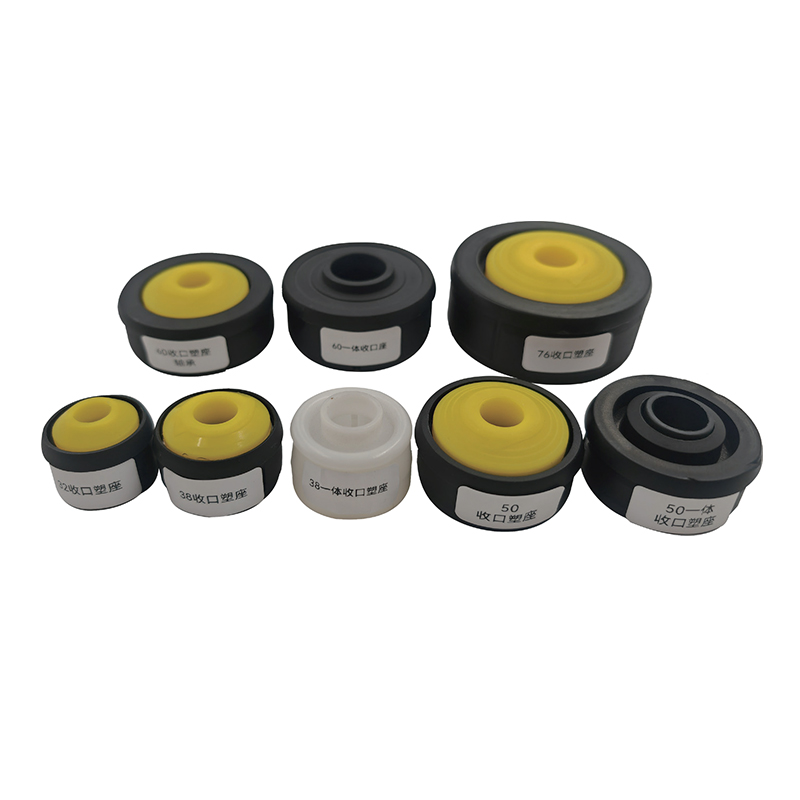 Roller End Cap Plastic SeatOpen-frame, precision-molded roller seat with integrated bearing housing and labyrinth seals, sized by tube diameter for logistics, food packaging, and baggage handling conveyors.View Product →
End Cap or No End Cap: Choosing Between Them
An open seat without a cap is not a bad design. It simply serves a different situation. On a dry, clean, indoor conveyor, an open seat is easier to inspect and lets you replace a worn bearing on its own instead of scrapping the whole seat. In a dusty or wash-down environment, the capped version almost always pays for itself.
| Factor | With end cap | Without end cap |
|---|---|---|
| Dust and debris protection | Bearing area is enclosed | Bearing area is exposed |
| Axial retention | Limited by the cap | Depends on frame or retaining ring |
| Wash-down conditions | Usually needs no extra shielding | Usually needs a separate cover |
| Routine inspection | Requires removing the roller | Easier to inspect in place |
| Replacement approach | Swap the whole seat | Replace the bearing alone |
| Typical setting | Food, pharma, packaging, wet areas | Dry, clean indoor lines |
Notice that protection and serviceability pull in opposite directions. That trade-off is the real decision, and it should be made with the environment your rollers actually live in, not the one in the specification sheet.
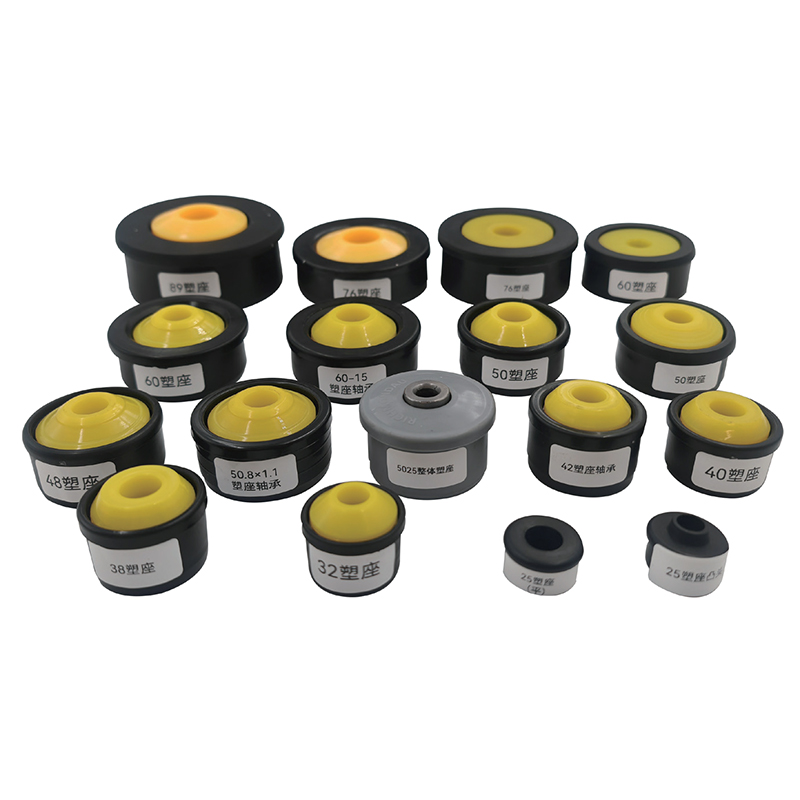 Roller Non-End Cap Plastic SeatOpen-end roller support bracket for conveyor assemblies, exposing roller ends for straightforward installation and independent replacement in logistics and automated handling lines.View Product →
What to Check Before You Specify an End-Cap Housing
A seat chosen badly usually shows up later as a wobbling roller, a persistent noise, or a bearing worn into an oval. These are the points worth confirming before you place an order:
- Shaft diameter and tube bore. The seat outer diameter has to match the roller tube bore, and the centre bore has to match the shaft. A fraction of a millimetre either way turns a press fit into a loose fit or an impossible one.
- Bearing size and type. Width, outer diameter and seal style all shape the internal pocket. Changing bearing series usually means changing the seat as well.
- Load and speed. A heavy-duty roller and a light one place very different demands on wall thickness and material choice.
- Operating environment. Dust, wash-down water, cleaning agents and temperature all narrow the material options. Some plastics soften noticeably above 70 °C.
- Mounting method. Press-in, bolted and snap-in designs each require different preparation of the frame or tube end.
- Availability over time. If a line carries several hundred rollers, consistency matters more than saving a few cents. A seat that changes shape between batches is a maintenance problem waiting to happen.
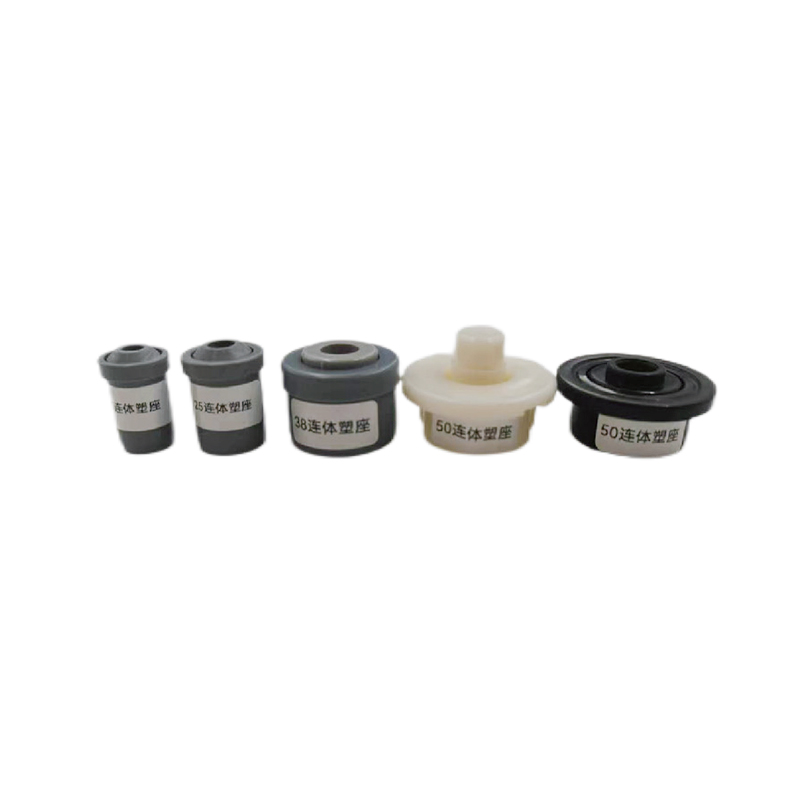 One-Piece Roller Plastic Seat for ConveyorsIntegrated bearing housing and mounting bracket in one molded plastic unit, offering corrosion resistance, light weight, and simplified assembly for light-duty conveyor systems.View Product →
Plastic versus Metal: Which One Fits
We have seen both materials work well, and honestly there is no universal answer. Plastic seats resist corrosion, weigh far less, and have a little give that absorbs minor misalignment. They will not score the roller tube surface, and they usually cost noticeably less. That is a large part of why so many roller ends in food, beverage and pharmaceutical facilities are plastic now: wash-down is frequent and rust is not negotiable.
Metal housings hold an advantage at extreme temperatures or very high radial loads. Where moisture is present, though, they need a coating, and once that coating is breached, corrosion spreads quickly from the damaged spot. Many of our customers end up with a mixed arrangement: plastic across the main lines, metal retained only at the few genuinely hot positions.
Installation and Assembly Notes
Most early failures we are asked about turn out to be assembly issues rather than product defects. These are the ones that come up again and again:
- Deburr the roller tube end before pressing anything in. A burr will carve a groove through the seat plastic.
- Keep the seat square as it enters. Pressing it in at an angle cracks the body, and the crack often only appears after the roller is already installed.
- Do not strike the seat directly with a hammer. Use a flat drift or an arbor press so the force spreads around the full circumference.
- Confirm the cap has seated fully. A cap that is half home will still turn, but it will drift axially once the line runs.
- Spin the finished roller by hand. If you can feel a problem at zero speed, do not expect it to disappear at full speed.
Where These Parts Turn Up
End-cap bearing housings appear almost anywhere a roller conveyor exists. We work with logistics sorting and warehousing operations, pharmaceutical plants, food and beverage producers, organic produce handling, tobacco processing, tyre manufacturing, and airport ground handling equipment. The component is broadly the same, but what people care about is not. A food plant asks first about daily wash-down. A warehouse asks about downtime, because nobody wants to swap rollers at two in the morning.
If you would like a broader picture of how these parts fit together with the rest of a line, our overview of conveyor roller fittings types and materials walks through the whole family, and you can also browse the full roller fittings range directly.
Common Problems and Quick Diagnosis
- Roller rattles in the frame. Usually a worn seat outer diameter, or a cap that never fully seated.
- Sharp noise while running. More often than not it is dust that has reached the bearing, or a cap bore rubbing where it should not.
- Roller seized and refusing to turn. Check for misalignment between the two seats, or one seat pressed in crooked.
- Powdery black residue around the bearing. A classic wear signal, and frequently a symptom of failed protection rather than a failed bearing.
- Gradual tracking drift after a few months. Occasionally the seat material has softened at elevated temperature and changed dimensions.
One habit worth keeping during diagnosis: replace a single roller at a time and give it ten minutes of running. If the fault follows the roller, the part is at fault. If it stays in the same position on the line, look at the frame and the alignment instead.
Who Makes These Parts
We are a plastic component manufacturer based in Zhejiang, China, and we have been supplying conveyor system parts since 2006. Production runs across three manufacturing sites in Zhejiang and Jiangsu with output in the tens of millions of pieces a year. The end-cap roller seat is a small share of that, but small parts like this are exactly what we do best: stable dimensions, consistent batches, and a supply that keeps going long after the first order.
If you are not sure whether a particular seat will fit the rollers you already have, send us your dimensions. Checking them together is far quicker than guessing twice.
Related products
-
-
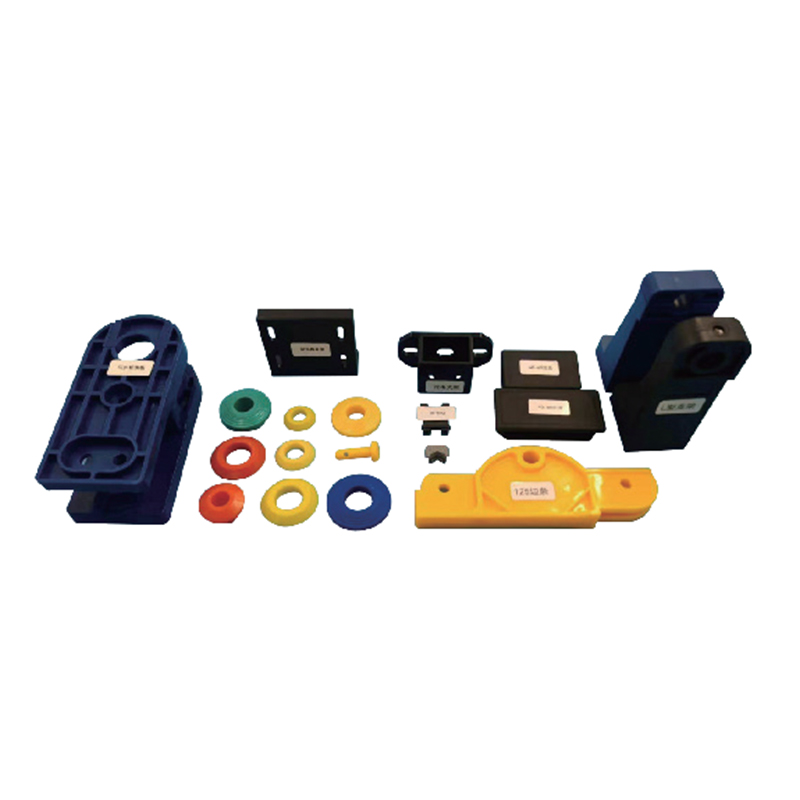 Conveyor Accessories
Conveyor accessories are a collection of functional components designed for indu...
-
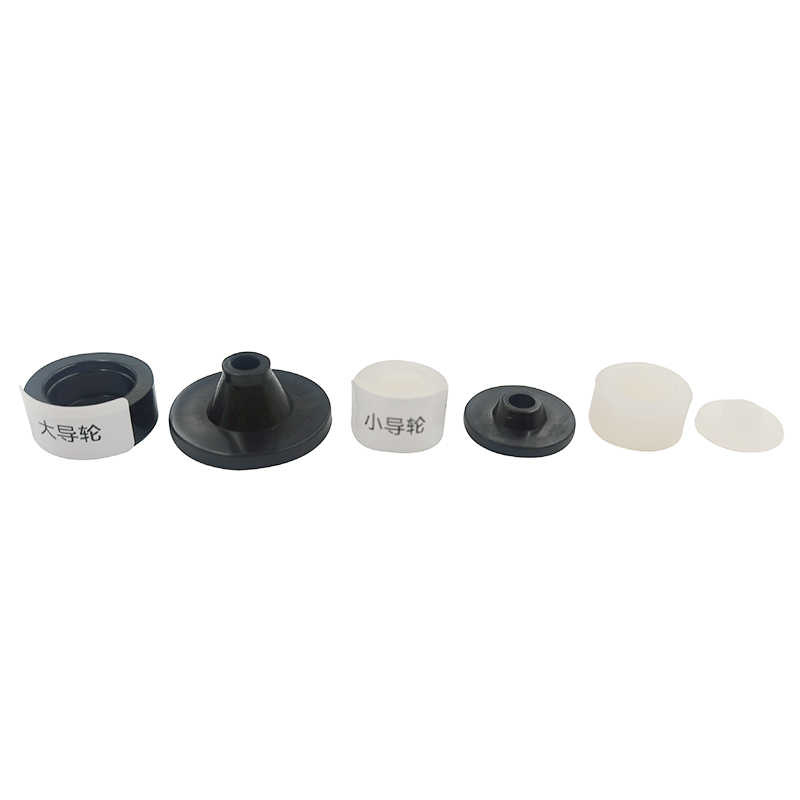 Roller Guide Wheel
The guide wheel serves as a critical directional component in industrial conveyi...
-
Roller Non-end Cap Plastic Seat
The roller open-end plastic seat is a plastic structural component used for supp...
-
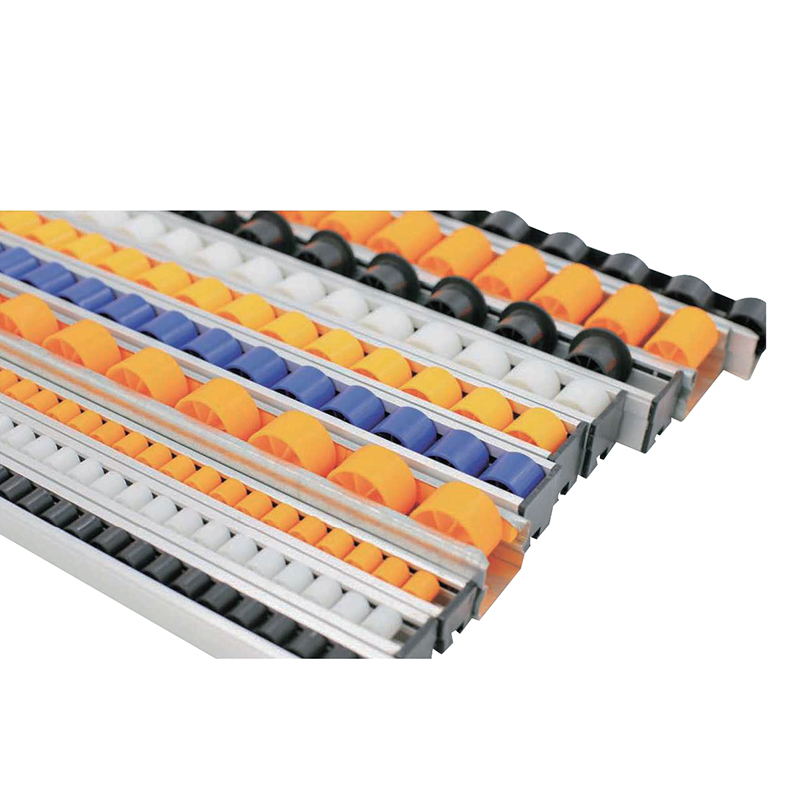 Conveyor Flow Bar
The conveyor flow bar is a rolling component designed for gravity-driven or assi...
-
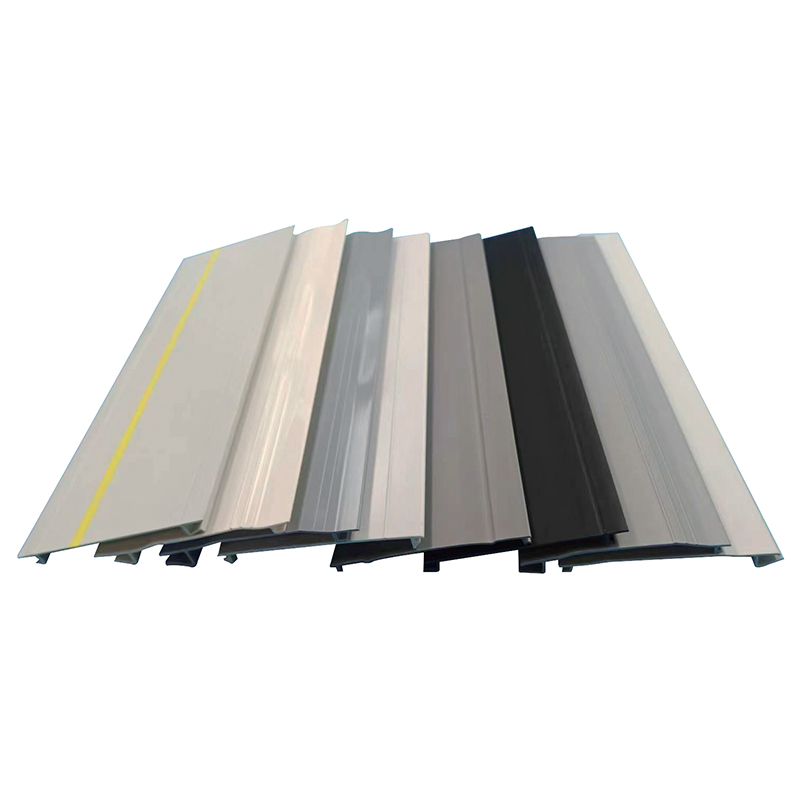 Conveyor Sealing Plate
The conveyor sealing plate is a side enclosure component designed for conveyor e...


+86-13250912999
Huzhou Nanxun Guan's Plastic Industry Co., Ltd.
Email: [email protected]
Address: Building 8, North Zone, Dehao Industrial Park, Linghu Town, Nanxun District, Huzhou City, Zhejiang Province, China
Navigation
Products
About us
Copyright © Huzhou Nanxun Guan's Plastic Industry Co., Ltd.
All Rights Reserved.
 Privacy
Wholesale Plastic Conveyor Parts Manufacturers