
 English
 中文简体
 русский
 Español

Definition and Structural Characteristics The Open Plastic Seat is a terminal su...

Industry News
Home / News / Industry News / Roller Cover End Caps: Fit, Materials, and Selection Tips for Conveyor Lines
Roller Cover End Caps: Fit, Materials, and Selection Tips for Conveyor Lines
Author: admin / 2026-10-23
Content
- 1 What a Roller Cover End Cap Is Doing All Day
- 2 The Configurations You Will Meet Most Often
- 3 Fit and Tolerance: Where Most Problems Begin
- 4 Materials and the Conditions They Meet
- 5 Installation and Maintenance Habits That Pay Off
- 6 Matching the Cap to the Rest of the Roller
- 7 Questions We Hear Most Often
A conveyor roller looks simple from the outside: a tube, a shaft and a few small fittings. But the parts that decide whether it runs quietly for years or starts to wobble within months are the ones tucked away at each end, and the roller cover end cap carries most of that responsibility.
We have been moulding plastic components for conveying and logistics equipment since 2006, and seats, caps, sleeves and rings pass through our benches every working day. What follows is the practical view we share with line builders and maintenance teams: what these caps actually do, what to check before you specify them, and where the familiar failures come from.
What a Roller Cover End Cap Is Doing All Day
On a roller, the cover, meaning the sleeve or tube the load rides on, has to be located firmly at both ends. The end cap is that locating feature. It centres the cover on the shaft, closes what would otherwise be an open tube end, and gives the bearing housing or mounting seat something solid to press against.
Do the job well and the reward is unremarkable: the roller turns true, the cover wears evenly, and nobody thinks about it again. Do it badly and the symptoms show up somewhere else entirely. A cap that sits a few tenths of a millimetre off-centre pushes the cover into a slight orbit, which appears as a hum at speed, a band of wear on one side of the sleeve, or a clicking that only turns up under load.
One terminology note before going further. In our catalogue, an end-cap plastic seat is a single moulding that combines the cap and the seat in one part, while a seat without an end cap leaves the end closure to a separate component. Both designs are common, and neither is better in the abstract. It depends on how the roller is assembled and how often it is serviced.
The Configurations You Will Meet Most Often
Most conveyor lines use one of a handful of arrangements. The comparison below sets them out in the terms that matter during specification.
| Configuration | How the cover is located | Where it suits the line | What to verify |
|---|---|---|---|
| Seat with integrated end cap | Cap face and housing moulded as one piece | Rollers built from a single open tube end; repeatable, high-volume assembly | Cap outside diameter against tube bore, shaft bore, cap squareness |
| Seat without end cap | Housing open; the end is closed by a separate cap or by the frame | Lines where the roller end is closed by another component or access is needed | Seat flatness, fixing hole spacing, clearance to the frame |
| One-piece plastic seat | Bearing housing and mounting foot in a single moulding | Light-to-medium duty sections with many identical rollers | Hole centres, base thickness, how the foot sits on the frame |
| Cover held by a retaining ring | Ring traps the sleeve or cap in a machined groove | Rollers dismantled for cleaning or sleeve replacement | Groove width and depth, ring fit, freedom to rotate |
One of the parts we mould most often for the first arrangement is the roller end-cap plastic seat, which pairs a closed cap face with a moulded housing in a single piece.
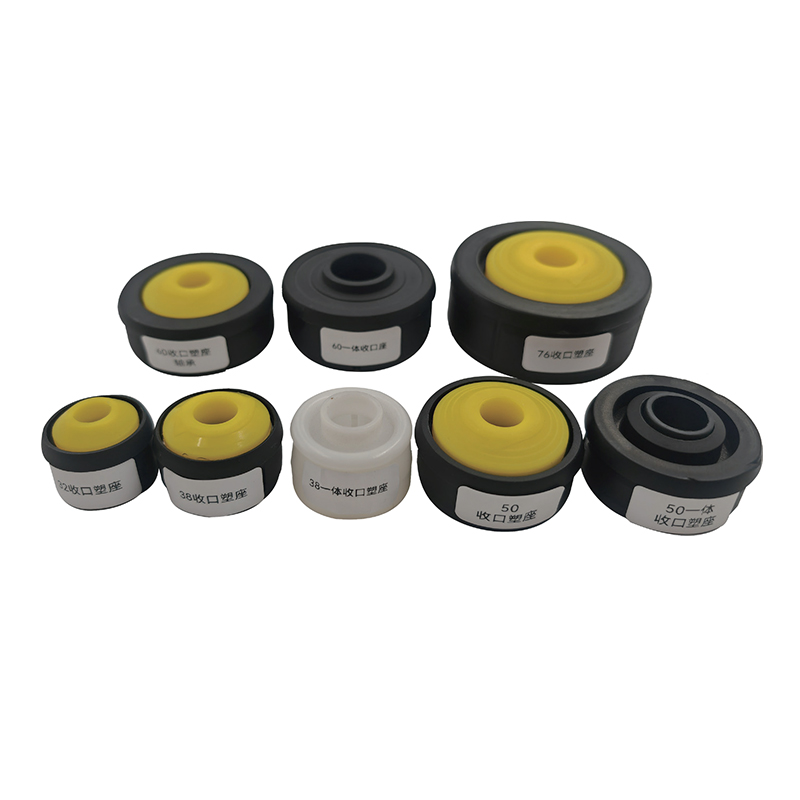 Roller End Cap Plastic SeatA moulded end cap and bearing seat for conveyor rollers; check shaft bore and tube locating diameter before ordering.View Product →
Fit and Tolerance: Where Most Problems Begin
Shaft bore and tube bore
Two dimensions do most of the work. The shaft bore decides how the roller turns: too tight and assembly becomes a press fit that can split the cap, too loose and the roller rattles and wears the shaft. The locating diameter against the tube decides how the cover sits, and it should be a light interference fit rather than a force fit that distorts the cap face. Measuring both before you order saves a great deal of guesswork later.
Concentricity and run-out
Concentricity between the shaft bore and the outer locating diameter sets the run-out of the whole roller. A cap that is perfectly round but off-centre is worse than one that is very slightly oval, because the error repeats with every revolution and loads the same patch of sleeve each time. This is one place where a moulding tool either holds its dimensions or it does not.
Wall thickness and load path
Thin caps save weight and cost, but they deflect under radial load if the load path from cover to bearing is not thought through. The question to ask is simple: where does the force go when the heaviest item on the line stops dead on that roller? If the answer runs through a thin section of plastic with nothing behind it, the cap will eventually show it.
For a wider look at how caps, sleeves, seats and drive wheels work together, our guide to conveyor roller fittings types and materials is a useful companion read.
Materials and the Conditions They Meet
Most conveyor end caps and seats are moulded in engineering plastics, and the choice usually comes down to a trade-off between stiffness, impact resistance, friction and cost. Polypropylene is forgiving and economical and handles general warehouse duty well. POM holds tolerances nicely and slides cleanly against other parts. Nylon absorbs impact and noise but takes up moisture, so it suits some environments better than others. PVC turns up where chemical resistance and a smooth finish matter.
The working environment narrows the list quickly: washdown and cleaning agents, ambient humidity, temperature swings, sunlight through roof panels, and the occasional spill of whatever the line is moving. In food, beverage, pharmaceutical and warehouse settings we usually ask three questions first: what cleans the line, what temperature range does it see, and how heavy is the load per roller. The answers rarely point to a single grade, but they rule most of them out.
Installation and Maintenance Habits That Pay Off
Even a well-specified cap can be let down at assembly. These habits show up again and again in lines that stay quiet:
- Check the tube end before fitting. A burr or a distorted cut end will push the cap off-centre no matter how good the moulding is.
- Seat the cap square. Press it in with a flat-faced tool rather than tapping one side, so it goes in evenly.
- Keep the shaft clean and dry. Grit between shaft and bore accelerates wear and makes later removal awkward.
- Inspect in groups, not one at a time. When one cap in a section shows wear, its neighbours usually share the cause.
- Replace caps and rings together. Mixing a worn ring with a new cap often reproduces the play you were trying to remove.
Matching the Cap to the Rest of the Roller
An end cap is never the whole story. It has to work with the sleeve it locates, the ring or seat that holds it, and the drive element at the other end. When replacing a part, it helps to think in assemblies rather than individual mouldings, because a slightly different cap changes how the sleeve sits, and a new sleeve changes what the cap has to hold.
On the cover side, our straight, tapered and general roller sleeves are moulded to pair with these seats, and the sleeve bore and cap diameter need to agree before anything else is decided.
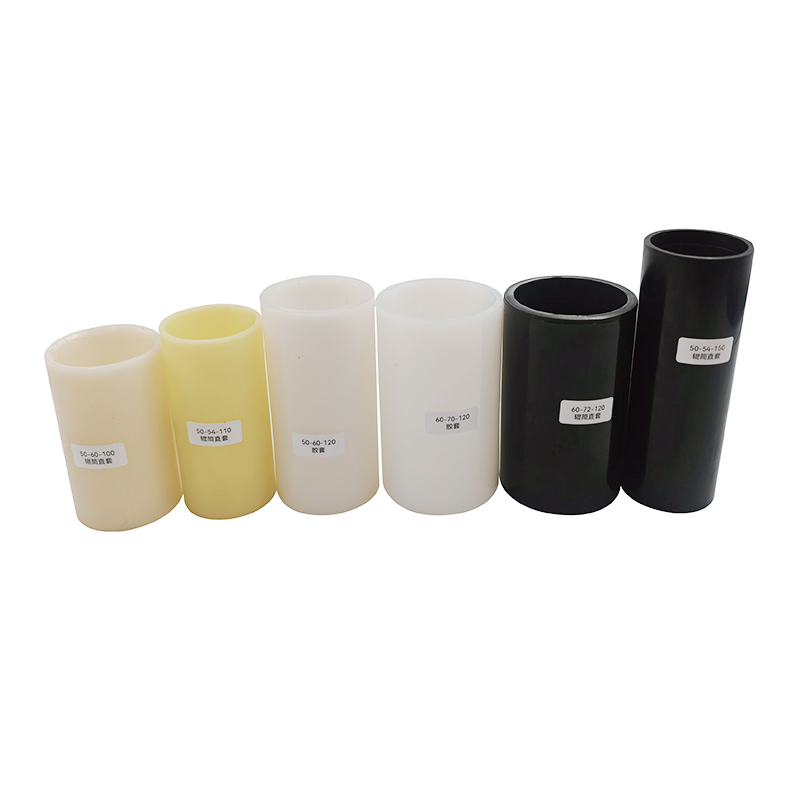 CNC Machined Roller Sleeve for Conveyor RollersPrecision tube sleeve with coaxial bore and outer diameter; match sleeve bore and cap diameter when pairing with roller seats.View Product →
Where a cover is held by a ring instead of a cap, the roller retaining ring does the locating, and its fit is just as decisive for run-out and noise.
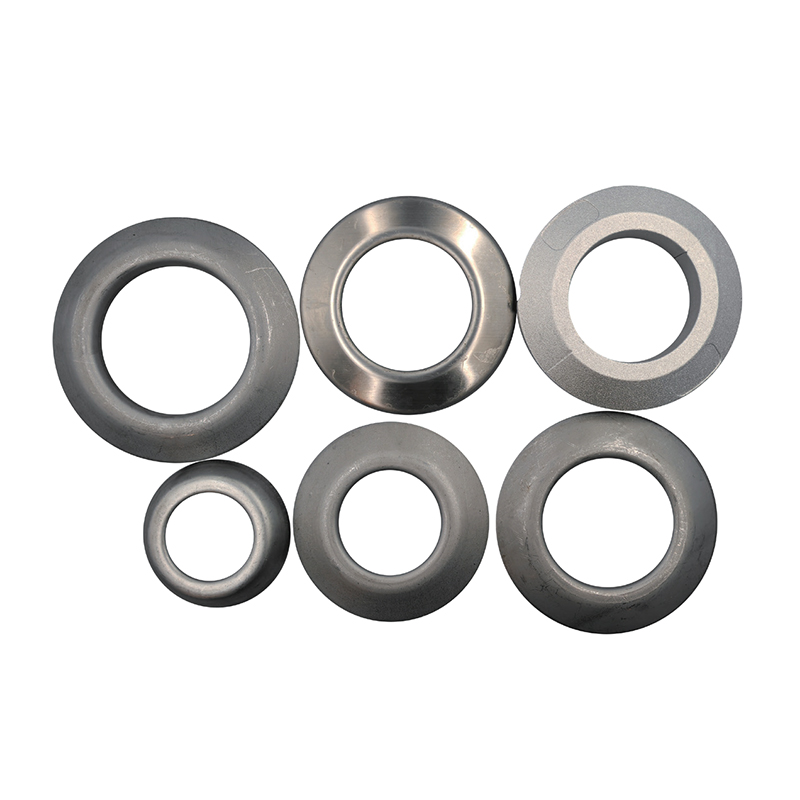 Roller Retaining Ring for Axial PositioningAxial stop for conveyor rollers and shafts, available in carbon or stainless steel; supports stable alignment and simpler maintenance.View Product →
If you are rebuilding a roller from scratch, the full roller fittings series brings seats, sleeves, pipes, rings and drive pulleys together in one place, which makes it easier to check compatibility across the whole assembly.
Questions We Hear Most Often
How do I know whether I need a cap or a seat?
Look at what closes the tube end. If one moulded part does the closing and holds the bearing housing, you want a combined cap-and-seat design. If another component closes the end, an open seat is usually the simpler and cheaper answer.
Can a cap be replaced on its own?
Usually yes, provided the sleeve bore and shaft are still within tolerance. In practice, caps that fail early often take the sleeve with them, so inspect both before ordering a single part.
What causes caps to crack in service?
Three causes cover most cases: an interference fit that is too heavy for the material, impact during assembly or jam clearance, and a grade that becomes brittle at low temperature. Each has a different fix, which is why we ask how the part failed before suggesting a change.
If you are unsure which arrangement suits your line, send us the tube bore, the shaft diameter and a photo of the existing part. We have been moulding these components in volume since 2006 across three manufacturing bases in Zhejiang and Jiangsu, and matching a new fitting to a working drawing is routine work for our team.
Related products
-
-
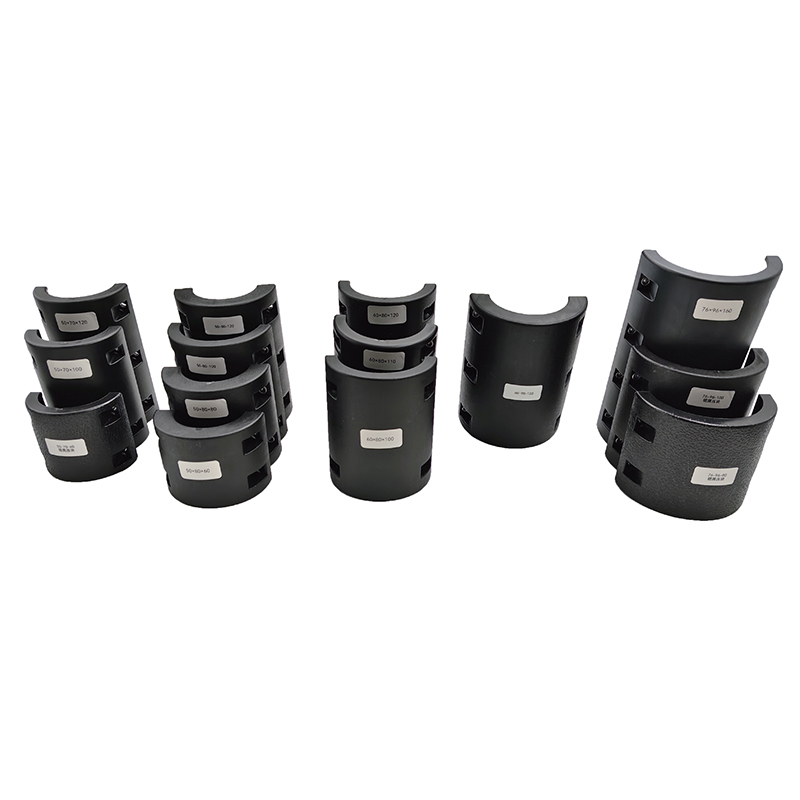 Roller Straight Sleeve
The Roller Straight Sleeve is a functional covering component installed on the o...
-
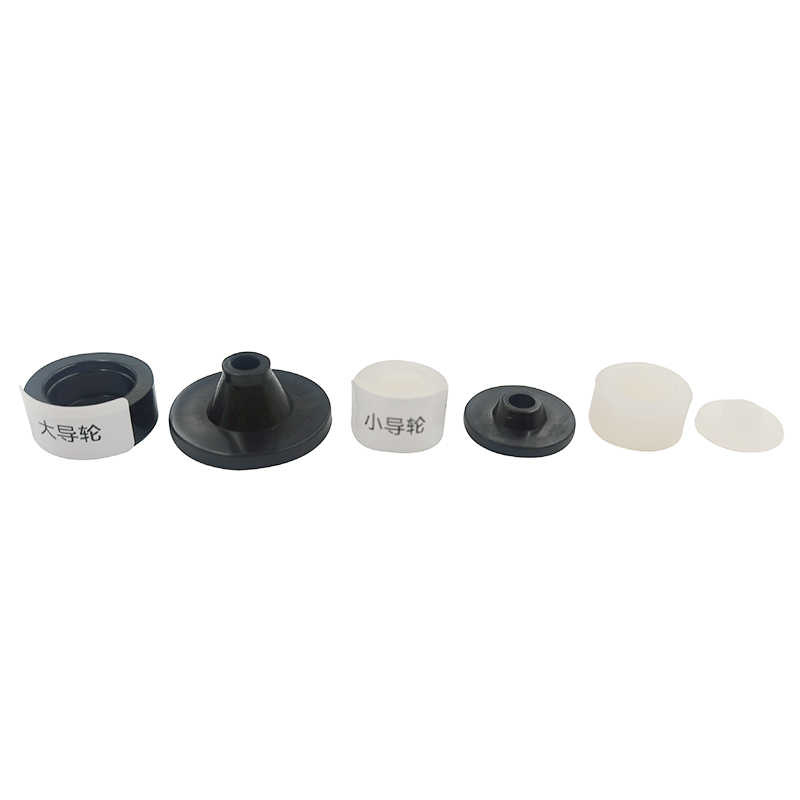 Roller Guide Wheel
The guide wheel serves as a critical directional component in industrial conveyi...
-
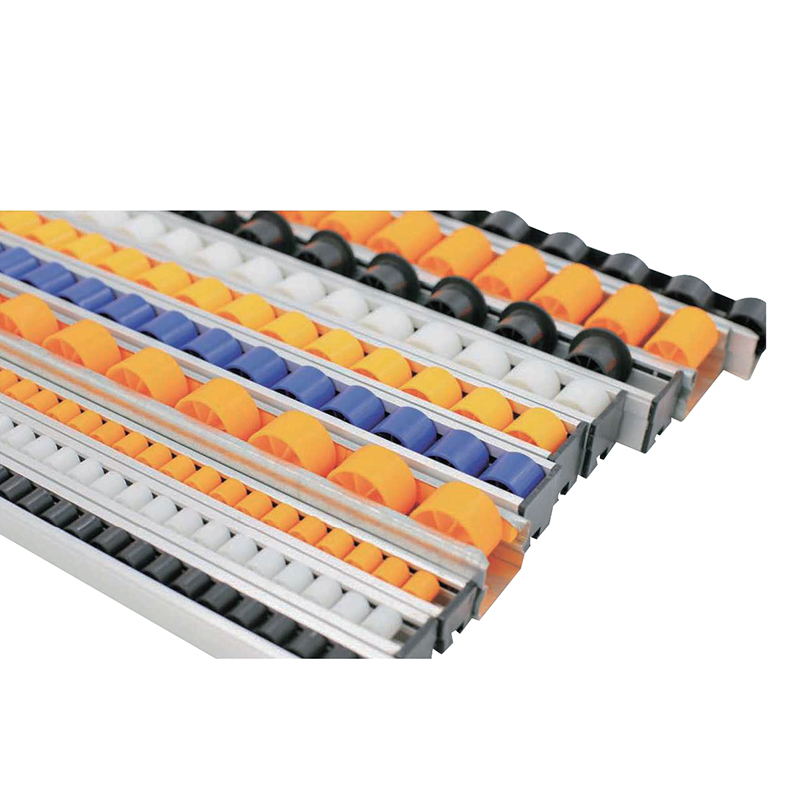 Conveyor Flow Bar
The conveyor flow bar is a rolling component designed for gravity-driven or assi...
-
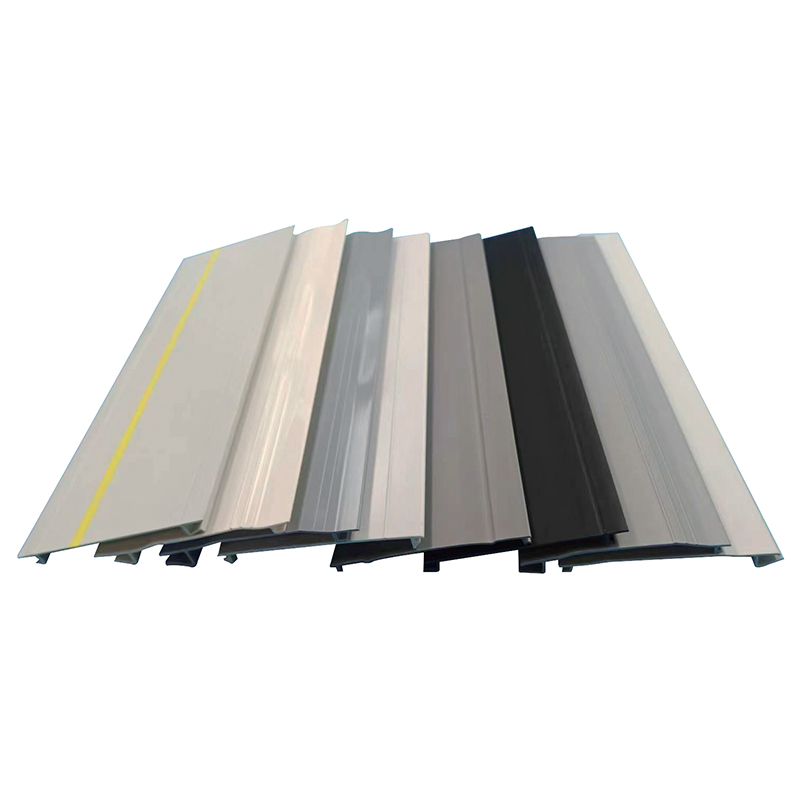 Conveyor Sealing Plate
The conveyor sealing plate is a side enclosure component designed for conveyor e...
-
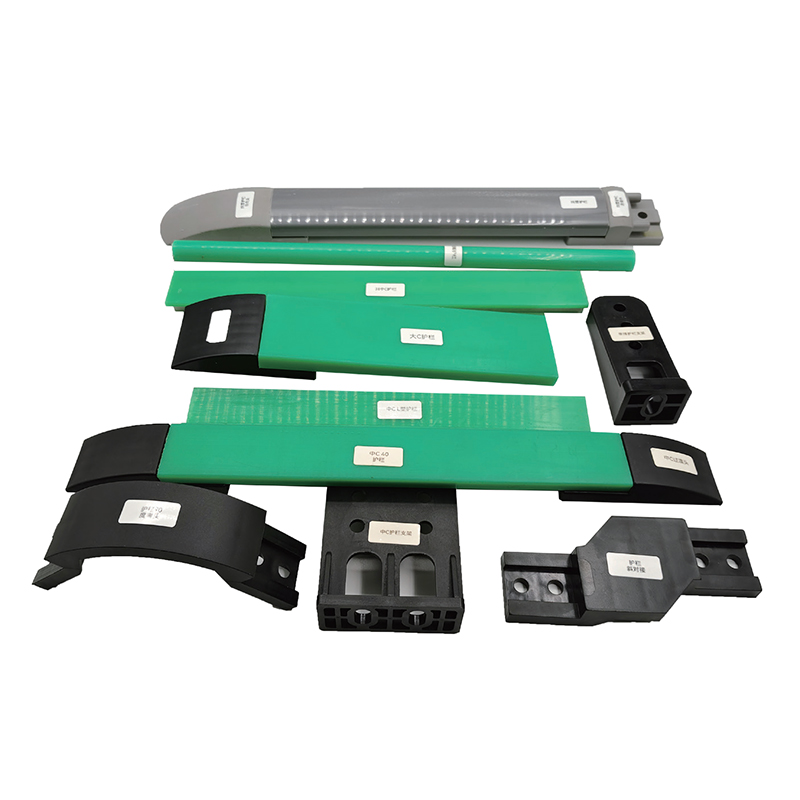 Conveyor Guardrail
The conveyor guardrail is a modular protective structure installed along the per...


+86-13250912999
Huzhou Nanxun Guan's Plastic Industry Co., Ltd.
Email: [email protected]
Address: Building 8, North Zone, Dehao Industrial Park, Linghu Town, Nanxun District, Huzhou City, Zhejiang Province, China
Navigation
Products
About us
Copyright © Huzhou Nanxun Guan's Plastic Industry Co., Ltd.
All Rights Reserved.
 Privacy
Wholesale Plastic Conveyor Parts Manufacturers