
 English
 中文简体
 русский
 Español

The conveyor sealing plate is a side enclosure component designed for conveyor e...

Industry News
Home / News / Industry News / Plastic Conveyor Parts Manufacturers: How to Choose the Right Partner for Your Line
Plastic Conveyor Parts Manufacturers: How to Choose the Right Partner for Your Line
Author: admin / 2026-10-09
Content
- 1 What Plastic Conveyor Parts Manufacturers Actually Supply
- 2 Why Plastics Have Replaced Metal in So Many Conveyor Positions
- 3 Roller Conveyor Fittings: The Parts That Keep Rollers Turning
- 4 Chain Conveyors, Guardrails and Line Structure Components
- 5 Flow, Lift and Turning Components
- 6 How to Evaluate a Plastic Conveyor Parts Manufacturer
- 7 Industries Where These Parts Do the Work
- 8 Working With a Manufacturer That Molds Its Own Parts
Conveyor lines rarely stop because of a frame or a motor. Far more often the culprit is a worn sleeve, a cracked roller seat, or a guide rail that has lost its edge. That is why choosing among plastic conveyor parts manufacturers deserves more attention than the modest unit price of these components suggests. A good supplier knows how a part behaves after a million cycles, not only how it looks on a drawing. In this guide we share what nearly two decades of molding conveyor components for logistics, food, pharmaceutical and warehousing operations has taught us about the parts, the materials, and the questions worth asking before you place an order.
What Plastic Conveyor Parts Manufacturers Actually Supply
The category covers every non-metallic element that carries, drives, guides or protects the load on a conveyor. In practice, a full-range supplier molds several distinct families:
- Roller fittings: sleeves, roller seats, drive pulleys and retaining rings that sit inside or around a roller.
- Chain conveyor components: chain supports, head frames, tension wheels and connecting accessories.
- Chain plates and line structure: flat chain mesh, side-bending chain and box-type side frame profiles.
- Guardrails and enclosures: product guide rails, sealing plates and protective covers.
- Gravity flow parts: fluency strips and their mounting accessories.
- Lift and transfer units: synchronized lifters, lifting transplanters and top lifting transfer wheels.
- Wheel and turning elements: skate wheel bearings, beaded omni wheels and mecanum wheels.
A manufacturer that molds across all of these families can support an entire line rather than a single replacement order. That breadth matters most during a project build, when dozens of different parts have to arrive from one source with consistent dimensions, colour and fit.
Why Plastics Have Replaced Metal in So Many Conveyor Positions
Steel and aluminium still have their place, but on the contact surfaces of a modern conveyor, engineering plastics usually win. They run quietly, need no lubrication, resist corrosion and washdown chemicals, weigh a fraction of metal, and absorb vibration instead of transmitting it into the frame. They also protect the product itself: a plastic guide rail will not scratch a carton or a glass bottle the way a bare steel edge can.
The choice between plastics is driven by load, speed, temperature and cleaning regime rather than by personal preference.
| Material | Typical conveyor parts | Why it is chosen |
|---|---|---|
| UHMW-PE | Wear strips, guide rails, chute liners | Very low friction, high abrasion resistance, good impact strength |
| POM (acetal) | Sprockets, sleeves, bearing housings | Stiffness, stable dimensions, low moisture absorption |
| PA (nylon) | Rollers, wheels, bushes | Toughness, load capacity, wear resistance |
| PP | Rollers, brackets, washdown parts | Chemical resistance, light weight, low cost |
| PVC | Roller pipe, profiles, guards | Rigidity, easy bonding and machining, economical |
Because these trade-offs are easy to get wrong, we documented the decision process in more detail in our guide to roller fittings: types, materials and selection.
Roller Conveyor Fittings: The Parts That Keep Rollers Turning
A roller conveyor is a surprisingly simple mechanism, yet it depends on a set of precisely molded interfaces. The sleeve sits over the roller tube and defines how the load rolls. The plastic seat holds the roller shaft in the frame. The drive pulley or sprocket turns the roller. The retaining ring keeps the assembly from drifting, and the roller pipe provides the body itself. A single mismatched dimension in this chain produces noise, vibration and premature wear across the whole line.
- Roller sleeves: cone, straight and universal versions for different tube ends.
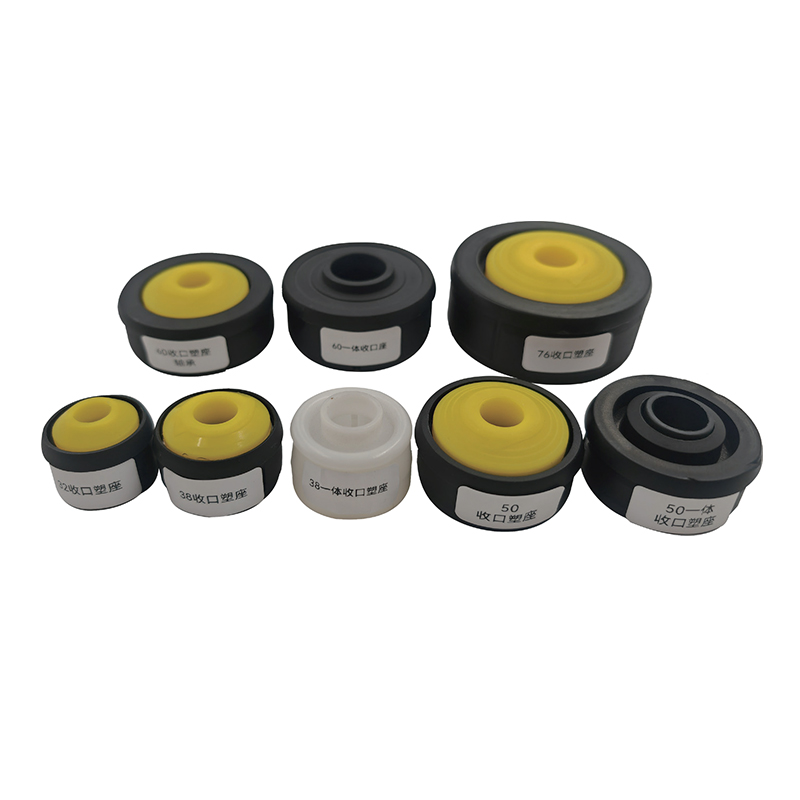
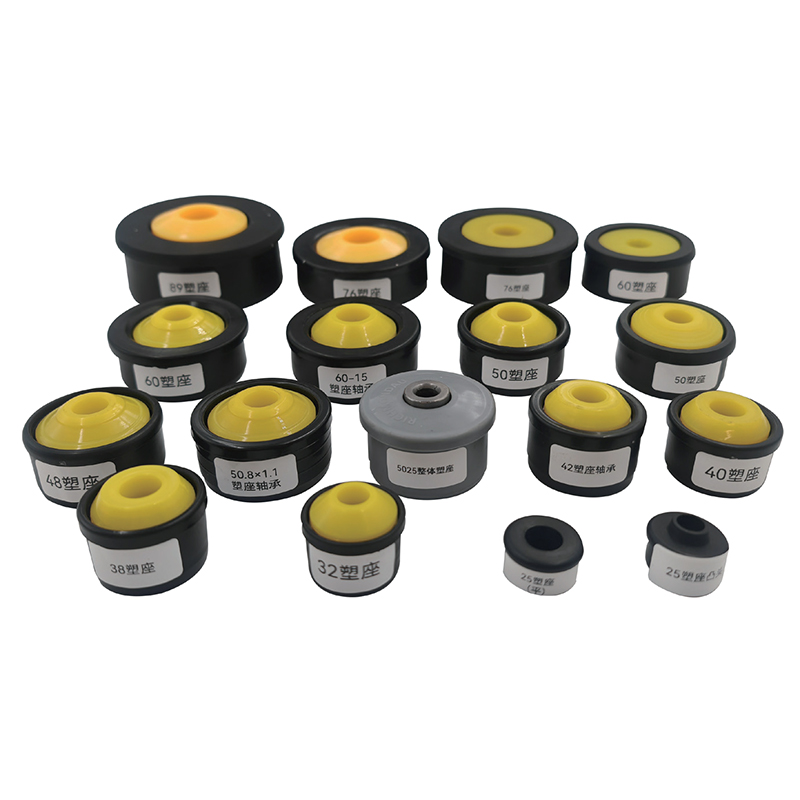
- Plastic roller seats: one-piece, end-cap and non-end-cap designs.
- Drive parts: chain wheels, double-slot O pulleys, polywedge pulleys and synchronous pulleys.
- Roller pipe and retaining rings in matching diameters.
- Small components: foot cups, guide wheels, O belts and transition wheels.
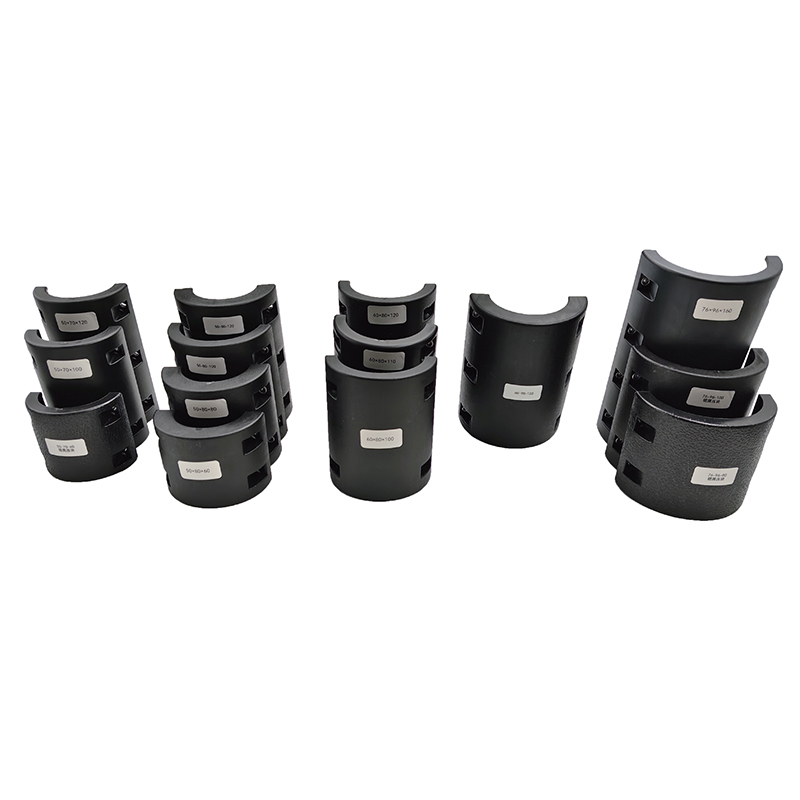 Roller Straight SleeveThe Roller Straight Sleeve is a functional covering component installed on the outer surface of rollers. It is used in continuous operation scenarios such as conveying...View Product →
Chain Conveyors, Guardrails and Line Structure Components
Where product has to accumulate, curve or change level, chain-based systems take over. A chain conveyor head frame carries the drive unit, the tension wheel keeps the chain at the right slack, and the chain support prevents sag along the return run. Flat chain mesh and side-bending chain handle straight and curved sections, while the box-type side frame profile gives the line its structural spine.
Guardrails are the parts operators notice least and replace most often. They keep product centred through curves and transfers, and one correctly profiled guide rail can eliminate a whole category of jams. Sealing plates close the gaps between rail sections so debris, crumbs and dust stay out of the track, which is especially valuable on packaging and food lines where cleaning time is expensive.
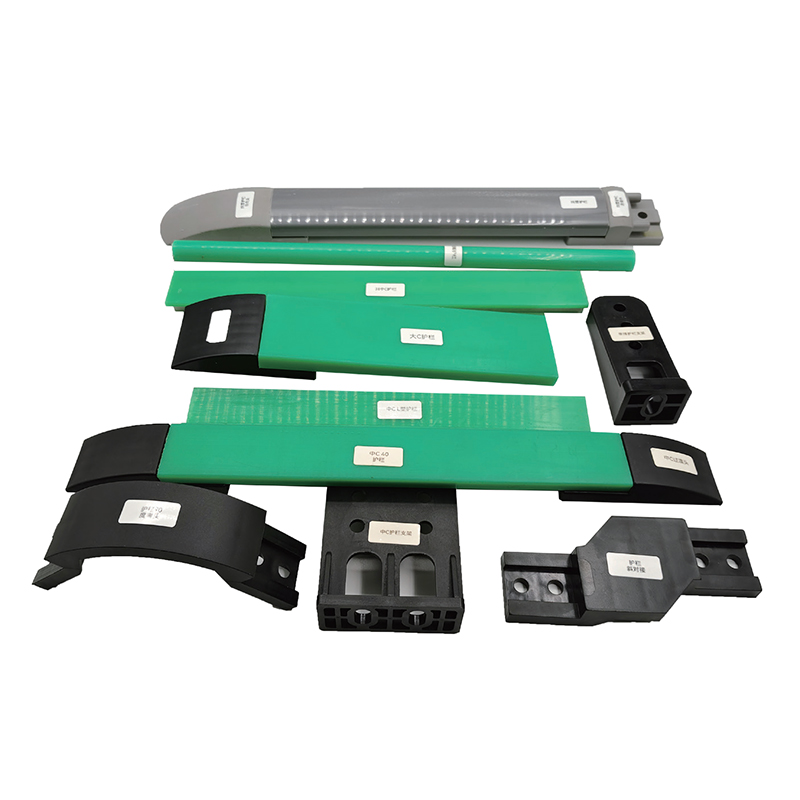 Conveyor GuardrailThe conveyor guardrail is a modular protective structure installed along the periphery of conveying equipment, creating physical separation between personnel activity ...View Product →
Flow, Lift and Turning Components
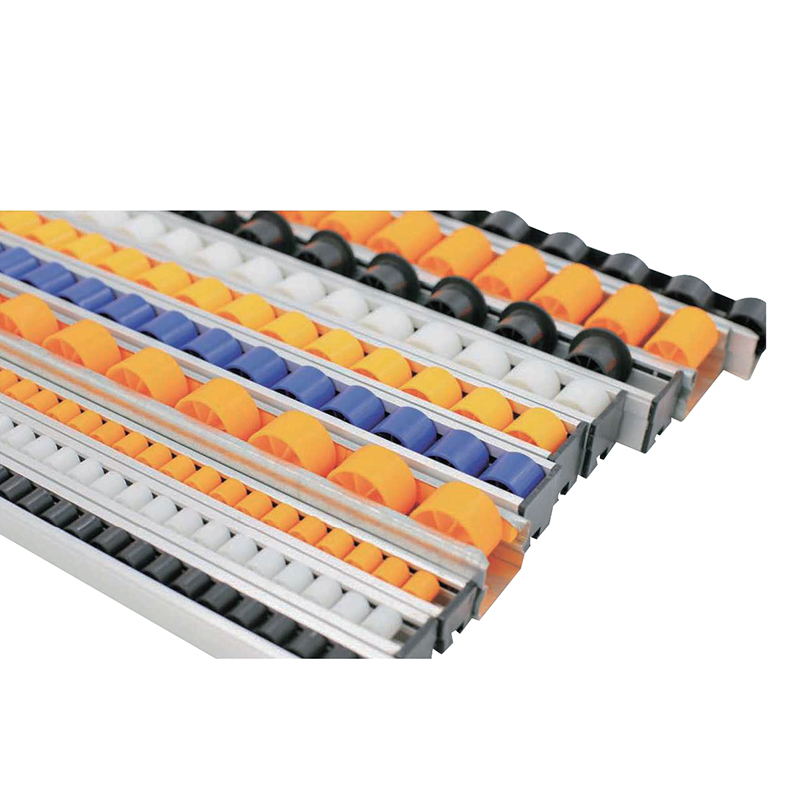
Not every section of a line is powered. Fluency strips create low-friction gravity lanes on racks and picking stations, letting operators push cartons with almost no effort. Where elevation changes are needed, synchronized lifters raise and lower loads evenly, and top lifting transfer wheels rotate them onto a crossing line without a turntable.
At the small end of the scale sit skate wheel bearings and beaded omni wheels, which combine load carrying with free movement in any direction. For equipment that must travel sideways or diagonally rather than forward, mecanum wheels turn a fixed chassis into an omni-directional platform. Together these parts decide how flexible a layout can be.
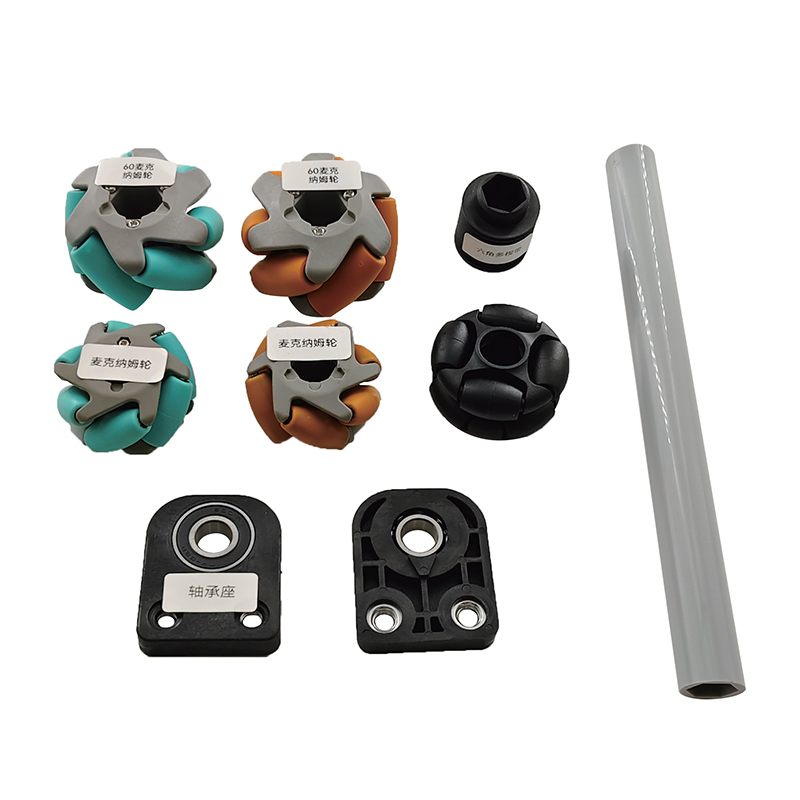 Mecanum WheelThe MECANUM WHEEL is an omnidirectional wheel characterized by a series of rollers distributed evenly around the circumference of the hub at a specific angle. These ro...View Product →
How to Evaluate a Plastic Conveyor Parts Manufacturer
Price lists look similar across suppliers. Capability does not. These are the points we would check first, in this order:
- Molding and tooling control: can new molds be built and modified in-house, or does every change wait for a third party?
- Material discipline: are grades documented and consistent, or chosen by whatever is available that week?
- Dimensional repeatability: will the part that arrives next year match the one delivered today?
- Catalog breadth: can one supplier cover sleeves, seats, sprockets, rails and lifting units together?
- Production capacity: multiple sites and sufficient output to absorb a sudden volume increase.
- Customization: machining, laser cutting and dedicated tooling for parts that are not in the catalog.
- Application support: someone who can discuss your line and your failure mode, not just your purchase order.
Industries Where These Parts Do the Work
Conveyor plastics are used far beyond a single sector. Our own components are installed in:
- Logistics and parcel handling, where durability under constant cycling is the main requirement.
- Pharmaceutical production, where clean surfaces and quiet operation matter.
- Food and beverage lines, where washdown and hygiene drive material selection.
- Warehousing and distribution centres using gravity lanes and powered rollers.
- Organic produce sorting, where gentle handling protects the product.
- Tobacco processing, where dust resistance in the track is critical.
- Tire manufacturing, where heavy loads and heat have to be tolerated.
- Airport ground services, where equipment must move in tight spaces.
Working With a Manufacturer That Molds Its Own Parts
Huzhou Nanxun Guan's Plastic Industry Co., Ltd. was founded in 2006 and is headquartered in Huzhou, Zhejiang. We operate three plastic product manufacturing bases across Zhejiang and Jiangsu provinces, along with a dedicated laser cutting workshop, more than 15,000 square metres of production and development space, a team of over 160 people, and an annual output measured in tens of millions of pieces. Our catalog runs from roller sleeves and plastic seats to guardrails, fluency strips, synchronized lifters and mecanum wheels, and it serves customers both in China and overseas.
You can review our complete conveyor component range to see how the families fit together, or simply describe the section of your line that is giving you trouble.
Choosing among plastic conveyor parts manufacturers is ultimately a question of engineering support rather than catalog size. The right partner will tell you which material suits your load and cleaning routine, hold the tolerance that keeps your line quiet, and still be there when the second order arrives. If a part on your conveyor is failing sooner than it should, that conversation is usually the fastest way to a durable answer.
Related products
-
-
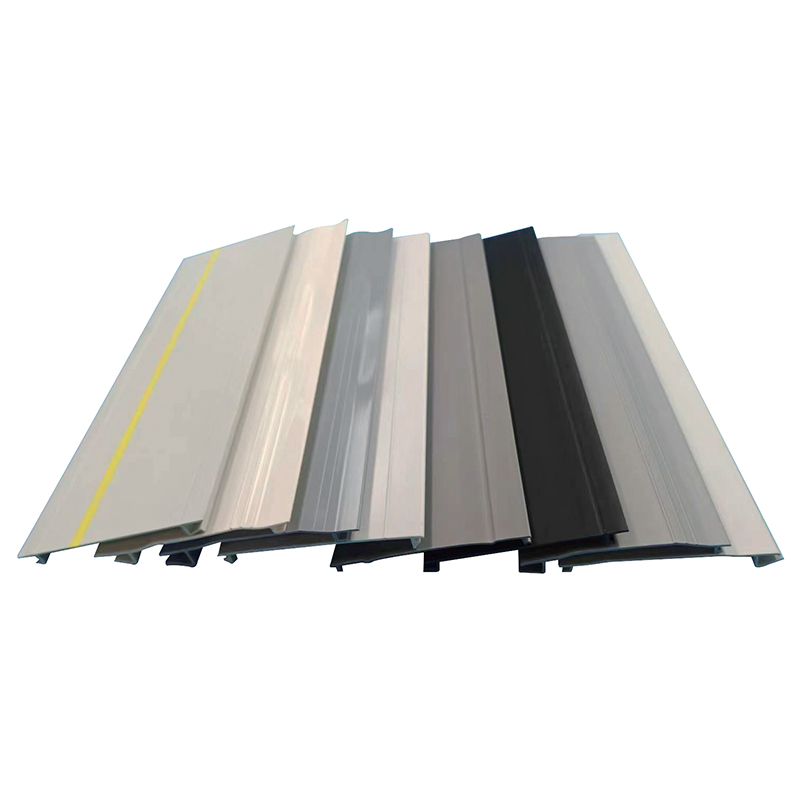
 Conveyor Guardrail
The conveyor guardrail is a modular protective structure installed along the per...
-
 Conveyor Flow Bar
The conveyor flow bar is a rolling component designed for gravity-driven or assi...
-
 Conveyor Accessories
Conveyor accessories are a collection of functional components designed for indu...
-
 Roller End Cap Plastic Seat
Definition and Structural Characteristics The Open Plastic Seat is a terminal su...
-
 Roller Non-end Cap Plastic Seat
The roller open-end plastic seat is a plastic structural component used for supp...


+86-13250912999
Huzhou Nanxun Guan's Plastic Industry Co., Ltd.
Email: [email protected]
Address: Building 8, North Zone, Dehao Industrial Park, Linghu Town, Nanxun District, Huzhou City, Zhejiang Province, China
Navigation
Products
About us
Copyright © Huzhou Nanxun Guan's Plastic Industry Co., Ltd.
All Rights Reserved.
 Privacy
Wholesale Plastic Conveyor Parts Manufacturers