
 English
 中文简体
中文简体 русский
 Español
The conveyor flow bar is a rolling component designed for gravity-driven or assi...

Industry News
Home / News / Industry News / Plastic Conveyor Flow Bar: A Practical Guide to Selection, Installation, and Care
Plastic Conveyor Flow Bar: A Practical Guide to Selection, Installation, and Care
Author: admin / 2026-09-30
Content
- 1 What a Plastic Conveyor Flow Bar Actually Does
- 2 Where Flow Bars Fit in a Conveyor Line
- 3 Why Plastic Beats Metal in Most Flow Applications
- 4 How to Specify the Right Flow Bar
- 5 Flow Bar, Slide Rail or Skate Wheel?
- 6 Installing Flow Bars the Right Way
- 7 Maintenance and Troubleshooting
- 8 Building a Complete Plastic Component Set
- 9 Working With a Manufacturer Who Molds These Parts
Walk through almost any distribution center and you will find them: narrow rails of plastic, each holding a neat row of tiny rollers, quietly carrying cartons from one picking position to the next. The plastic conveyor flow bar is easy to overlook, but it is one of the hardest-working parts on a gravity conveyor line. Specified well, cartons glide, operators stop pushing, and lanes stay clean. Chosen poorly, loads stall halfway down the rack and the whole pick face slows to a crawl.
We have been molding plastic conveyor components since 2006, and in that time we have seen good lanes and bad lanes come down to the same handful of details. This guide covers what a flow bar does, how to specify one, how to install it square, and how to keep it running for years rather than months.
What a Plastic Conveyor Flow Bar Actually Does
A plastic conveyor flow bar is a low-friction rail that presents a raised, slippery track for loads to slide along. The body is usually a molded or extruded plastic profile. Inside that profile sits either a row of small rollers spinning on a shared axle, or a smooth slide face when friction is less critical. End caps close the profile, locate the axle and keep dust out, while mounting holes along the base let you fasten the bar to a rack beam, a side frame or a steel channel.
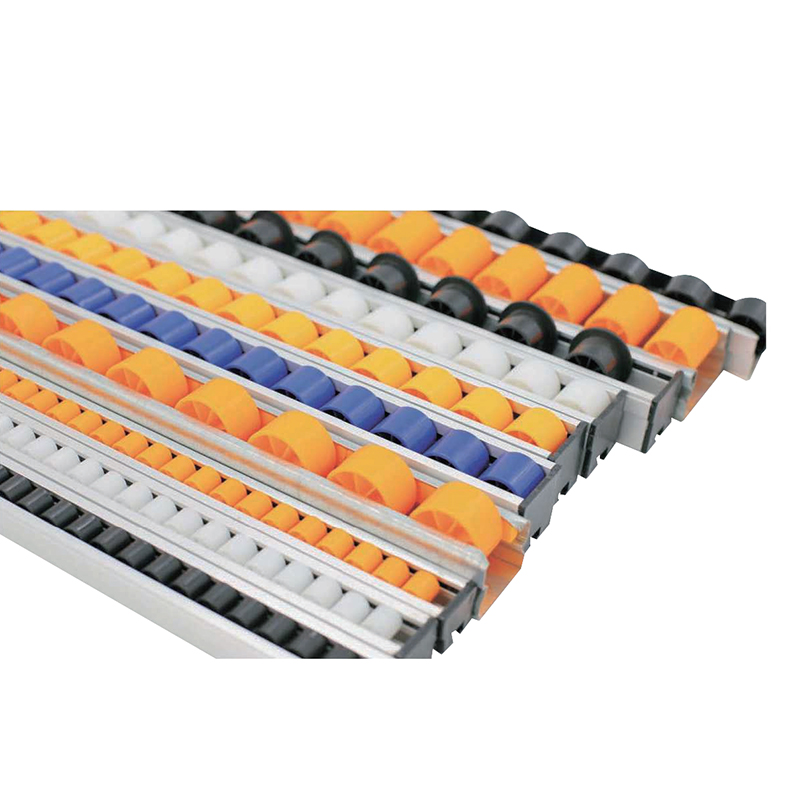 Conveyor Flow BarThe conveyor flow bar is a rolling component designed for gravity-driven or assisted conveying systems. It consists of multiple rollers integrated into a bar structure...View Product →
Mounted in pairs, the bars lift a carton just clear of the frame, so only the rollers and the carton base touch. That small contact patch keeps resistance low, which matters in gravity lanes where slope alone has to keep the load moving. Because the two rails are independent, one damaged bar can also be swapped in minutes without dismantling the lane.
Where Flow Bars Fit in a Conveyor Line
Flow bars appear wherever product has to travel without a motor pushing it along. Applications we see most often include:
- Carton flow racks and pick modules, where full cases roll forward to the picking face as the front carton is removed.
- Packing and assembly benches, where finished goods slide toward a takeaway conveyor.
- Gravity accumulation lanes between processes, absorbing short stoppages without adding drives.
- Loading and unloading areas, where bars bridge the height difference between a truck bed and the dock.
- Side guide and wear strip positions on powered lines, protecting product edges and stopping cartons from rubbing directly against steel.
In every one of these roles the flow bar carries a modest load over a short distance, over and over, all day long. That duty cycle is why material quality and roller consistency matter far more than the price difference between two similar profiles.
Why Plastic Beats Metal in Most Flow Applications
We are asked regularly why a plastic rail should be chosen over steel or aluminium, and the answers are practical rather than promotional:
- Corrosion resistance. Plastic profiles do not rust in damp cold stores or wash-down areas, and they tolerate most cleaning chemicals better than painted steel.
- Quiet operation. A plastic channel with plastic rollers running under a carton is noticeably quieter than metal rails or steel skate wheels.
- No lubrication. Sealed rollers and self-lubricating plastics remove the need for oiling, which keeps cartons, trays and product clean.
- Light weight. A lighter bar means lower frame loads and faster installation with fewer people on the job.
- No marking. Soft plastic faces are far less likely to scuff printed cartons, shrink wrap or coated trays.
- Consistent friction. Molded profiles deliver repeatable sliding performance from lane to lane, which makes slope calculations more predictable.
How to Specify the Right Flow Bar
Before ordering, gather a few facts about the lane itself:
- Load per bar, not just total carton weight. A 25 kg carton resting on two bars puts roughly half its weight on each one.
- Bar length and support spacing. Long unsupported spans sag under load, so plan a mid-support or choose a deeper profile.
- Roller pitch. Closer rollers suit small or soft-bottomed items; wider pitch reduces cost and rolling resistance for rigid totes.
- Roller and axle material. Choose grades that match your temperature range and cleaning regime.
- Slope. Most carton lanes work between roughly 3 and 6 degrees; too little and light cartons stall, too much and heavy ones arrive too fast.
- Mounting detail. Hole spacing, slot length and end-cap clearance must match your existing beam pattern.
A short trial on a single lane is always cheaper than a full rollout that has to be rebuilt.
Flow Bar, Slide Rail or Skate Wheel?
Not every lane needs rollers. The table below summarises the three options we are asked about most often.
| Option | Effort Needed | Best For | Points to Watch |
|---|---|---|---|
| Roller flow bar | Low | Cartons, totes and trays on a sloped lane | Roller pitch and load per bar |
| Plain slide rail | Moderate to high | Light, flat-bottomed items on short runs | Friction rises as the surface wears |
| Skate wheel rail | Low | Rigid, heavy loads with a firm base | Small or soft cartons can bridge between wheels |
Roller flow bars handle the widest range of carton sizes and behave most predictably, which is why they dominate carton flow racking. If your loads are rigid and heavy, skate wheel bearings set into a rail can be a strong alternative. For very light flat-bottomed items, a plain slide rail often costs less and works perfectly well.
Installing Flow Bars the Right Way
Installation is simple, but small errors here cause most of the complaints we hear later. The sequence we recommend is:
- Check the frame first. Bars cannot correct a rack that is twisted or out of level, so verify beam parallelism before anything else.
- Set the slope. Use a digital level and confirm the drop along the actual travel path, not just at the beam ends.
- Cut to length if needed, using a fine-tooth blade, then deburr the cut end so no sharp edge can catch a carton.
- Mark mounting holes from the bar itself rather than from a drawing, so tolerance stack-up does not push the lane out of line.
- Fit the bars loosely first, then confirm every roller spins freely before final tightening.
- Test with the real load. Send three or four representative cartons down the lane and watch how they settle at the stop.
Maintenance and Troubleshooting
Flow bars need very little attention, but when a lane misbehaves the cause is usually one of a few familiar problems:
- Cartons stalling mid-lane: slope too shallow, roller pitch too wide for the load, or debris on the rollers.
- Grinding or squealing: a seized roller or worn axle. Replace the roller set rather than lubricating it.
- Sagging bars: the support span is too long for the load, so add an intermediate support.
- Broken end caps: often caused by cartons being thrown onto the lane instead of placed on it.
- Routine checks: a quarterly inspection of roller spin and fixing tightness takes minutes and prevents most unplanned stops.
Building a Complete Plastic Component Set
Flow bars rarely travel alone. On a typical line they sit between roller fittings at the head and tail, run alongside guardrails that keep loads centred, and end in accessories that absorb impact or hand the product over to the next zone. Buying these parts as a matched set, with the same profile family, material grade and mounting conventions, saves a great deal of fitting time on site.
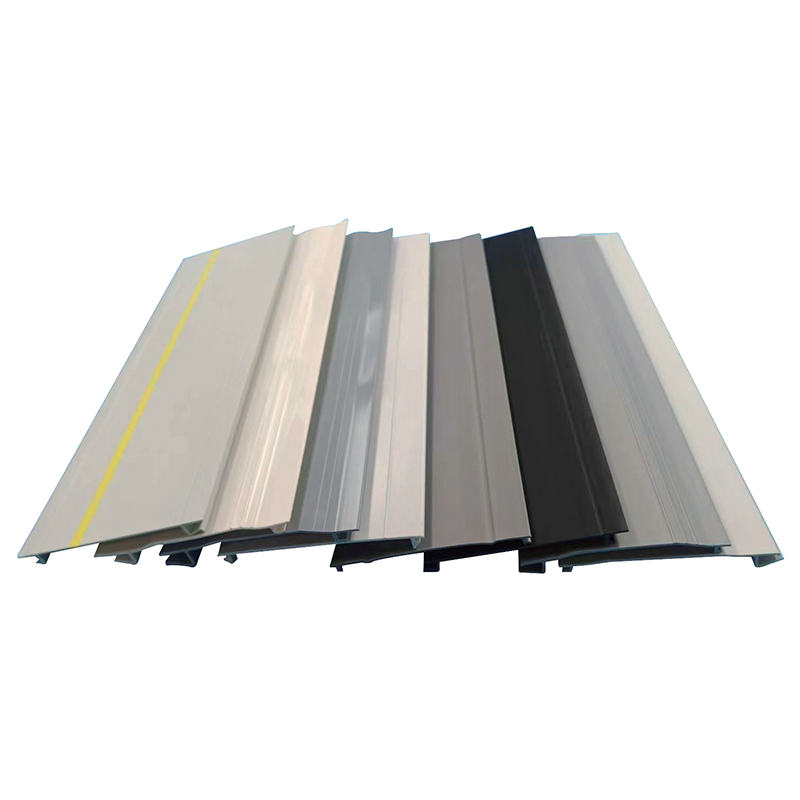 Conveyor AccessoriesConveyor accessories are a collection of functional components designed for industrial conveyor systems, enhancing the functionality, safety, and maintainability of ba...View Product →
Guide rails deserve particular attention on sloped lanes, because a carton that drifts sideways will eventually jam against a frame or drop between two rails. Choosing a rail profile that matches the width and rigidity of the loads you handle keeps products tracking straight from the infeed to the stop.
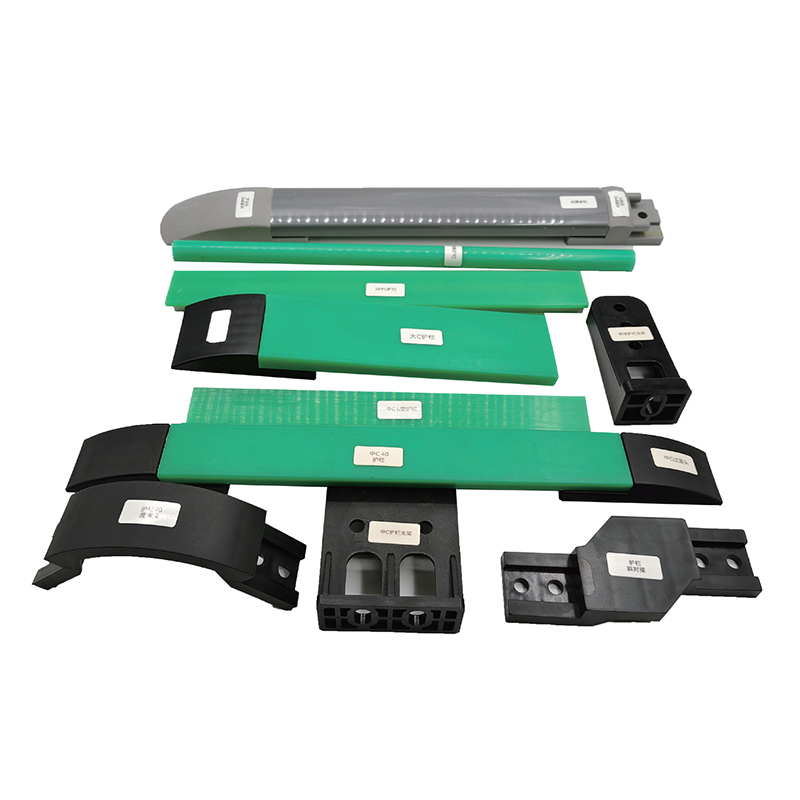 Conveyor GuardrailThe conveyor guardrail is a modular protective structure installed along the periphery of conveying equipment, creating physical separation between personnel activity ...View Product →
Working With a Manufacturer Who Molds These Parts
We are Huzhou Nanxun Guan's Plastic Industry, a plastic component manufacturer with production bases in Zhejiang and Jiangsu and a dedicated laser cutting workshop. Parts like flow bars and their accessories are the core of what we do: repeatable molded components produced in volumes that keep projects on schedule. Our products serve logistics, warehousing, food and beverage, pharmaceutical, tobacco, tyre manufacturing and airport ground handling operations, and the profile that suits a cold-store pick module can usually be adapted to a packaging line with a different roller grade and axle material.
Flow bars are small, inexpensive and easy to treat as an afterthought, right up to the moment a lane stops moving. Get the load per bar, the roller pitch, the slope and the support spacing right, install the bars square, and keep the rollers clean, and a plastic conveyor flow bar will quietly outlast several rounds of everything else on the line. If you are planning a new lane or replacing a tired one, send us your carton weights and lane drawing, and we will help you match the right profile to the job.
Related products
-

-
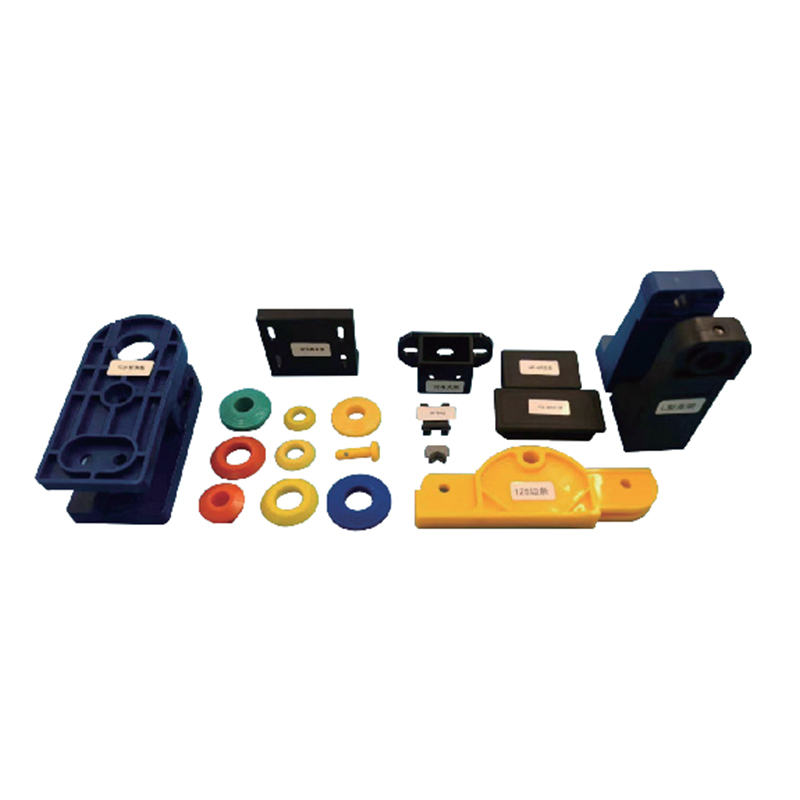 Conveyor Accessories
Conveyor accessories are a collection of functional components designed for indu...
-
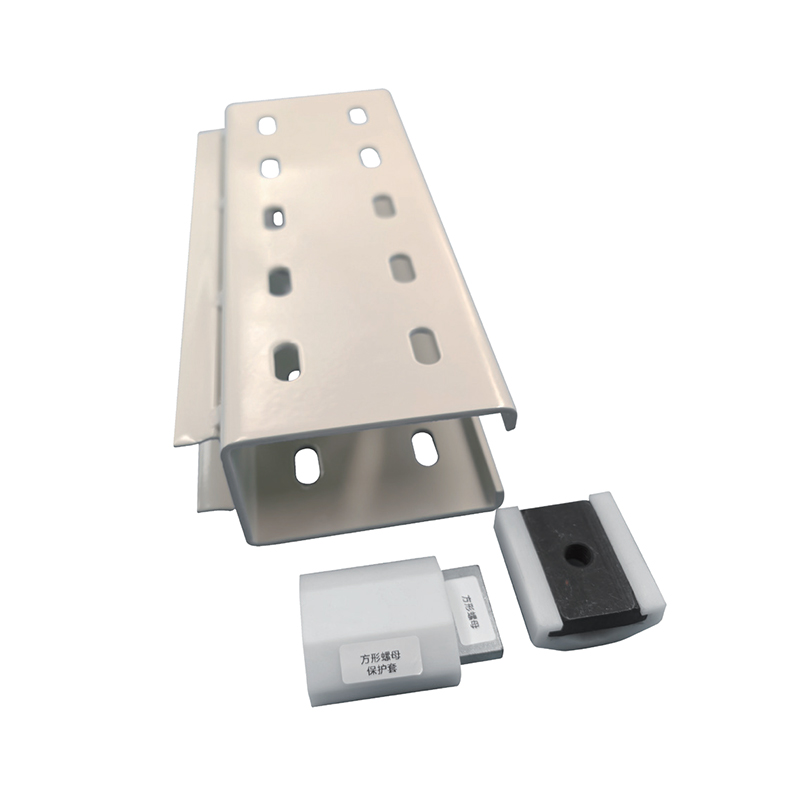 Chain Conveyor Accessories
Chain conveyor accessories are functional components designed for use with chain...
-
 Conveyor Sealing Plate
The conveyor sealing plate is a side enclosure component designed for conveyor e...
-
 Conveyor Guardrail
The conveyor guardrail is a modular protective structure installed along the per...
-
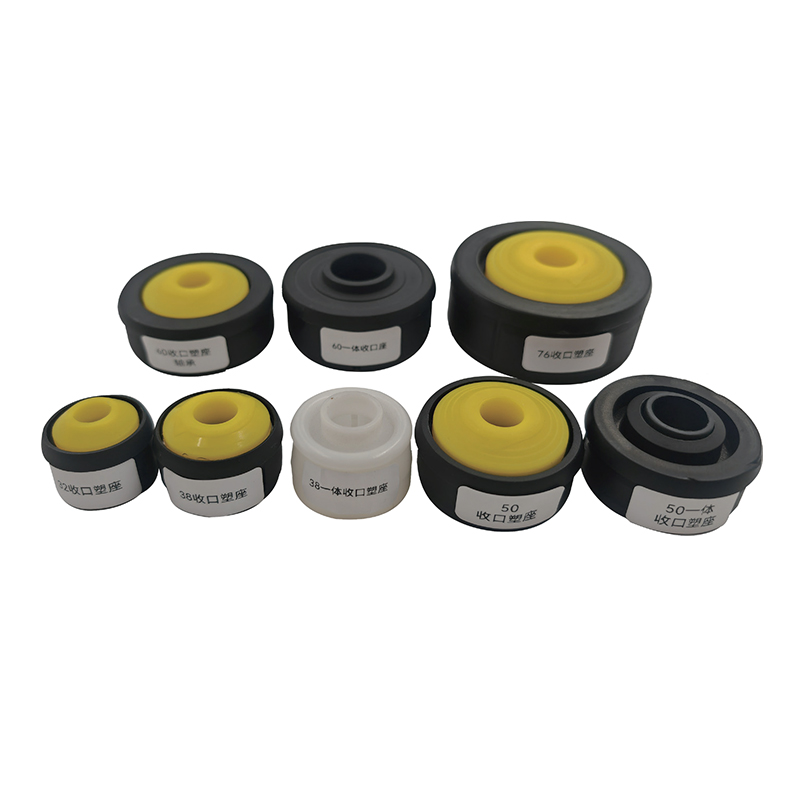 Roller End Cap Plastic Seat
Definition and Structural Characteristics The Open Plastic Seat is a terminal su...


+86-13250912999
Huzhou Nanxun Guan's Plastic Industry Co., Ltd.
Email: [email protected]
Address: Building 8, North Zone, Dehao Industrial Park, Linghu Town, Nanxun District, Huzhou City, Zhejiang Province, China
Navigation
Products
About us
Copyright © Huzhou Nanxun Guan's Plastic Industry Co., Ltd.
All Rights Reserved.
 Privacy
Wholesale Plastic Conveyor Parts Manufacturers
Privacy
Wholesale Plastic Conveyor Parts Manufacturers